Live Chat Software
Live Chat Software
Live Chat Software
A crop of new health care companies delivers predictably better health outcomes at lower cost than conventional approaches in high value niches of clinical, financial, and administrative risk. Purchasers using a combination of these firms can reasonably expect (often, with guarantees) a 20% reduction in spending in Year 1 and a 40% reduction by Year 3.
This workshop brings together purchasers, benefits advisers, and solutions providers to discuss the dynamics, barriers, and potential within this sector. Topics will include:
Workshop Leaders:

|
|
Dave Chase
Institute CEO and Group Cofounder, Health Rosetta; Author: The CEO’s Guide to Restoring the American Dream |
Dave is Author of The CEO’s Guide to Restoring the American Dream: How to Deliver World Class Healthcare to Your Employees at Half the Cost. He is Co-founder of Health Rosetta and has built the Health Rosetta ecosystem over the last six years, first while building his last startup and then as a venture investor.
Chase’s TEDx talk entitled “Healthcare Stole the American Dream – Here’s How We Take it Back” sums up health care’s devastation of the middle class and the redemption coming via a bottom-up movement. Chase was named one of the most influential people in Digital Health due to his entrepreneurial success, speaking, and writing. He delights in sharing how high-performing organizations have solved health care’s toughest challenges. Chase co-authored the health care Book of the Year in in 2014.
Chase was the CEO/Co-founder of Avado, acquired by and integrated into WebMD and Medscape. Before Avado, Chase spent several years outside of health care in startups as founder or consulting roles with LiveRez.com, MarketLeader, and WhatCounts. He also played founding and leadership roles in launching two new $1B+ businesses within Microsoft including their $2 billion health care platform business.
|
|
David Contorno
President Lake Norman Benefits |
David Contorno is President of Lake Norman Benefits, now part of the Hilb Group and one of the employee benefit practice leaders inside this now top 40 largest insurance agency. As a native of New York, David began his career in the insurance industry at the age of 14, and has since become a leading expert in the realm of employee benefits over the last 21 years. The Hilb Group continues to grow organically by ensuring all management is handled locally, providing top notch solutions and supports, and through strategic acquisitions.
Among his many accolades, David received a Broker Spotlight in 2004 and was recognized as an outstanding Broker of Service in 2005 through 2014 by Blue Cross Blue Shield. He has continually received the Echelon Award by United Healthcare since 2003, reserved for the top 1% of agents nationally, and was a 2015 "40 Under 40" Award Winner presented by Charlotte Business Journal. Most recently, David was Benefits Selling Magazine's 2015 Broker of the Year and, in March 2016, Forbes deemed him "One of America's Most Innovative Benefits Leaders."
David is a member of the Board of Directors for both the Charlotte Association of Health Underwriters and Healthreach Community Clinic. He served on the NC Insurance Commissioners Life and Health Agent Advisory Committee, as well as participated in the Technical Advisory Group that helped with the Market Reforms required under the Affordable Care Act in North Carolina. He is a long-time member of the Lake Norman and South Iredell Chambers of Commerce as well as the National, North Carolina, New York and Long Island Associations of Health Underwriters. David contributes to numerous publications, including Forbes, Benefits Selling Magazine, Business Leader Magazine and Insurance Thought Leadership.
David is committed to giving back to his community and actively participates in the membership drive for the United Way, assisting the local chapter of Habitat for Humanity, and supporting The Dove House Child Advocacy Center. When he is not working, he enjoys boating, traveling, and being with his wife, Heather, and their two children, Hannah and Ethan.

|
|
Barry Cross
Director, Corporate Business Services, Personnel Michelin |
Barry L. Cross, Director of Michelin’s Corporate Business Services - Personnel, has responsibilities for Total Rewards strategic activities for Michelin’s Canadian, US, Mexican, and Brazilian employees.
Mr. Cross joined Michelin in 1979 having served over 37 years. During his service he has held various positions in Corporate and Industry. They include Purchasing, Corporate Accounting, Financial & Industrial Controlling, Industrial Engineering, Production Management and Strategic planning for Industrial Semi-Finish Product Line and North America Corporate Personnel.
Mr. Cross earned a Bachelor of Arts from the University of South Carolina (1976) and a Master of Business Administration from Clemson University (1993).
Along with his duties for Michelin, Mr. Cross serves on the Board of Alliance for a Healthier South Carolina and is a member of the SC Upstate NBGH. Michelin remains the global leader in the tire industry, manufacturing tires for every type of vehicle including aircraft, automobiles, bicycles, motorcycles, earthmovers, farm equipment and trucks. The North American operations are more than $10 billion in sales and with over 21,500 employees.


|
|
Scott Haas
Senior Vice President USI Insurance Services |
Scott has over 34 years of employee benefits experience. Scott’s background includes the development prescription benefit management (PBM) solutions; provider network evaluation and valuation, and negotiation; product development and underwriting.
Scott was the Executive Vice President of a TPA with over $2.8B in assets under management. Scott has also started and operationalized a Third-Party-Administrator (TPA) and a PBM platform from scratch. Scott has worked in the arena of alternative funding for the majority of his career. Scott’s current role within USI Insurance Services is focused on support of PBM and Managed Care/Provider Excess national practices that transcends to self-insured plan sponsors. In addition, the Healthcare Operational Risk Consulting team has evolved multiple solution combinations and expertise in the Reference Based Reimbursement arena.
Scott has held officer-level positions within Blues plans and TPAs as Vice President of Sales and Marketing; Vice President of Underwriting; and President. Scott has also served as a trustee for both union and non-union health and welfare and pension plans.
Scott frequently shares his consulting expertise speaking at national events hosted by organizations such as the International Foundation of Employee Benefits; Health and Welfare Plan Management Conference; Western Pension and Benefits Council; and the Self-Insurance Institute of America.
Scott has authored and co-authored articles on various topics over his career.
Scott earned his B.S. in both Business Administration and Economics from the University of Nebraska at Kearney. He holds Chartered Life Underwriter (CLU) and Registered Health Underwriter (RHU) designations.

|
|
Eric Haberichter
Co-Founder and Chief Executive Officer Access HealthNet |

|
|
Brian Klepper, PhD
Principal Worksite Health Advisors |
Brian Klepper, PhD is Principal of Worksite Health Advisors and a nationally prominent health care analyst and commentator. He writes and speaks extensively about the structural dynamics of the US health care cost crisis, primary care clinics, high performance health care and the management of full continuum clinical and financial risk.

|
|
Lee Lewis
Area Vice President and Managing Director, Innovation Lab Practice Arthur J. Gallagher |
Lee Lewis runs Gallagher’s Innovation Lab practice, a mission-driven group devoted to improving the cost, quality and design of American healthcare. Lee advises several health startups working to solve meaningful healthcare problems.
The Innovation Lab has a track record of breakthroughs. It leads the effort to bring sophisticated health plan audits to private employers. It pioneered specialty drug direct purchasing without using a PBM. His team led a grassroots effort to identify all independent freestanding Emergency Rooms in Texas. The innovation lab developed the first HSA compliant model for back and joint pain prevention, and is piloting first-ever ultra-high value virtual networks in 2018 in two major U.S. cities.
His current and past clients include American Airlines, Comcast NBC Universal, Albertson’s Grocery Stores, Home Depot, Abbot Laboratories and dozens of other large and jumbo employers.
Lee is a Rhodes Scholar Nominee. He graduated Second in his Class, Magna cum Laude with University Honors in Accounting from Brigham Young University.

|
|
James Millaway
Chief Executive Officer The Zero Card |
|
|
Angela Mitchell
Leader, US Health Care Delivery Intel Corporation |
Angela has many years of experience challenging the status quo to improve healthcare in the US. Her Executive Masters in Public Administration is focused on health care transformation through federal and state policy and reform initiatives. In the health care industry she focused on Patient Centered Medical Home designs and created a team-based leadership model that was adopted across 5 states. She also created new creative wats to drive improvements through the patients perspectives, bringing them across the table with the health care system executives to demand improvements, and it worked. These programs are now running across the state of OR and are embedded into all primary care and hospital practices.
For the past several years, Angela has been leading innovative, employer-led ACO models for Intel in the US. No other large employer has this direct contracting relationship with local health care systems, so to build them all took strong leadership and partnership. The most recent data shows how the vision behind the ACO models is working, achieving Triple Aim outcomes: reducing costs, improving health outcomes, and getting high member satisfaction and engagement rates. Angela is a passionate leader in health care that brings the right people around the table to make the impossible happen.
|
|
Edward Smith
Executive Vice President Hutchinson Traylor |

|
|
Tom Stoeckle
Director, Compensation and Benefits Seattle Children’s Hospital |

|
|
Richard Sutton
Employee Benefits Consultant RE Sutton & Associates |
RE Sutton & Associates, a division of Brown & Brown of Indiana, LLC
As an independent broker/consultant, Richard works with a variety of small and large employers and specializes in working with school systems, libraries and other public employers. Richard is a graduate of Ball State University where he majored in Public Relations and Political Science. While at Ball State, Richard was active as President of his Fraternity and President of the Student Center Governing Board.
Prior to founding RE Sutton & Associates, LLC in July, 2001, Richard was a partner at the firm of D.B. Englehart & Associates. Before his consultant work, Richard worked ten years at Blue Cross/Blue Shield and The Acordia Companies, where he received numerous awards for new sales and service to existing clients.
RE Sutton & Associates was named as one of the Top 25 Largest Indianapolis-Area Independent Insurance Agencies/Brokerage firms by the Indianapolis Business Journal for five years. In 2008, RE Sutton & Associates merged with Brown & Brown of Indiana creating the Largest Indianapolis-Area Independent Insurance Agency in the Indianapolis area and the firm has remained at the top of that list.
Richard contributed to a book series “Inside the Minds: Employee Benefit Best Practices”. The book, written by leading executives across the country, is an authoritative perspective on key strategies for offering secure, affordable coverage, while continuing to attract, retain and award employees. Richard’s chapter is entitled: “A Transparent Effort for Servicing Clients in the Employee Benefits Industry.
Richard is a graduate of Leadership Hendricks County. Through that program he was instrumental in instituting the Summer Lunch Bunch for Kids in Brownsburg. This program brings lunch, activities and entertainment to the children of Brownsburg during the summer months. Richard serves on the advisory board for several insurance and health related corporations.
Richard was included in the 2011 Indianapolis Business Journal list “Who’s Who in Health Care and Benefits.” This list includes administrators, benefits experts, insurance executives, and doctors doing groundbreaking work, attorneys, CPAs and policymakers.
Attend this workshop and learn the ABC's of the drug contracting process, starting with the manufacturer. Learn how discounts, formularies, and rebates work and take control of your drug spend. Leverage strategies used by the pharma supply chain in your favor rather than the other way around.
Workshop Leaders:
|
|
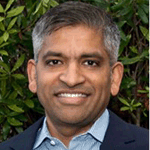
Pramod John
Chief Executive Officer Vivio Health |
Prior to VIVIO Health, Pramod was founder of Oration PBC which is changing the way consumers purchase prescription medications by capturing the prescription in the physician’s office and providing all the pricing options and routing automatically. Pramod was also VP of Strategy and Innovation at McKesson, the world’s largest healthcare company. At McKesson, Pramod helped develop solutions that leveraged advanced technologies and business process improvements to optimize healthcare delivery systems, infrastructure and supply chains.
Earlier, Pramod founded and served as CEO of PacketMotion, Inc., a venture-funded startup in the enterprise network information and policy management industry. The company was later acquired by VMWare. In addition, Pramod founded netExaminer.com, a managed-vulnerability assessment company acquired by SonicWALL (acquired by Dell). Pramod earned his Ph.D. in Electrical Engineering from the University of Illinois at Urbana-Champaign. He serves on the Boards of Oration, Mission Aviation Fellowship, a global relief organization and 3 Crosses Church in Castro Valley, CA.
Individual health care risk management programs will inevitably give way to "platforms" that integrate a range of solutions to high value cost drivers and barriers to quality. This advanced session will explore the cumulative quality and cost impacts available when high performance solutions are brought to bear under a single organizational or contractual umbrella.
The first half of this workshop will describe the challenges and results of a collaborative management effort by an on-site clinic company, and a musculoskeletal disorder management company, across several sites. The project relies on advanced analytics, worksite primary care, musculoskeletal management, and other capabilities, and provides a glimpse of the efficiencies and effectiveness readily available to employers willing to genuinely think outside the box. In the second half of the workshop, Adam Russo from The Phia Group, focused on efficient employer health plan management, will detail how to control health plan costs and protect plan assets through:
Workshop Leaders:

|
|
Mary Delaney
Managing Director Vital Incite |
Mary is the President of Vital Incite. Her role is to help employers understand how to leverage a variety of solutions to provide meaningful healthcare coverage, promote wellbeing and mitigate cost. Mary is motivated by a genuine desire to make a lasting difference in the evolving world of healthcare. Having spent 23 years on the provider side of the healthcare industry, Mary has the unique ability to see the big picture in healthcare and develop outside-the-box strategies and solutions. She has specific expertise in wellness solutions, onsite clinic integration, disease and utilization management and the medical home model of patient care.
Prior to launching Vital Incite, Mary held a number of leadership roles in healthcare. Those other positions include: CEO of Innovative Therapy Services; Regional Director of Rehab at Stryker Corporation; and President of Innovative Medical Management, a consulting company that served a variety of physician groups, including urgent care centers, specialty practices and primary care providers. In addition, she served as the Director of Employee Health Management for American Health Network, a physician practice with more than 250 providers in 2 states.
Mary serves on several boards and is involved with many organizations including: the American Diabetes Association, National Wellness Institute, American Physical Therapy Association, The Institute for Healthcare Improvement, Legatus, PCPCC-Patient Centered Primary Care Collaborative, IN Shape Indiana and the Indiana Employer’s Forum.
In her current role, Mary is focused on delivering data-driven strategies to employers, designed to decrease medical spend waste and efficiently guide the reinvestment of those resources into meaningful programs that ultimately result in improved employee health. Mary and the Vital Incite team currently manage population health programs for more than 80 employers throughout the US, from Alaska to Florida, providing strategies covering more than 150,000 employee lives. Mary received her bachelor’s degree in biology from the University of Michigan and her MS in Physical Therapy from the University of Indianapolis.

|
|
Chad Gray, PT
Cert. MDT, Chief Executive Officer Integrated Mechanical Care (IMC) |
Gray has been a clinical practitioner for two decades and is a widely recognized entrepreneur, health-benefit design consultant, and concierge practitioner, focused on groundbreaking innovations in musculoskeletal triage, health care, and self-care. He is a thought and practice leader in group health, workers’ compensation, and disability outcomes optimization, and he has a proven track record of performance improvements in health benefits design, clinical residency programs, employer-based clinics, primary care practices, orthopedic triage facilities, sub-acute rehabilitation centers, skilled nursing facilities, and physical therapy clinics.
Gray graduated from Florida A&M; University in 1994, earned a Mechanical Diagnosis and Therapy credential from the McKenzie Institute International in 2002, served on the Board of McKenzie Institute U.S.A., and has taught Accountable Community Development to hundreds of STEM researchers, human capital consultants, insurance brokers, benefit program directors, and clinicians.
As CEO of Integrated Mechanical Care, Inc., he is the business mind behind the company’s intra-national medical tourism program for intractable musculoskeletal conditions.
Gray remains trusted consultant to the C-Suite of self-insured companies, as well as to vice presidents and directors of group health, workers’ compensation, and disability programs. He is a regular speaker at national orthopedic conferences and a guest lecturer in a broad range of clinical education settings.
|
|
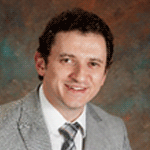
Igor Kozunov, MBA, MHA
Chief Executive Officer Wellness For Life Medical, LLC |
As a co-founder and CEO of Wellness for Life Medical, LLC, Igor led the rapidly-growing organization from start-up to its current position of one of the most innovative and reputable Direct Primary Care and Employee Health Services providers.
A former Army officer, Igor earned his Masters’ Degrees in Health Management and Policy and Business Administration from the University of Iowa. Prior to founding Wellness for Life, Igor worked as a Management Consultant, specializing in academic health systems and service line expansions. His expertise includes healthcare finance, new service line development, medical practice mergers and acquisitions, health plan design, clinical risk management, VA health systems, and integration of new business models and operational capabilities.
|
|
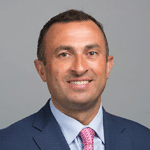
Adam Russo, Esq.
Co-Founder and Chief Executive Officer The Phia Group |
Adam V. Russo, Esq. is the Co-Founder and Chief Executive Officer of The Phia Group LLC; an experienced provider of health care cost containment techniques offering comprehensive claims recovery, plan document and consulting services designed to control health care costs and protect plan assets. The Phia Group’s overall mission is to reduce the cost of plans through its recovery strategies, innovative technologies, legal expertise, and focused, flexible customer service.
Attorney Russo is also the founder and managing partner of The Law Offices of Russo & Minchoff, a full-service law firm with offices in Boston and Braintree, MA. Attorney Russo’s practice is devoted to representing employers, plan fiduciaries, third-party administrators and carriers in employment and employee benefits matters throughout the United States. He is a frequent speaker and author on health care and employee benefits topics at webinars, conferences and seminars across the country.
Attorney Russo obtained a Juris Doctorate degree from Suffolk University Law School and a Masters Degree in Finance from the Frank Sawyer School of Management at Suffolk University in Boston, Massachusetts. He also acquired an undergraduate degree from Suffolk University, where he double majored in Political Science and Public Relations. He was recognized by Suffolk University with the 2005 Outstanding Alumni Achievement Award.
Attorney is on the Self-Insurance Institute of America, Inc. (SIIA) Board of Directors, the Board of the Massachusetts Association of Health Underwriters (MAHU), and the Board of Directors at JFS of Metro-West, a non-profit agency that provides social services, elder care, adoption services, and domestic violence assistance. Attorney Russo is admitted to the Massachusetts Bar, the U.S. Court of Appeals for the First Circuit and the Supreme Court of the United States.
Adam and his wife Kelly have four wonderful children named Soli, Maeve, Samuel and Shae. In addition to spending his spare time with his family and friends, Adam enjoys watching his beloved Cleveland Indians baseball team.
This case-based MasterClass explores the drama and trauma of daily management, including resistance to change. Discuss critical success factors that transform professionals into more effective leaders, who in turn distinguish their organizations as industry frontrunners. Understand pre-conditions for higher productivity and performance – more speed and lower cost – based on theory and practical examples. A unique highlight of the workshop is a case discussion about healthier leadership and our responsibilities to ourselves, to others, and to our change initiatives.
This live activity is eligible for 3.0 AMA PRA Category 1 Credits™. Physicians should claim only the credit commensurate with the extent of their participation in the activity and 3.0 contact hours through the Florida Board of Nursing, Provider # 50-94.
Workshop Leaders:
|
|
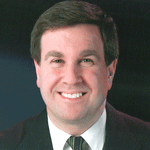
David A. Shore, PhD
Faculty, Harvard University; Former Associate Dean Harvard University School of Public Health Distinguished Professor of Innovation and Change Tianjin University of Finance and Economics (China) |
David A. Shore is a leading authority on innovation and managing change to gain competitive advantage. Throughout his career he has built constructive links between theory and practice by combining research, consulting, and teaching.
He is on the faculty of Harvard University and adjunct professor of organizational development and change at the School of Business, University of Monterrey, Mexico. He has held visiting professorships including in Amsterdam, Santiago, and Shanghai; has consulted on six continents; and has delivered more than 250 keynote addresses and workshops for groups in multiple industries. Shore spent two decades at the Harvard School of Public Health, where he served as associate dean. He founded and directed the School’s flagship programs: Forces of Change: New Strategies for the Evolving Health Care Marketplace; The Trust Initiative; and the Certificate Program on Launching and Leading Successful Change Initiatives.
Prior to joining Harvard, Shore served in management roles at The Joint Commission, the Health Care Financial Management Association, and the American College of Healthcare Executives. Shore is also a faculty member of The Governance Institute and Executive in Residence at Enable East (National Health Service, England). He has served on and chaired numerous boards and committees, and currently sits on the Board of Directors of the Marshfield Clinic Health System as well as several editorial boards. Along with innovation and change, Dr. Shore’s work focuses on building and rebuilding trust; re-engineering meetings; and, strategic marketing and branding.
His most recent books include Launching and Leading Successful Change Initiatives in Health Care Organizations: (Jossey-Bass, 2014); Forces of Change: New Strategies for the Evolving Health Care Marketplace (Jossey-Bass, 2012); and High Stakes: The Critical Role of Stakeholders in Health Care, with Eric D. Kupferberg (Oxford University Press, 2011).
In 2015 Professor Shore was recognized as a Top Thought Leader in Trust by Trust Across America – Trust Around the World. He is also a multiple recipient of Harvard’s Letter of Commendation for Distinguished Teaching Performance, most recently in 2015; and was chosen to deliver a 2015 Harvard Lecture That Lasts (Harvard’s version of a TED Talk) and invited to give a TEDx Talk.
Never known to simply “admire the problem,” Shore provides executable advice, inspiring leaders and organizations to gain a unique and adaptable competitive advantage.
This workshop explores new models of collaboration that address health system sustainability. Across the world, states and cities face huge health and social care challenges in an environment of increased patient expectations and economic challenges. Solutions require concerted action, imaginative policies, and innovative partnerships harnessing academic, industry, government, health, and social care resources to discover, develop, and deliver accelerated health care innovation. In this workshop, attendees explore, debate, and discuss optimal models of collaboration.
This workshop paves the way for a wider European and worldwide perspective on health system sustainability at the World Health Care Congress (Europe) in Manchester, UK on March 5-7, 2019.
Workshop Leaders:
|
|
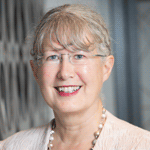
Jackie Oldham
Director Health Innovation Manchester’s Oxford Road Corridor, UK |
Professor Jackie Oldham is Director of Health Innovation for Manchester’s Oxford Road Corridor, the dense Innovation District at the heart of Greater Manchester. She is also a Global Ambassador for Manchester. Her Oxford Road Corridor role sits at the heart of Health Innovation Manchester and the Greater Manchester devolution agenda harnessing academic, industry, local government, health & social care resources to improve patient care by discovering, developing and delivering accelerated innovation into the local population and beyond. Jackie is also Director of Manchester Improving Medicine with Innovation and Technology (MIMIT) and Chair of St Ann’s Hospice.
This workshop showcases five high-performance health care organizations that excel in clinical, financial, and administrative risk management. Learn how these organizations deliver improved health outcomes while curbing costs. Examine direct contracting models that are scalable, significantly reducing financial burden while optimizing care delivery.
Workshop Leaders:
|
|
Anne Hendrickson
Vice President ,Operations & Marketing Communications Allergychoices Inc. |

|
|
Jeff Kessler, MBA, FACHE
President and Director Allergychoices Inc. |
|
|
Brian Klepper, PhD
Principal Worksite Health Advisors |
Brian Klepper, PhD is Principal of Worksite Health Advisors and a nationally prominent health care analyst and commentator. He writes and speaks extensively about the structural dynamics of the US health care cost crisis, primary care clinics, high performance health care and the management of full continuum clinical and financial risk.
|
|
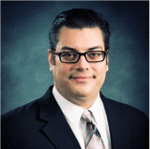
James R. Napoli
Chief Executive Officer and General Counsel Medliminal, LLC |

|
|
Ryan Schmid
Co-Founder, President and Chief Executive Officer Vera Whole Health |
|
|
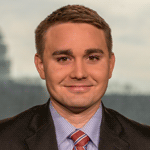
Alex Schuman
Journalist, Founder and Chief Executive Officer Informavore Media |
|
|
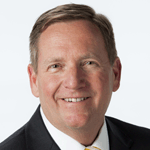
G. Keith Smith, MD
Co-founder The Surgery Center of Oklahoma |
Dr. G. Keith Smith is a board certified anesthesiologist in private practice since 1990. In 1997, he co-founded The Surgery Center of Oklahoma, an outpatient surgery center in Oklahoma City, Oklahoma, owned by over 90 of the top physicians and surgeons in central Oklahoma. Dr. Smith serves as the medical director, CEO and managing partner while maintaining an active anesthesia practice.
In 2009, Dr. Smith launched a website displaying all-inclusive pricing for various surgical procedures, a move that has gained him and the facility, national and even international attention. Many Canadians and uninsured Americans have been treated at his facility, taking advantage of the low and transparent pricing available. His most recent effort is the launch of the Free Market Medical Association which provides a platform where those seeking to obtain high quality and affordable health care can find free market-minded providers, both physicians and facilities.
Operation of this free market medical practice, the standard for all who have embraced this practice approach, has gained the endorsement of policymakers and legislators nationally. More and more self-funded insurance plans are taking advantage of Dr. Smith’s pricing model resulting in significant savings to their employee health plans. His hope is for as many facilities as possible to adopt a transparent pricing model, a move he believes will lower costs and improve quality of care for all.
He has made appearances on the John Stossel Show, CNBC, Huffington Post, The O’Reilly Factor, Capital Account, The Ron Paul Channel, NBC Nightly News and has been featured by Reason Magazine’s TV division. The New York Times, Time Magazine, ABC news, Forbes and many others have written articles featuring Dr. Smith’s revolutionary approach to the pricing of health care and uncompromising free market principles.
|
|
Tom Stoeckle
Director, Compensation and Benefits Seattle Children’s Hospital |

|
|
Danny Toth
Principal Timber Ridge Consultants |
Status quo employee benefits agencies produce status quo results: “less bad” annual premium increases. It is time for advisers to start delivering real bottom-line results to employers: lower health care costs with better benefits. Leading benefits advisers are putting their compensation at risk to guarantee bottom-line results and are working with the C-Suite to manage the health care supply chain and lower health care costs.
In this workshop discover proven strategies from Nelson Griswold, the industry’s top innovation consultant, and some of these next gen benefits advisers who are revolutionizing the benefits industry:
Workshop Leaders:
|
|
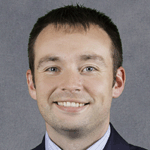
Bob Gearhart, Jr.
Partner DCW Group |
Bob Gearhart Jr. is the third generation to lead DCW Group and has reshaped the company into a Next Generation Benefits Firm. He and the team at DCW Group are committed to delivering high performing employee benefit plans to the market, one client at a time. Bob’s goal is to reverse the hyperinflation of healthcare that has led to middle class wage stagnation over the last 20 years.
Bob is also a nationally recognized speaker on Healthcare Reform and Employee Benefits. He frequently appears on radio, television, and in print to provide insight into the ever-changing landscape surrounding healthcare in America. In 2017, Bob was invited to El Salvador by that nation’s Ministry of Health to provide feedback on the healthcare facilities and providers in their growing Healthcare Abroad Network for patients around the world.
|
|
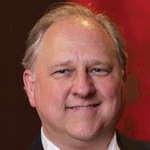
Nelson L. Griswold
President, Bottom Line Solutions, Inc.; Author, DO or DIE: Reinventing Your Benefits Agency for Post-Reform Success |
Nelson Griswold has been called “visionary” by Art Dammers of Anthem, “an authority on voluntary benefits and consultative selling” by Employee Benefit Adviser magazine and “a well-recognized industry thought leader” by Ron Leopold of MetLife.
Nelson has been honored by the Voluntary Benefits Association with their prestigious Industry Leadership Award, for his “professional accomplishments that drive the voluntary benefits industry forward.” A nationally-known agency reinvention and growth expert, he is the author of DO or DIE: Reinventing Your Benefits Agency for Post-Reform Success, the industry bestseller that has been hailed as the only comprehensive blueprint for agency leaders to reinvent their firm to survive and grow in the post-ACA era. As a practice management and agency growth consultant, Nelson works with leading agencies across the country to grow their top- and bottom-line revenue.
Nelson serves as Managing Director of the Agency Growth Mastermind Partnership, a national executive peer-exchange network for non-competing benefits agency owners who collaborate and cooperate to identify best practices and proven growth strategies to remain relevant, profitable, independent & growing.
Nelson is also a leading strategic consultant to carriers and other industry vendors on broker distribution & activation, voluntary benefits, and next-generation engagement & enrollment strategies. Nelson writes a monthly column for Employee Benefit Adviser magazine, has written for Benefits Selling, Producers eSource and other leading industry publications, and writes a blog for Zywave. He is an in-demand keynote speaker and presenter at industry conferences. He is a board member and serves on the executive committee of both the Workplace Benefits Association and the Voluntary Benefits Association
|
|
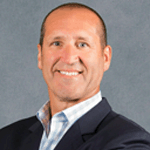
Mick Rodgers
Principal and Managing Partner Axial Benefits Group |
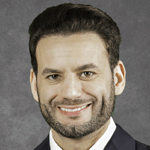
As the Principal and Managing Partner of Axial Benefits Group, Mr. Rodgers brings his extensive background in health and welfare plans to Axial's clients.
He has been pioneering Healthcare Purchasing Coalitions since 2009 specializing in assisting medium and large corporations, many of whom have multi-state locations, with the development of effective health care programs. Specifically, he has designed, implemented and managed 5 successful healthcare purchasing coalitions helping hundreds of companies lower costs and stabilized renewals.
Prior to co-founding Axial Benefits Group, Mr. Rodgers founded its predecessor company, Atlantic Benefits, in 2003. He also founded The Staffing Exchange (TSE) in 2012, a successful healthcare purchasing coalition dedicated specifically to the Staffing industry. He has had over 22 years of experience and held senior consulting positions at Hays Companies, William Gallagher Associates, and Marsh & McLennan. Mr. Rodgers is a graduate of the University of Massachusetts School of Engineering. He is a former Massachusetts high school wrestling state champion and collegiate wrestler. He is an avid national speaker on the Affordable Care Act and has become known as one of the nation's experts on the topic of its compliance. He is the former Chairman of the Boston Board of Directors for the March of Dimes and has been involved with the development of corporate programs for the both Friends of Boston's Homeless charity and various local Habitat for Humanity Chapters. He lives in Concord, MA with his wife and family, where he is also a town meeting member.
|
|
John Sbrocco
Founder Questige Consulting |
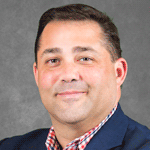
John W. Sbrocco, CSFS is a healthcare strategist and founder of both Questige Consulting and Achieve Health Alliance. He began consulting in 2005 and specializes in bringing innovative risk management solutions to self-funded employers. John holds a designation as a Certified Self-Funding Specialist.
John recently visited El Salvador as a guest of the Ministry of Health on a fact-finding mission to evaluate that country’s healthcare facilities and physicians for their Healthcare Abroad program for patients around the world who travel for superior medical outcomes at substantial savings over domestic healthcare.
An in-demand speaker at industry events & conferences, John has been featured in industry publications including, most recently, BenefitsPro magazine. He is a Charter Member of the Association for Insurance Leadership and a member of the exclusive Agency Growth Mastermind Partnership – an elite group of high-performing benefits consultants and advisors from around the country.
|
|
Trey Taylor
Chief Executive Officer Taylor Insurance Services |
Workshop Leaders:
|
|
Craig Behm
Senior Director of Marketing and Product Development Chesapeake Regional Information System for our Patients (CRISP) |

|
|
Dawnavan S. Davis
Assistant Vice President of Community Health MedStar Health |
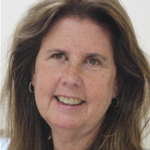
Dawnavan S. Davis, PhD, MS is Assistant Vice President of Community Health at MedStar Health where she oversees the community benefit and community health improvement programming for a 10-hospital health system. In addition, Dr. Davis currently sits on the Health Services Cost Review Commission’s Community Benefit Workgroup, Baltimore City Department of Health Local Health Improvement Coalition Steering Committee, and the DC Department of Health HP2020 Chronic Disease and Care Committee.
Dawnavan is a medical psychologist and behavioral scientist with more than 20 years of experience in public health, and community-based and health disparities research and programming. She received her master’s degree in Community Health Education from Towson University, and her doctorate in Medical Psychology from the Uniformed Services University of the Health Sciences in Bethesda, MD. Upon completion, she was selected as a Kellogg Health Scholar, where she completed a two-year postdoctoral fellowship in Public Health at the University of North Carolina at Chapel Hill.
Prior to joining Medstar Health, Dr. Davis served as the Director of Health Promotions at Blue Cross and Blue Shield of Kansas City where she oversaw the creation of a new department focused on local and regional multi-sector chronic disease prevention programs, organizational strategic alliance development and community relations, and population health management. Additionally, she previously served as faculty and the Director of the Community-Engaged Research Program for the Biological Sciences Division at the University of Chicago Medical Center, and is the founder of a non-profit organization, ACTS of FAITH, in Chicago aimed to execute evidence-based faith-based public health initiatives in under-resourced communities.
Dawnavan has made significant contributions to the field of community health serving as a principal investigator and collaborator on federal and foundation-funded research studies; serving on NIH and RWJF study sections, participating in numerous public health expert committees and as an invited speaker at national and international conferences in the areas of community health transformation, health equity, and community-based research and programming.
|
|
Leigh Ann Eagle
Executive Director, Living Well Center of Excellence (LWCE) Mac, Inc |

|
|
Sue Lachenmayr
State Program Coordinator, Living Well Center of Excellence MAC, Inc. |
Sue Lachenmayr, MPH, CHES, is the State Program Coordinator for MAC, Inc. Living Well Center of Excellence (LWCE). She has 25 years of knowledge and expertise in training, implementing, evaluating and sustaining evidence-based healthy aging/self-management programs. As State Program Coordinator, she was worked to establish partnerships between healthcare entities and community-based organizations to expand access and sustainability of these programs across the State of Maryland. Previously, she served as Senior Director of the National Council on Aging (NCOA) Center for Healthy Aging Technical Assistance Center. Prior to that, Sue oversaw evidence-based program implementation across New Jersey for the Department of Health and Senior Services.
|
|
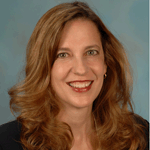
Susan Mosier, MD, MBA, FACS
Former Secretary, Kansas Department of Health and Environment; Former State Health Officer, Former Medicaid Director State of Kansas |
Susan Mosier, MD, MBA, FACS is the former Secretary of the Kansas Department of Health and Environment and the Medicaid Director for the State of Kansas. She is board-certified in ophthalmology and had a solo medical and surgical ophthalmology practice in Manhattan, Kansas, from 2000-2012. In 2010, she was elected to serve in the Kansas House of Representatives.
Prior to her medical career, Dr. Mosier was a systems development and database manager at the National Association of Insurance Commissioners (NAIC) from 1988-1990. At the NAIC, Dr. Mosier oversaw projects to update and improve the information technology systems and databases that support the states and territories in their job of regulating the insurance industry. Previously she worked as a project leader for American Airlines from 1986-1988 where she directed the work of supervisors and programmer/analysts in the design and implementation of a new budget system. She served as a consultant in Arthur Andersen & Co.’s Management Information Consulting Division from 1983-1986.
Dr. Mosier graduated summa cum laude from Kansas State University with a bachelor’s degree in pre-medicine. She received her Masters in business administration from the University of Texas at Austin with an emphasis in accounting and information systems. She received her medical degree from the University of Kansas and completed her residency training in ophthalmology at the University of Iowa.
|
|
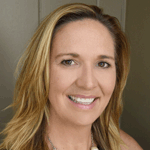
Michelle (Sheli) Reynolds
Director of individual Advocacy and Family Support, Institute for Human Development University of Missouri-Kansas City |
|
|
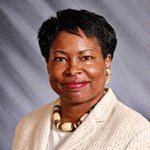
Sharon Williams
Consultant National Council on Aging (NCOA) |
Sharon is a senior level healthcare executive with Medicaid and Medicare managed care experience. Her areas of expertise include: business development, compliance administration, strategic planning, public policy interpretation/implementation, stakeholder relationships, business acumen, Medicaid and MLTSS RFP proposal writing and contract implementation, and government relations. Sharon has been affiliated with leading industry organizations such as America’s Health Insurance Plans (AHIP), Medicaid Health Plans of America (MHPA), Meals on Wheels America (MOWA), National Council on Aging (NCOA), National Association of Area Agencies on Aging (n4a), National Association of Health Services Executives and the Association for Community Affiliated Plans (ACAP). She has worked closely with significant national/regional stakeholders to expand broader integration of clinical care with Social Determinants of Health to enhance the quality of life for consumers; and impact quality outcomes.
Sharon developed and leads the implementation of the curriculum for the NCOA Network Development Learning Collaborative. She has also been a key contributor to the design and execution of the MOWA Health Integration Institute.
Sharon is a graduate of Michigan State University and holds a Bachelor of Arts in Communication—with an emphasis on organizational/business communication.
Wonder whether your wellness program delivers savings and results? Want to make sure you are choosing programs with the highest impact and best savings? In this workshop, find answers to the above questions and walk away with:
Understand population health metrics, how measures work, and the role of measure stewards. Learn from case studies, engage in small group discussions, and gain strategies to maximize savings.
This activity, has been approved for 2.75 HR (General) recertification credit hours toward aPHR™, PHR®, PHRca®, SPHR®, GPHR®, PHRi™ and SPHRi™ recertification through HR Certification Institute® (HRCI®). Please make note of the activity ID number on your recertification application form. For more information about certification or recertification, please visit the HR Certification Institute website at www.hrci.org
Workshop Leaders:
|
|
Al Lewis, JD
Chief Executive Officer Quizzify |

|
|
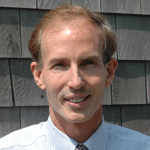
Linda K. Riddell
Population Health Scientist and Independent Validator Care Innovations™ Validation Institute |
With the global health care market expanding, and health care consuming a growing proportion of the GDP in most countries, discussions about health care are consuming a larger share of popular attention and media coverage. Those responsible for paying for health care, managing its delivery and determining policies to assure quality and outcomes have been caught up in these debates, discussions and public arguments.
Politics and rhetoric aside, there is much that countries, jurisdictions, providers and regions can learn from each other about how best to manage the transition from volume-based, fee-for-service care to value-based health care. Consumers traveling for medical services from one location to another – “medical travelers” – may be paving the way for an international exchange of ideas that will ultimately benefit insurance companies, intermediaries managing care, providers delivering care and governments overseeing health care. The markets have moved faster than the legacy systems which are responsible for funding, managing and delivering healthcare.
This Masterclass provides insights into these topics: Hosted by:
Workshop Leaders:

|
|
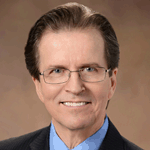
Keith Pollard
Editor in Chief International Medical Travel Journal |
Keith has been involved in medical travel and cross border healthcare since the 1990’s. His career has embraced the management of private hospitals in the UK, research and feasibility studies for healthcare ventures, the marketing and business development aspects of healthcare and medical travel and publishing, research and consultancy on cross border healthcare.
Within Intuition Communication, Keith has driven the company’s initiatives in the medical tourism sector and has a worldwide reputation as an opinion leader, speaker, commentator and adviser on medical tourism. He is responsible for the development of consumer-focused medical tourism sites such as Treatment Abroad, and the B2B resource, IMTJ – International Medical Travel Journal. Through his Health Tourism Blog, he provides valuable insight into the medical travel business.
Keith is one of Europe’s leading experts on medical tourism and cross border healthcare, attending and contributing to major conferences across the world on the subject. He has been responsible for many initiatives in the sector including the first patient guide to the EU Directive on Cross Border Healthcare, a Code of Practice for Medical Tourism, a Good Practice Score for Cross Border Reproductive Healthcare, research into patient experiences of medical tourism and an initiative to collect meaningful data in this emerging market. He was an advisor on the NIHR funded project, “Implications for the NHS of Inward and Outward Medical Tourism”, and a contributor to the EU & International Cross Border Healthcare Policy Team at the UK's Department of Health.
|
|
Irving Stackpole
President Stackpole & Associates |
With over thirty five years of experience in healthcare, senior living and human services, Irving Stackpole is the President of Stackpole & Associates, Inc., a market research, marketing, customer service and sales training, and organizational development firm. Founded in 1991, Stackpole & Associates has established itself in the field of medical travel working with governments, governmental agencies, professional associations, healthcare providers, and tourism organizations to define markets, conduct research, develop marketing programs and strategies, establish brand identity, and launch marketing efforts to attract international medical clients from the US, Canada, the UK, and other geographic areas. , Stackpole & Associates applies scientific marketing principles to develop practical solutions to clients’ challenges. Using the most rigorous psychological and behavioral science research, Stackpole & Associates develops methods and designs that produce unimpeachable data yielding reliable, actionable recommendations.
In addition to the publication of many articles in national and international trade magazines and newspapers, Irving is Editor of Medical Tourism Marketing, the first book on the subject published in the sector, and a co-host of the Medical Travel Show. He is a popular speaker, having addressed audiences at medical travel and health care conferences throughout the US and internationally. His client experience embraces an extensive list of medical tourism organizations including professional associations, governments, health care providers, developers, investors, and facilitators.

|
|
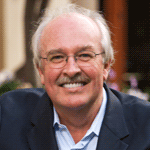
Steve Weiner
Partner Mintz, Levin, Cohn, Ferris, Glovsky and Popeo |
Steve is a member and chairman of the national Health Law Practice of Mintz, Levin, Cohn, Ferris, Glovsky and Popeo, P.C. He represents health care entities, both well established and start up, in a broad array of legal matters, including corporate, and clinical integration, strategic, financial, regulatory, reimbursement, clinical research, conflict of interest, relationships between academic medical centers and affiliated medical schools. Steve is currently:
He has lectured and conducted courses at Yale Law School, Boston University School of Law and Suffolk Law School. Honors include:
|
|
Ian Morrison
Author, Consultant, and Futurist |
Ian is an internationally known author, consultant, and futurist specializing in long-term forecasting and planning with particular emphasis on health care and the changing business environment. He combines research and consulting skills with an incisive Scottish wit to help public and private organizations plan their longer-term future.
Ian has written, lectured, and consulted on a wide variety of forecast¬ing, strategy, and health care topics for government, industry, and a variety of nonprofit organizations in North America, Europe, the Middle-East and Asia. He has spoken to a range of audiences from the boards of Fortune 100 companies to the Chinese Academy of Social Sciences in Beijing. Ian has worked with more than 100 Fortune 500 companies in health care, manufacturing, information technology, and financial services. Recent client sponsors include GE, Kaiser Permanente and the Mayo Clinic. He is a frequent commentator on the future for television, radio, and the print media.
Ian is the author of Leading Change in Healthcare: Building a Viable System for Today and Tomorrow (AHA Press, June 2011) and Healthcare in the New Millennium: Vision, Values and Leadership (Jossey-Bass, 2002). His previous book: The Second Curve - Managing The Velocity of Change (Ballantine, 1996) was a New York Times Business Bestseller and Businessweek Bestseller. Ian has co-authored several other books and chapters, including Future Tense: The Business Realities of the Next Ten Years (William Morrow, 1994) and Looking Ahead at American Health Care (McGraw-Hill, 1988). He also has co-authored numerous journal articles for publications such as Chief Executive, Encyclopaedia Britannica, Across the Board, The British Medical Journal, New England Journal of Medicine, and Health Affairs.
Ian is a past President of the Institute for the Future (IFTF). Ian is a founding partner in Strategic Health Perspectives a joint venture between Harris Interactive and the Harvard School of Public Health’s Department of Health Policy and Management. In 2017 the Strategic Health Perspectives team joined with Leavitt Partners (Health Intelligence Partners HIP program) a forecasting and intelligence service for clients in the healthcare industry. Ian serves as a Senior Advisor to Leavitt Partners and to HIP. From 1996-1999, Ian was retained by Accenture, (formerly Andersen Consulting), as Chairman of the Health Futures Forum. In that capacity, Ian chaired a number of international forums on the future of healthcare. Before coming to IFTF in 1985, Ian spent seven years in British Columbia, Canada, in a variety of research, teaching, and consulting positions.
Ian holds an interdisciplinary Ph.D. in urban stud¬ies from the University of British Columbia; an M.A. in geography from the University of Edinburgh, Scotland, and a graduate degree in urban planning from the University of Newcastle-upon-Tyne, England). He is a past director and chair of the California Health Care Foundation; a director of the new Martin Luther King Community Hospital in Los Angeles; a past director of the Health Research and Education Trust (HRET), the research and education arm of the American Hospital Association; and a past director of the Center for Healthcare Design. Ian currently serves on the Founder’s Council of United States of Care a new non-partisan non-profit movement to achieve long-lasting solutions that make health care better for everyone. He also serves on the Advisory Council of the Council of Accountable Physician Practices (an affiliate of the American Medical Group Association and served as a member of the Stakeholders Advisory Committee of the Program on Health System Improvement at Harvard University.

|
|
John Mackey
co-Founder and Chief Executive Officer, Whole Foods Market; Author, The Whole Foods Diet: The Lifesaving Plan for Health and Longevity; Founder, Whole Planet Foundation |
John Mackey, co-founder and CEO of Whole Foods Market, has led the natural and organic grocer to a $15.7 billion Fortune 500 company with more than 460 stores and 87,000 team members in three countries. The company has been included on Fortune magazine’s “100 Best Companies to Work For” list for 20 consecutive years.
While devoting his career to helping shoppers satisfy their lifestyle needs with quality natural and organic foods, Mackey has also focused on building a more conscious way of doing business. He was the visionary for Whole Planet Foundation to help end poverty in developing nations, the Local Producer Loan Program to help local food producers expand their businesses, the Global Animal Partnership’s rating scale for humane farm animal treatment, and the Health Starts Here initiative to promote health and wellness.
Mackey has been recognized as one of Fortune's "World's 50 Greatest Leaders," Ernst & Young’s “Entrepreneur of the Year Overall Winner for the United States,” Institutional Investor’s “Best CEO in America,” Barron’s “World’s Best CEO,” MarketWatch’s “CEO of the Year,” Fortune’s “Businessperson of the Year,” and Esquire’s “Most Inspiring CEO.”
A strong believer in free market principles, Mackey co-founded the Conscious Capitalism Movement (http://consciouscapitalism.org/) and co-authored a New York Times and Wall Street Journal best-selling book entitled “Conscious Capitalism: Liberating the Heroic Spirit of Business” (Harvard Business Review Press 2013) to boldly defend and reimagine capitalism, and encourage a way of doing business that is grounded in ethical consciousness. Mackey cut his pay to $1 in 2006 and continues to work for Whole Foods Market out of passion to see the business realize its potential for deeper purpose, for the joy of leading a great company and to answer the call to service that he feels in his heart.
Mackey is also the co-author of the new book, “The Whole Foods Diet” (Grand Central Life & Style 2017).
|
|
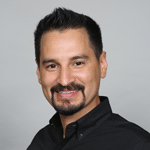
G. Keith Smith, MD
Co-founder The Surgery Center of Oklahoma |
Dr. G. Keith Smith is a board certified anesthesiologist in private practice since 1990. In 1997, he co-founded The Surgery Center of Oklahoma, an outpatient surgery center in Oklahoma City, Oklahoma, owned by over 90 of the top physicians and surgeons in central Oklahoma. Dr. Smith serves as the medical director, CEO and managing partner while maintaining an active anesthesia practice.
In 2009, Dr. Smith launched a website displaying all-inclusive pricing for various surgical procedures, a move that has gained him and the facility, national and even international attention. Many Canadians and uninsured Americans have been treated at his facility, taking advantage of the low and transparent pricing available. His most recent effort is the launch of the Free Market Medical Association which provides a platform where those seeking to obtain high quality and affordable health care can find free market-minded providers, both physicians and facilities.
Operation of this free market medical practice, the standard for all who have embraced this practice approach, has gained the endorsement of policymakers and legislators nationally. More and more self-funded insurance plans are taking advantage of Dr. Smith’s pricing model resulting in significant savings to their employee health plans. His hope is for as many facilities as possible to adopt a transparent pricing model, a move he believes will lower costs and improve quality of care for all.
He has made appearances on the John Stossel Show, CNBC, Huffington Post, The O’Reilly Factor, Capital Account, The Ron Paul Channel, NBC Nightly News and has been featured by Reason Magazine’s TV division. The New York Times, Time Magazine, ABC news, Forbes and many others have written articles featuring Dr. Smith’s revolutionary approach to the pricing of health care and uncompromising free market principles.
|
|
Kenneth Aldridge Jr.
Director, Health Services Rosen Hotels & Resorts |
Kenneth has served Rosen Hotels and Resorts since 1998 in a variety of roles. With his bachelor’s degree in nursing from the University of Central Florida, Kenneth began as a triage nurse in the Rosen Medical Center not only providing patient care, but also organizing medical staff training and managing emergent medical needs. Within two years, Kenneth was promoted to Medical Staff Manager supervising the Center’s medical assistants and licensed practical nurses, leading and coordinating medical staff internal educational programs, managing patient education and handling departmental reports.
In 2004, Kenneth was promoted to Medical Center Administrator. In this role, he oversees all daily operational aspects of the medical center, including staff management, strategic planning, provider relations, public relations, budget development and analysis, and pharmaceutical and other external contract negotiations. In May of 2005, Kenneth completed a Master’s degree in Health Services Administration from the University of Central Florida. In 2008, Kenneth was promoted to Director of Health Services responsible for various programs for the over 4700 covered lives of Rosen Hotels and Resorts. Responsibilities include: strategic planning, contracting, budgeting, community relations, quality assurance, program development, reporting, compliance programs, presentations, government relations, recruitment, claims reviews, utilization review and other responsibilities managing a $15 million dollar budget.
In 2012, Kenneth was a vital team member for the planning, design and implementation of the new 12,000 sqft Rosen Medical Center, A Place for Healing and Wellness. Kenneth brought into the new facility a full fitness center, physical therapy, digital x-ray, dexascan, ultrasound and a chiropractor.
Kenneth has truly found his niche in healthcare administration. Years of establishing professional and personal relationships within Rosen Hotels and Resorts, Inc. and the Central Florida healthcare community have allowed Kenneth to grow the medical center from one facility to two and expand the center’s service provision to the students of the University of Central Florida’s Rosen College of Hospitality. Providing a second location has improved access to healthcare for those served by the medical center.
Kenneth has worked diligently to contribute to efforts to cut healthcare costs for the medical center to ensure that recipients of the facility’s services receive the highest quality healthcare at the most affordable price. Kenneth has served on administrative teams that generated cost savings by negotiating and implementing improved administrative service only and pharmacy benefit management programs. To further achieve the cost-saving goal, Kenneth has sought to implement more programs internally, including radiology and dietetic services, in-house laboratory testing, electronic medical records and other preventative programs. Kenneth’s implementation of preventative care programs has already saved lives of employees of Rosen Hotels and Resorts, Inc. and continues to ensure our employees have the best health education and resources to stay healthy.
Kenneth has further served Rosen Hotels and Resorts, Inc. since 1998 as coordinator for the medical team that helps organize the annual Rosen Hotels Health and Benefits Fair. He is a graduate of Rosen Hotels and Resorts Management Training Program and the Certified Leader Program. He is a member of the American College of Healthcare Executives, the Professional Association of Healthcare Management, Medical Group Management Association (MGMA), Vice President of Dream Big (not for profit foundation) and an adjunct professor at the University of Central Florida teaching graduate level health care administration.
Throughout his career, Kenneth has been honored with employee of the month from Rosen hotels and service advisory coach of the month approximately five times. 2009, Kenneth was honored by Rosen Hotels as manager of the year. In 2011, Kenneth was honored by the Orlando Business Journal as an outstanding health administrator. 2012, Kenneth is honored to receive the Collage of Health and Public Affairs Outstanding Alumni Award from the University of Central Florida.

|
|
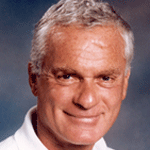
Ashley Bacot
President ProvInsure Inc.; Director, Risk Management Rosen Hotels & Resorts |
Ashley Bacot, President of ProvInsure, has a Bachelor of Science degree in Risk Management and Insurance from Florida State University, one of the leading universities and somewhat of a pioneer in the curriculum of Risk Management and Insurance.
Ashley has played an integral role in helping Rosen Hotels & Resorts develop a cutting edge self insured healthcare model to include an on-site patient centered medical home. This program has reduced the company’s healthcare costs to a mere fraction of its competitors while at the same time provides benefits that are far superior. Ashley has been instrumental in attracting national attention to this model with visits from the Chairman of the Congressional Subcommittee on Health, Katie Couric at CBS News, Fox and Friends and CNN to mention a few. This very model has saved Rosen Hotels & Resorts $340 million since its inception and it could reduce the nation’s healthcare cost by $1 trillion annually.
Ashley has become a sought after speaker at conferences on the topic of healthcare reform and maximizing ROI of on-site employee healthcare clinics. Most recently, Ashley has spoken at the World Healthcare Congress in Washington DC, Duke Journal of Gender Law & Policy Symposium; the Society of Insurance Research 39th Annual Conference and several World Research Group conferences, among others.
Ashley is married to his wife Cathy with whom he has two children Erin, age 19 and Casey, age 16. Ashley has lived in Central Florida for 30 years and is actively involved in community volunteering including, but not limited to, Canine Companions for Independence, Runway to Hope and the American Cancer Society’s Relay for Life.
|
|
Harris Rosen
Founder and President Rosen Hotels & Resorts |
Harris Rosen is the President & COO of Rosen Hotels & Resorts, the largest independently owned hotel chain in Florida.
After spending the early years of his career working for other major hotel groups, including Walt Disney World, Rosen purchased his first hotel in 1974. Since then, he has added eight hotels to his portfolio, for a total of six leisure hotels and three convention properties. Combined, Rosen Hotels & Resorts comprise more than 6,694 guest rooms, approximately six percent of Orlando’s total hotel inventory.
Rosen is a charter member of the UCF Board of Trustees. In 2000 he donated $18 million to the University of Central Florida to build the Rosen College of Hospitality Management. He also provided a $5 million scholarship endowment for UCF.
As well as Rosen’s commitment to UCF, he spearheaded the multi-million dollar Tangelo Park Program, which has provided more than 200 high school seniors with full college scholarships over the past 20 years. The program also provides a free preschool education for all 2-, 3- and 4-year-olds in the Tangelo Park neighborhood, a disadvantaged neighborhood in Central Florida, as well as parenting classes. In 2005, Oprah Winfrey presented Rosen with the President’s Award from the US Dream Academy at an event in Washington, D.C. for his work with this program. In the past few years, he has spearheaded a similar, five times larger program to benefit the Orlando urban neighborhood of Parramore. Here he also opened the 24-classroom Rosen Preschool at the OCPS Academic Center for Excellence.
In 2004, Rosen served as the Honorary Co-Chair of the Bethune-Cookman College Statue Project with the late Dr. Dorothy Height, President Emeriti of the National Council of Negro Women. The project raised funds to erect a monument to honor the legendary educator on the campus she founded which is Bethune-Cookman College, Daytona Beach, Fla.
Rosen is also a member of the Cornell Society of Hotelmen and the Waldorf Astoria Distinguished Alumni Association and is the past President of Visit Orlando. He is an honorary Tuskegee Airmen and holds an honorary Black MBA from the National Black MBA Association. He serves on the boards of numerous not-for-profit organizations throughout Florida including the Boys & Girls Club, the Boggy Creek Gang and the YMCA Aquatic Center.
Among numerous accolades, Rosen was named by the Orlando Business Journal as the "2017 CEO of the Year," Orlando Sentinel “2011 Central Floridian of the Year” and “2011 Cornell Entrepreneur of the Year ” by his alma mater. He was inducted into Visit Florida’s Tourism Hall of Fame in 2010. He has received Sustainable Florida’s Legacy Award for his contributions not only for his environmental efforts, but for his contributions to the local community and has been named an Orlando Business Journal “Healthcare Hero” and featured on national media outlets for his innovative healthcare program.
Rosen has four adult children that live in Orlando: Jack, Joshua, Adam and Shayna.
Master of Ceremonies
|
|
Ian Morrison
Author, Consultant, and Futurist |
Ian is an internationally known author, consultant, and futurist specializing in long-term forecasting and planning with particular emphasis on health care and the changing business environment. He combines research and consulting skills with an incisive Scottish wit to help public and private organizations plan their longer-term future.
Ian has written, lectured, and consulted on a wide variety of forecast¬ing, strategy, and health care topics for government, industry, and a variety of nonprofit organizations in North America, Europe, the Middle-East and Asia. He has spoken to a range of audiences from the boards of Fortune 100 companies to the Chinese Academy of Social Sciences in Beijing. Ian has worked with more than 100 Fortune 500 companies in health care, manufacturing, information technology, and financial services. Recent client sponsors include GE, Kaiser Permanente and the Mayo Clinic. He is a frequent commentator on the future for television, radio, and the print media.
Ian is the author of Leading Change in Healthcare: Building a Viable System for Today and Tomorrow (AHA Press, June 2011) and Healthcare in the New Millennium: Vision, Values and Leadership (Jossey-Bass, 2002). His previous book: The Second Curve - Managing The Velocity of Change (Ballantine, 1996) was a New York Times Business Bestseller and Businessweek Bestseller. Ian has co-authored several other books and chapters, including Future Tense: The Business Realities of the Next Ten Years (William Morrow, 1994) and Looking Ahead at American Health Care (McGraw-Hill, 1988). He also has co-authored numerous journal articles for publications such as Chief Executive, Encyclopaedia Britannica, Across the Board, The British Medical Journal, New England Journal of Medicine, and Health Affairs.
Ian is a past President of the Institute for the Future (IFTF). Ian is a founding partner in Strategic Health Perspectives a joint venture between Harris Interactive and the Harvard School of Public Health’s Department of Health Policy and Management. In 2017 the Strategic Health Perspectives team joined with Leavitt Partners (Health Intelligence Partners HIP program) a forecasting and intelligence service for clients in the healthcare industry. Ian serves as a Senior Advisor to Leavitt Partners and to HIP. From 1996-1999, Ian was retained by Accenture, (formerly Andersen Consulting), as Chairman of the Health Futures Forum. In that capacity, Ian chaired a number of international forums on the future of healthcare. Before coming to IFTF in 1985, Ian spent seven years in British Columbia, Canada, in a variety of research, teaching, and consulting positions.
Ian holds an interdisciplinary Ph.D. in urban stud¬ies from the University of British Columbia; an M.A. in geography from the University of Edinburgh, Scotland, and a graduate degree in urban planning from the University of Newcastle-upon-Tyne, England). He is a past director and chair of the California Health Care Foundation; a director of the new Martin Luther King Community Hospital in Los Angeles; a past director of the Health Research and Education Trust (HRET), the research and education arm of the American Hospital Association; and a past director of the Center for Healthcare Design. Ian currently serves on the Founder’s Council of United States of Care a new non-partisan non-profit movement to achieve long-lasting solutions that make health care better for everyone. He also serves on the Advisory Council of the Council of Accountable Physician Practices (an affiliate of the American Medical Group Association and served as a member of the Stakeholders Advisory Committee of the Program on Health System Improvement at Harvard University.

|
|
Ceci Connolly
President and Chief Executive Officer Alliance of Community Health Plans |
Ceci Connolly, a nationally-recognized health care leader, took over as president and CEO of the Alliance of Community Health Plans in January 2016. In her role, she works with some of the most innovative executives in the health sector to provide high-quality, evidence-based, affordable care. She is passionate about transforming America’s system to deliver greater value to all.
Connolly has spent more than a decade in health care, first as a national correspondent for the Washington Post and then in thought leadership roles at two international consulting firms. She is a leading thinker in the disruptive forces shaping the health industry and has been a trusted adviser to c-suite executives who share her commitment to equitable, patient-centered care.
She is co-author of the book “LANDMARK: The Inside Story of America’s Health Law and What it Means for Us All,” has covered six presidential campaigns and numerous natural disasters including Hurricane Katrina. She is the first non-physician to receive the prestigious Mayo Clinic Plummer Society award for promoting deeper understanding of science and medicine and in 2001 was awarded a fellowship to Harvard’s Kennedy School of Government.
For four years, Connolly served on the board of Whitman-Walker Health, a $26 million non-profit, community health center, assisting 15,000 clients a year. She is a founding member of Women of Impact (WOI) for Healthcare and serves on the national advisory committee of the Altarum Institute Center for Sustainable Health Spending. She is a graduate of Boston College.

|
|
Phil Jackson
Chief Executive Officer, Health Plan Products Sutter Health |
Jackson’s career has focused on health care transformation through integrated care delivery and financing. He’s held leadership roles in health plans, physician groups, clinical service lines, and strategy. As CEO of Health Plan Products, he oversees Sutter Health Plus, a commercial HMO; SutterSelect, Sutter Health’s self-insured plan for employees; and the Sutter Health | Aetna joint venture.
Jackson spent nearly 30 years with Washington-based Providence St. Joseph Health, the nation’s third largest not-for-profit health system that includes a successful health plan covering more than a half-million members. After leadership roles in Providence Health Plan, Jackson moved into medical group management. He served as Chief Operating Officer of Providence Medical Group and was promoted to Vice President of Physician Services at the system’s corporate office. Jackson concluded his tenure at Providence as the Chief Integration and Transformation Officer for Providence’s California region. Jackson served as President and CEO of Oregon’s Health CO-OP, a nonprofit, consumer-oriented and operated health plan, before joining the Sutter team. Jackson earned a bachelor’s degree from Portland State University and a master’s degree from the University of Texas at Austin.
|
|
Paul Kusserow
President and Chief Executive Officer Amedisys |
Paul Kusserow is the President and Chief Executive Officer for Amedisys and member of its Board of Directors. Mr. Kusserow, a healthcare industry veteran with deep expertise in driving growth strategies, most recently served as President and Vice Chairman of Alignment Healthcare, Inc., an integrated clinical care company focused on providing care to the Medicaid population. Prior to that, he served as Senior Vice President, Chief Strategy, Innovations and Corporate Development Officer of Humana, Inc., a Fortune 75 healthcare services and benefits company.
Mr. Kusserow’s experience also includes time as Managing Director and Chief Investment Officer of the Ziegler HealthVest Fund; Managing Director of San Ysidro Capital Partners, L.L.C.; and Managing Partner of Roaring Mountain, L.L.C. He began his healthcare career with Tenet Healthcare Corporation, one of the nation’s largest investor-owned healthcare service companies, where he spent seven years, the last four as Senior Vice President, Strategy and Ventures. Kusserow is on the boards of Connecture (Nasdaq: CNXR), Picwell, New Century Health, Matrix Medical Network and Dream Foundation Prior to Tenet, Mr. Kusserow was a consultant at McKinsey and Company, Inc. Mr. Kusserow received his Bachelor of Arts from Wesleyan University, where he was a member of Phi Beta Kappa, and his Master of Arts from Oxford University, where he was a Rhodes Scholar.
|
|
Karen Springer
President, Healthcare Operations Ascension Healthcare |
Karen Springer was named Ascension President, Healthcare Operations in 2017. In this role, Karen is accountable for the management oversight of Enterprise Excellence, which includes Performance Excellence and the Project Management Office (ePMO) as well as Ascension Healthcare’s small and medium Ministry Markets, delivering solutions to improve operating performance and achieve operating excellence for all ministries within those markets, and the successful execution of strategic operating priorities. Karen provides leadership and guidance across Ministry Markets’ ongoing efforts to explore new models of healthcare delivery to achieve operational excellence. Driven by the operating model, Karen plays a key role in evaluating and aligning each Ministry Market’s services and structure to help leverage Ascension’s collective resources in order to create maximum value for the communities served while ensuring financial stability and optimal operating performance.
Prior to her current position, Karen Springer served as Senior Vice President, Ascension Health/Tennessee Market Executive and President and CEO of Saint Thomas Health. In this role, Karen oversaw nine acute care hospitals, 97 primary care and specialty clinics, 17 ambulatory surgery centers, 14 outpatient imaging centers, 13 outpatient rehab clinics, five sleep centers and one post-acute partnership. While President and CEO, Springer implemented the clinical dyad leadership model to Saint Thomas Health and Saint Thomas Medical Partners, including both the chief clinical officer role partnered with the chief operating officer, and the chief medical officer role partnered with the chief executive officer. She also established a chief nursing officer role for Saint Thomas Health in 2017. Springer focused heavily on new systems for population health management by assisting in the launch of an accountable care organization, MissionPoint Health Partners to launch the journey for clinical integration system of care.
Springer also served as Saint Thomas Health President and Chief Operating Officer with responsibility for operational success and effectiveness of Saint Thomas Health hospital facilities, physician practices and numerous joint ventures. Saint Thomas Health inpatient facilities include four acute care facilities ranging from 30 to 500 beds, a critical access hospital, long-term care facility and a joint venture specialty hospital complemented by joint-venture acute care hospitals and a robust network of community health clinics, medical practices, imaging centers and outpatient rehabilitation services.
Springer joined Saint Thomas Health in 2011 after serving as Executive Vice President/Chief Operating Officer at Lutheran Hospital of Indiana for four years. While there, she was administratively responsible for the operations of a 400-bed acute care hospital, providing key leadership of 16 division directors and more than 2,000 associates. Springer began her healthcare leadership career in the Lutheran Hospital System in Fort Wayne, Indiana, serving first as Director for cardiovascular and medical/surgical ICUs. From 1997 to 2000, she was Chief Nursing Officer for the Rehabilitation Hospital in Fort Wayne with direct responsibility for hospital operations and for multiple patient care departments in a setting focused on restoration of abilities. For Dupont Hospital, she held increasingly responsible positions and was responsible for construction of a new $52 million facility, serving as both Chief Operating Officer and Chief Nursing Officer.
Springer received her Associate of Science degree in Nursing from Germanna College in Virginia and her Bachelor of Science in Business Administration from Indiana Wesleyan University. She completed her Master of Science degree in Administration at Ball State University.
Springer is active in the Middle Tennessee community, serving as the Board Chair for Habitat for Humanity of Greater Nashville, Board Member of the Nashville Area Chamber of Commerce, Nashville Healthcare Council, Nashville Health, Tennessee Hospital Association, Center for Medical Interoperability and the Tennessee Business Roundtable. She also serves on the Boards of Saint Thomas Health, Saint Thomas Rutherford, River Park Hospital, DeKalb Community Hospital and Stones River Community Hospital. She serves on the board of advisors for the University of Kentucky MHA. And she is a member of Sigma Theta Tau, the International Honor Society of Nursing.
Springer resides in Nashville with her husband of 38 years, Brad. They have one amazing son who practices law in New Mexico and is married to a beautiful woman with whom he has two very busy boys.

|
|
Matt Wallaert
Chief Behavioral Officer Clover Health |
Matt Wallaert is a behavioral scientist working at the intersection of technology and human behavior, designing products and programs that help people live happier, healthier lives and teaching others to do the same. An advocate for behavior change as the outcome of everything, he has a checkered past: academia, building and selling two successful startups, Microsoft's first behavioral scientist, director at Microsoft Ventures. He is currently the industry's first Chief Behavioral Officer at Clover Health, an insurance company focused on health outcomes. Wallaert sits on the board of a variety of startups and non-profits, prioritizes underrepresented founders and audiences, and continues to build side products like GetRaised.com, which has helped underpaid women ask for and earn over $2.3B in salary increases. And more important than all of that, he's a proud dad to a son named Bear.
Moderator:
|
|
Ceci Connolly
President and Chief Executive Officer Alliance of Community Health Plans |
Ceci Connolly, a nationally-recognized health care leader, took over as president and CEO of the Alliance of Community Health Plans in January 2016. In her role, she works with some of the most innovative executives in the health sector to provide high-quality, evidence-based, affordable care. She is passionate about transforming America’s system to deliver greater value to all.
Connolly has spent more than a decade in health care, first as a national correspondent for the Washington Post and then in thought leadership roles at two international consulting firms. She is a leading thinker in the disruptive forces shaping the health industry and has been a trusted adviser to c-suite executives who share her commitment to equitable, patient-centered care.
She is co-author of the book “LANDMARK: The Inside Story of America’s Health Law and What it Means for Us All,” has covered six presidential campaigns and numerous natural disasters including Hurricane Katrina. She is the first non-physician to receive the prestigious Mayo Clinic Plummer Society award for promoting deeper understanding of science and medicine and in 2001 was awarded a fellowship to Harvard’s Kennedy School of Government.
For four years, Connolly served on the board of Whitman-Walker Health, a $26 million non-profit, community health center, assisting 15,000 clients a year. She is a founding member of Women of Impact (WOI) for Healthcare and serves on the national advisory committee of the Altarum Institute Center for Sustainable Health Spending. She is a graduate of Boston College.
|
|
Akram Boutros, MD
President and Chief Executive Officer MetroHealth |
In his four years as the President and CEO of MetroHealth, the public health system in Cleveland, Akram Boutros, MD, FACHE, has galvanized political leaders, entrepreneurs and the public around supporting community-wide health care many had taken for granted.
With his unwavering commitment to delivering high-quality health care to everyone in Cuyahoga County, Akram Boutros has achieved what many thought was impossible. Under his leadership, The MetroHealth System went to market on its own credit in 2017 and sold $946 million in bonds to rebuild its hospital, revitalize its main campus and resurrect its West Side neighborhood.
That is just one piece of the unprecedented transformation of Cuyahoga County’s public health care system Dr. Boutros has piloted since he arrived at MetroHealth in 2013.In the four years since, he has created an Integrated Delivery System that provides care at more than 20 community health centers, four emergency departments, four clinics in Discount Drug Mart stores, five MetroExpressCare locations and nine pharmacies. Those are in addition to MetroHealth’s main-campus hospital, which is home to the area’s most experienced Level I Adult Trauma Center, a Level II Pediatric Trauma Center, one of two adult and pediatric burn centers in the state and Ohio’s only Ebola Treatment Center.
Now a more than $1 billion operation, MetroHealth and its caregivers treat patients at more than 1.3 million visits a year. In the past four years, The MetroHealth System has also created more than 1,200 additional jobs, sent doctors into a dozen Cleveland schools and constructed an $82 million addition to its Critical Care Pavilion. Annual operating revenues have grown from $783 million in 2012 to $1 billion in 2016. And last year, MetroHealth returned $226 million – 22 percent of its operating expenses – to Cuyahoga County in free care and community benefit programs. That is 2.5 times the national average. An internist with a 25-year record of successful hospital leadership at academic medical centers, community hospitals and specialty hospitals, Dr. Boutros cultivates personal relationships throughout the hospital system and the community along with an atmosphere of personal excellence for everyone he works with.
A graduate of St. John’s University, SUNY Downstate Medical Center and Harvard Business School’s Advanced Management Program, he has led organizations through strategic repositioning, operational redesign, clinical and physician integration and population-health and risk-contracting programs. He sees collaboration with other health systems, organizations and local residents as a key driver in fulfilling MetroHealth’s mission of leading the way to a healthier community.
|
|
Martin Otto
Current Board of Director and Former Chairman National Association of Chain Drug Stores (NACDS); Chief Operating Officer H-E-B |
Martin Otto is currently on the Board of Directors for the National Association of Chain Drug Stores (NACDS) and served as its Chairman from 2016-2017. In these roles, Mr. Otto works with the NACDS leadership to shape pharmacy industry policy and inspire NACDS’ members to embrace an increasingly larger set of responsibilities as health care providers, businesses and corporate citizens.
Known to his colleagues for his candid assessment and broad vision, Mr. Otto relies on his extensive experience and background to help advance pharmacy’s leadership position in the U.S. healthcare system. Mr. Otto currently serves as Chief Operating Officer of H-E-B, a $23 billion supermarket/pharmacy chain operating in Texas and Mexico. H-E-B is #13 on the 2016 Forbes list of America’s largest private companies and is among the more than 100 NACDS chain member companies, comprised of traditional drug stores, supermarkets and mass merchants with pharmacies.
Mr. Otto is a strong believer in the potential for collaborating at the national and local level to design healthcare solutions by confronting an array of socio-economic challenges. With 40,000 chain pharmacies industry-wide, employing 178,000 pharmacists who interact with these concerns on a daily basis, Mr. Otto sees pharmacy care as a key health care element.
In his 26 years with H-E-B, Mr. Otto has held numerous leadership roles in merchandising, store operations and finance, serving most recently as Chief Merchant and Chief Financial Officer, and serving earlier in his career in a variety of store management roles. He continues to mentor H-E-B’s key leaders, contributing his in-depth knowledge to assessing opportunities across the company’s operations.v
Mr. Otto's past professional experience also includes real estate investment banking and public accounting. He is a graduate of the University of Virginia and Harvard Business School.

|
|
Harold L. Paz, MD
Executive Vice President and Chief Medical Officer Aetna |
Harold L. Paz, M.D., M.S., is executive vice president and chief medical officer for Aetna. He leads clinical strategy and policy at the intersection of all of Aetna’s domestic and global businesses. He is responsible for driving clinical innovation to improve member experience, quality and cost in all areas of the health care delivery system. Reporting to Aetna’s Chairman and CEO, he is a member of the company’s executive committee.
Before joining Aetna in 2014, Dr. Paz served as chief executive officer of Penn State Hershey Medical Center and Health System, senior vice president for Health Affairs for Penn State University, dean of its College of Medicine and professor of medicine and public health sciences for eight years. His vision for health care transformation at Penn State led to the formation of an integrated healthcare system of four hospitals, 64 ambulatory care practices and 18 affiliated hospitals focused on population health across central Pennsylvania. Prior to his appointment to Penn State, he spent 11 years as dean of the Robert Wood Johnson Medical School and chief executive officer of Robert Wood Johnson University Medical Group, the largest multispecialty group practice in New Jersey where he was professor of medicine.
Dr. Paz has focused his research and teaching on clinical outcomes, health care effectiveness and employee health benefit design. A pioneer in the field of quality management, Dr. Paz was among the first to study clinical outcomes in the intensive care unit. From this early work, he recognized the need to formally train physicians in quality, and in 1993 he started the first fellowship of its kind in quality management. Currently, he is professor adjunct of internal medicine at Yale University School of Medicine and remains clinically active in pulmonary medicine at the West Haven Veteran’s Administration Hospital. He serves on the National Academy of Medicine (NAM) Leadership Consortium and the NAM Roundtable on Quality Care for People with Advanced Illness.
A fellow of the American College of Physicians and the American College of Chest Physicians, Dr. Paz is currently on the boards of United Surgical Partners International, Research!America and the National Health Council. Dr. Paz is past chair of the Board of Directors of the Association of Academic Health Centers and a former member of the Association of American Medical Colleges (AAMC) and the University Health System Consortium boards of directors. He previously was chair of the AAMC Council of Deans administrative board and has served on the AAMC executive council, in addition to corporate and scientific advisory boards in the biotechnology field. He has authored more than 85 publications, including peer-reviewed research and quality articles, chapters, commentaries and abstracts. He is the recipient of numerous awards and an honorary degree.
Dr. Paz received his bachelor's degree from the University of Rochester, a master of science in life science engineering from Tufts University, and his medical degree from the University of Rochester School of Medicine and Dentistry. He completed his residency at Northwestern University, where he served as chief medical resident and instructor in clinical medicine. He was a Eudowood Fellow in pulmonary and critical care medicine at Johns Hopkins Medical School. In addition, he was a post-doctoral fellow in environmental health science at Johns Hopkins School of Hygiene and Public Health.

|
|
William Shrank, MD
Chief Medical Officer UPMC Health Plan |
Moderator:
|
|
Ian Morrison
Author, Consultant, and Futurist |
Ian is an internationally known author, consultant, and futurist specializing in long-term forecasting and planning with particular emphasis on health care and the changing business environment. He combines research and consulting skills with an incisive Scottish wit to help public and private organizations plan their longer-term future.
Ian has written, lectured, and consulted on a wide variety of forecast¬ing, strategy, and health care topics for government, industry, and a variety of nonprofit organizations in North America, Europe, the Middle-East and Asia. He has spoken to a range of audiences from the boards of Fortune 100 companies to the Chinese Academy of Social Sciences in Beijing. Ian has worked with more than 100 Fortune 500 companies in health care, manufacturing, information technology, and financial services. Recent client sponsors include GE, Kaiser Permanente and the Mayo Clinic. He is a frequent commentator on the future for television, radio, and the print media.
Ian is the author of Leading Change in Healthcare: Building a Viable System for Today and Tomorrow (AHA Press, June 2011) and Healthcare in the New Millennium: Vision, Values and Leadership (Jossey-Bass, 2002). His previous book: The Second Curve - Managing The Velocity of Change (Ballantine, 1996) was a New York Times Business Bestseller and Businessweek Bestseller. Ian has co-authored several other books and chapters, including Future Tense: The Business Realities of the Next Ten Years (William Morrow, 1994) and Looking Ahead at American Health Care (McGraw-Hill, 1988). He also has co-authored numerous journal articles for publications such as Chief Executive, Encyclopaedia Britannica, Across the Board, The British Medical Journal, New England Journal of Medicine, and Health Affairs.
Ian is a past President of the Institute for the Future (IFTF). Ian is a founding partner in Strategic Health Perspectives a joint venture between Harris Interactive and the Harvard School of Public Health’s Department of Health Policy and Management. In 2017 the Strategic Health Perspectives team joined with Leavitt Partners (Health Intelligence Partners HIP program) a forecasting and intelligence service for clients in the healthcare industry. Ian serves as a Senior Advisor to Leavitt Partners and to HIP. From 1996-1999, Ian was retained by Accenture, (formerly Andersen Consulting), as Chairman of the Health Futures Forum. In that capacity, Ian chaired a number of international forums on the future of healthcare. Before coming to IFTF in 1985, Ian spent seven years in British Columbia, Canada, in a variety of research, teaching, and consulting positions.
Ian holds an interdisciplinary Ph.D. in urban stud¬ies from the University of British Columbia; an M.A. in geography from the University of Edinburgh, Scotland, and a graduate degree in urban planning from the University of Newcastle-upon-Tyne, England). He is a past director and chair of the California Health Care Foundation; a director of the new Martin Luther King Community Hospital in Los Angeles; a past director of the Health Research and Education Trust (HRET), the research and education arm of the American Hospital Association; and a past director of the Center for Healthcare Design. Ian currently serves on the Founder’s Council of United States of Care a new non-partisan non-profit movement to achieve long-lasting solutions that make health care better for everyone. He also serves on the Advisory Council of the Council of Accountable Physician Practices (an affiliate of the American Medical Group Association and served as a member of the Stakeholders Advisory Committee of the Program on Health System Improvement at Harvard University.
Moderator:
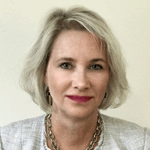
|
|
Heidi L. Gautier
VP of Commercial Operations, Thyroid Sonic Healthcare USA |
Heidi Gautier is a Senior Commercial Executive with unparalleled insight and understanding of Thyroid Oncology; deep understanding of the marketplace for novel therapeutics and diagnostics; and extensive experience of market development for new tests and treatments for patients with rare diseases.
Heidi is the Director of Strategic Markets (Thyroid) for CBLPath, a SONIC Healthcare Company, and a National leader in Thyroid Cytopathology, processing and interpreting over 35,000 specimens per year, with market leading accuracy and precision, and amongst the lowest Indeterminate rates in the country. Heidi leads CBLPath’s marketing strategy for ThyroSeq, a paradigm changing molecular solution for clarification of indeterminate thyroid cytology, which harnesses recent advances in the understanding of the genetic mechanisms of thyroid cancer, coupled with Next Generation Sequencing technology to assess literally hundreds of mutations and genetic rearrangements, in the contents of a single needle pass from a thyroid FNA biopsy.
Before joining CBLPath, Heidi successfully supported the launch of Veracyte’s Afirma assay, and market placement and expansion of Asuragen’s miRInform assay, both of which target the indeterminate thyroid cytopathology market, giving her a unique and comprehensive experience in this field. Previously, she launched Genzyme’s Thyrogen (recombinant human Thyrotropin), initially introduced as a rare-disease niche product, which she grew into a $100M per year business. As the leader of Genzyme's market development group, Heidi then led the company's efforts to create and support patient advocacy groups, to enhance disease awareness; and partnered with Key Opinion Leader physicians to tailor treatment guidelines to incorporate new therapies, with the goal of improving patient care in endocrine, cardiology and rare disease markets.
Heidi has extensive experience leading commercial operations, sales, marketing, market development and KOL relationship management, positioning her uniquely to drive the adoption of novel therapeutics and companion diagnostic tests across a range of disease states.
Panelists:
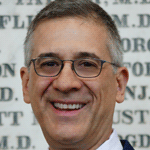
|
|
Steven Hodak, MD
Associate Director: Division of Diabetes, Endocrinology and Metabolism NYU School of Medicine; Endocrinology Section Chief, NYU Langone Medical Center |

|
|
Bryan McIver, MD
Deputy Physician-in-Chief Moffitt Cancer Center |
Dr. McIver received his MB ChB degree from the University of Edinburgh Medical School in Scotland, following undergraduate work in Edinburgh and a PhD in Physiology and Biophysics at the University of Vermont. He completed an Internal Medicine Residency at the Royal Infirmary of Edinburgh, followed by a Clinical Fellowship and Clinical Investigator Fellowship in Endocrinology at the Mayo Graduate School of Medicine in Rochester, MN.
Dr. McIver joined the staff of Mayo Clinic in 1998 and spent 15 years as a Consultant in Endocrinology and Internal Medicine at the Mayo Clinic and Foundation, with 7 of those years as Chairman of the Mayo Clinic Thyroid Group. In 2011, he was appointed as a founder member of the Endowed and Master Clinician Program at the Mayo Clinic in Rochester, Minnesota, recognizing excellence in patient care. In 2013, he moved to Moffitt Cancer Center, to become the Program Leader of the Endocrine Tumor Program. His success in team-building led to an appointment as Interim Chair of Moffitt’s newly created Department of Head and Neck, and Endocrine Oncology. He then assumed leadership responsibility as the Interim Chair of the Department of Breast Oncology, pending recruitment of a new Department Chair. He was subsequently appointed as Deputy Physician in Chief of the Moffitt Medical Group. In this role, he has assumed responsibility for Physician engagement in Moffitt’s Clinical Pathways, which define clinical standards of care.
During his almost 20 years of clinical practice, Dr. McIver gained broad experience in the evaluation and management of patients with thyroid nodules and thyroid cancer, with a particular focus on advanced and aggressive forms of thyroid cancer. He has a long-standing basic research interest in the genetic regulation of growth, invasion and spread of thyroid tumors of all types. His primary research focus is the use of genetic and molecular techniques to: improve the accuracy of diagnosis of thyroid nodules; more accurately predict outcomes in the disease; tailor appropriate treatment to a patient’s unique needs; and guide the use of novel therapies for progressive and life-threatening disease.
Dr. McIver received two Mayo Clinic “Teacher of the Year” awards, recognizing his commitment to education of medical students, residents and fellows. He is a founding member of the World Congress on Thyroid Cancer, a quadrennial International meeting, now the largest such meeting in the World.
Amongst his most proud accomplishments was the creation of the Department of Head and Neck, and Endocrine Oncology at Moffitt Cancer Center, now recognized as a World leader in the management of patients with thyroid cancer and other Endocrine malignancies.
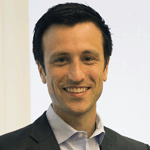
|
|
Michael Rea
Chief Executive Officer Rx Savings Solutions |
Dr. Michael Rea formed Rx Savings Solutions in 2008 after routinely witnessing consumers struggling to pay for their medications. Working as a pharmacist, he quickly noticed that consumers were paying much more than they needed to for their prescriptions, which was attributable to a lack of information available to them. He was compelled to help, and identified savings opportunities made possible by providing a transparent view of current costs and ways to reduce those costs to the consumer. In addition to the savings Rx Savings Solutions identifies for consumers, their employers and insurers also benefit greatly. Since inception, Rx Savings Solutions has operated with the goal of bringing price transparency and advocacy to the market.
With his many years of experience as a retail pharmacist, Dr. Rea possesses a unique understanding on creating an effective approach for consumers to follow. While acting as a pharmacy manager, he learned the inner workings of the business. During that same time, he was directly responsible for dispensing tens of thousands of prescriptions on a yearly basis. This experience and interaction with customers provided invaluable insight when developing a solution that takes into account the many barriers, breakdowns, and unforeseen misinformation a consumer might receive. In addition, he also held a position as a specialty pharmacist in the Clinical Management Division for a major health insurance carrier. This position provided him exposure to specialty pharmacy, the issues consumers face paying for these high cost medications and solutions available.
Dr. Rea founded and has led the company through its initial growth phase of advancing the functionality of automated processes, user experiences, and securing its first major contract. Dr. Rea has been involved with research surrounding pharmacy transparency for over 10 years and was a researcher and/or a co-author on several scholarly published papers focused around this topic. His many years of experience developing a pharmacy transparency tool make him the earliest mover in the industry. Dr. Rea and Rx Savings Solutions were recently featured in Bloomberg Businessweek.
Dr. Rea attended the University of Minnesota, Morris where he completed his pre-pharmacy coursework. He received his Doctor of Pharmacy degree from the Creighton University School of Pharmacy and Health Professions.

|
|
Greg Sweat, MD
Chief Medical Officer Blue Cross and Blue Shield of Kansas City |
Dr. Greg Sweat is the Vice President and Chief Medical Officer at Blue Cross and Blue Shield of Kansas City (Blue KC). Dr. Sweat is responsible for helping the company provide value to members, partners and the community through innovative and efficient patient care of the highest quality.
In his previous role as Chief Medical Officer at the Shawnee Mission Physicians Group, Dr. Sweat directed all facets of the multi-specialty group’s services consisting of more than 100 providers in 25 practices serving more than 225,000 patients per year. Dr. Sweat also taught as an Assistant Professor at the University of Kansas Department of Family Medicine. He also served as a consultant in the Mayo Clinic’s Department of Family Medicine.
A respected leader in the industry, Dr. Sweat has received numerous awards for his medical stewardship throughout his career. Most recently he was awarded the Stewardship Award from Shawnee Mission Health. He has also been included in Ingram’s Magazine 40 under 40 list of local outstanding professionals. Dr. Sweat was also presented with the Excellence in Teaching Award and the Clinician Educator Award from Mayo Medical School.
Dr. Sweat sits on the board of the Kansas City Quality Improvement Consortium. He is a member of local professional association chapters including the Medical Group Management Association (MGMA), the American Academy of Family Physicians (AAFP), and the American Medical Association (AMA).
Dr. Sweat earned his Doctor of Medicine from the University of Kansas. He also received a Master of Health Administration from the University of Missouri-Columbia. Dr. Sweat also received his Bachelor of Science in Business Administration from the University of Kansas.
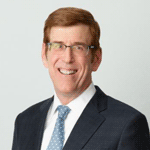
|
|
Gene Cronin
Vice President Priority Advantage |
Gene Cronin is the vice president of Priority Advantage, LLC., a Medicare Advantage (MA) services company offered by Priority Health, a national leader in Medicare Advantage. Priority Advantage provides a full suite of Medicare Advantage administrative services, both end-to-end and targeted services, to help health systems and health plans start and manage their MA plan to achieve profitable growth and maximize value capture.
Gene joined Priority Health in 2010 as vice president of Product and Market Development and led the development and implementation of Priority Health’s Affordable Care Act strategy resulting in Priority Health being selected as Michigan’s benchmark plan. Before assuming responsibility for the development and management of Priority Health’s Priority Advantage business unit, Gene was Priority Health’s Chief Marketing Officer and led all branding, marketing, and corporate communication functions.

|
|
Donald Tuitel
Director, Business Development Priority Advantage |
Don Tuitel is Director, Business Development for Priority Advantage, LLC., a Medicare Advantage (MA) services company offered by Priority Health, a national leader in Medicare Advantage. Priority Advantage provides a full suite of Medicare Advantage administrative services, both end-to-end and targeted services, to help health systems and health plans start and manage their MA plan to achieve profitable growth and maximize value capture.
Don joined Priority Health in spring 2017 as Director, Business Development to lead and drive growth of Priority Health’s Priority Advantage business unit, by leveraging the success that Priority Health has experienced as a national leader in Medicare Advantage. Don will be helping other health systems and health plans maximize their success in this challenging market.

|
|
Martino Luu
Senior Vice President and General Manager HealthSmart Rx Solutions |
In his role as General Manager of HealthSmart Rx Solutions, Martino oversees HealthSmart’s High Cost Specialty Drug Management program for plan sponsors, health plans, and at risk provider groups. Martino advances HealthSmart’s capabilities to manage the ever increasing cost of specialty drugs. Specialty spend under the medical benefit will average $308 annually per person in 2017, representing approximately 40% of the total drug spend. Currently, management of specialty drug spend on the medical benefit has been minimal compared to the pharmacy benefit until now. Healthsmart Rx Solutions now offers plan sponsors and payers an array of options to manage and control them. Those solutions include additional drug discounts by leveraging our preferred specialty pharmacy network, utilization management tools, medical claims edits, specialty drug medical rebates, and integrated coupon and patient assistance program access to reduce plan spend.
Prior to joining HealthSmart Rx Solutions, Martino was a member of the senior leadership team at DaVita Rx, the specialty pharmacy unit of DaVita, which is the largest provider of kidney care in the United States. He previously held senior leadership positions at Diplomat Specialty Pharmacy (Vice President of Innovation), the nation’s largest independent specialty pharmacy, and Medco Health Solutions (Business Process Champion).
Martino graduated from pharmacy school at Rutgers University and completed his MBA in Entrepreneurship at Fairleigh Dickinson University’s Silberman School of Business.
The importance of automation in health care has increased dramatically. Despite more demand for value-based care, improved patient outcomes, regulations, global competition, pricing pressure and the need for more precision medicines, the U.S. market is poised for a technology transition that will aid future business; it is already a major contributor to the growth of AI in health care. In this sessions attendees explore critical questions like:
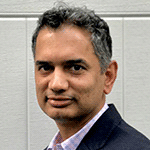
|
|
Venky Ananth
Vice President, Health Care Infosys |
Venky is a senior Client Partner in Infosys’ Healthcare Industry Vertical. In this role, he is responsible for business profitability and growth at Infosys’ global HealthCare clients, particularly Fortune 50 clients. He manages critical relationships with senior client executives, industry analysts and anchors talent development of key Infosys personnel. He is responsible for crafting and delivering business and technology solutions to client business problems with his deep understanding of Healthcare business and technology.
Previously, Venky was the global delivery head for Infosys Digital transformation Practice focused on the Retail and Consumer Industry. Under his leadership the Digital practice delivered double digit growth. As Practice head he was responsible for Practice P&L;, Project/Program delivery, competency development and talent management in areas of Digital Commerce, Digital Marketing and Content management, Supply Chain, Integration technologies and Business Intelligence.
Venky has spent over 21 years with Infosys and has broad experience spanning multiple industries and geographies. He has won a multitude of excellence awards and Gold standard awards for outstanding achievement ranging from thought leadership in the industry to client management. He holds a undergraduate degree in mechanical Engineering and an executive leadership program from Stanford graduate school of business.
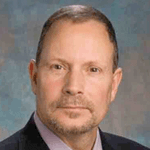
|
|
Jay Atkin
VP, Medicaid Business/Program Delivery Aetna Inc. |
Jay Atkin currently serves as Vice President of Medicaid Business / Program Delivery. He is accountable for Information Technology (IT) business solutions supporting over 3 million members.
Previously Jay led Medicare, Senior Supplemental Insurance and FEDS Technology teams. Prior to that, he was accountable for the Enterprise Quality Assurance (QA) organization. In that role he drove results to best-practice levels, and initiated and executed the first IT managed services contract as well as several other progressive programs enhancing business value. Prior to QA, Jay led the IT Enterprise Production Maintenance teams, instituting programs to increase return on investments across technology products, significantly improved turn-a-round times on business related level one and two incidents and drove the application sunset program, retiring over 125 systems.
Prior to IT Production Maintenance, Jay held a variety of progressively responsible technical and service related roles in the Infrastructure Services organization.
Jay has a variety of college experiences focused primarily on Information Technology.
An increasingly digital marketing environment has brought with it the ability for rapid, unpredicted changes and the need for quick trajectory shifts. See how to use the information you have in a more robust database, or how to get the data you might still need, to prepare contingency plans for swift changes.

|
|
Kurt Waltenbaugh
Founder and CEO Carrot Health, Inc. |
Kurt Waltenbaugh is a serial entrepreneur with a career focused on the consumer: using data to predict and influence behavior. Understanding consumer behavior, Kurt has built successful analytic solutions, products and companies in the health care, retail, education, and credentialing industries.
His previous companies were sold to Oracle and Pearson Education. Most recently, Kurt was responsible for product strategy at Optum, Inc. (UnitedHealth Group), building data analytic businesses for the provider, payer and employer markets.
When not working with customers, Kurt is with his wife, guiding their three children toward adulthood, and planning their next winter camping trek into Minnesota's Boundary Waters (BWCAW).
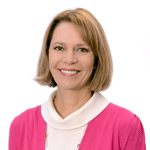
|
|
Brooke Brownlow
Group Vice President, Total Rewards H-E-B |
|
|
Martin Otto
Current Board of Director and Former Chairman National Association of Chain Drug Stores (NACDS); Chief Operating Officer H-E-B |
Martin Otto is currently on the Board of Directors for the National Association of Chain Drug Stores (NACDS) and served as its Chairman from 2016-2017. In these roles, Mr. Otto works with the NACDS leadership to shape pharmacy industry policy and inspire NACDS’ members to embrace an increasingly larger set of responsibilities as health care providers, businesses and corporate citizens.
Known to his colleagues for his candid assessment and broad vision, Mr. Otto relies on his extensive experience and background to help advance pharmacy’s leadership position in the U.S. healthcare system. Mr. Otto currently serves as Chief Operating Officer of H-E-B, a $23 billion supermarket/pharmacy chain operating in Texas and Mexico. H-E-B is #13 on the 2016 Forbes list of America’s largest private companies and is among the more than 100 NACDS chain member companies, comprised of traditional drug stores, supermarkets and mass merchants with pharmacies.
Mr. Otto is a strong believer in the potential for collaborating at the national and local level to design healthcare solutions by confronting an array of socio-economic challenges. With 40,000 chain pharmacies industry-wide, employing 178,000 pharmacists who interact with these concerns on a daily basis, Mr. Otto sees pharmacy care as a key health care element.
In his 26 years with H-E-B, Mr. Otto has held numerous leadership roles in merchandising, store operations and finance, serving most recently as Chief Merchant and Chief Financial Officer, and serving earlier in his career in a variety of store management roles. He continues to mentor H-E-B’s key leaders, contributing his in-depth knowledge to assessing opportunities across the company’s operations.v
Mr. Otto's past professional experience also includes real estate investment banking and public accounting. He is a graduate of the University of Virginia and Harvard Business School.
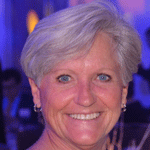
|
|
Gale Adcock, RN, FNP
Chief Health Officer SAS Institute |
As chief health officer for SAS Institute Gale Adcock is responsible for all operations of the onsite health care center at HQ in Cary, NC; serves as media spokesperson for health and wellness issues; partners with Benefits for enhancements to SAS’ self-funded medical and drug plans; and speaks, writes and conducts research on the SAS model of onsite health care delivery.
Adcock is a family nurse practitioner of 30 years and has been at SAS since 1991.
|
|
Angela Mitchell
Leader, US Health Care Delivery Intel Corporation |
Angela has many years of experience challenging the status quo to improve healthcare in the US. Her Executive Masters in Public Administration is focused on health care transformation through federal and state policy and reform initiatives. In the health care industry she focused on Patient Centered Medical Home designs and created a team-based leadership model that was adopted across 5 states. She also created new creative wats to drive improvements through the patients perspectives, bringing them across the table with the health care system executives to demand improvements, and it worked. These programs are now running across the state of OR and are embedded into all primary care and hospital practices.
For the past several years, Angela has been leading innovative, employer-led ACO models for Intel in the US. No other large employer has this direct contracting relationship with local health care systems, so to build them all took strong leadership and partnership. The most recent data shows how the vision behind the ACO models is working, achieving Triple Aim outcomes: reducing costs, improving health outcomes, and getting high member satisfaction and engagement rates. Angela is a passionate leader in health care that brings the right people around the table to make the impossible happen.
|
|
David Contorno
President Lake Norman Benefits |
David Contorno is President of Lake Norman Benefits, now part of the Hilb Group and one of the employee benefit practice leaders inside this now top 40 largest insurance agency. As a native of New York, David began his career in the insurance industry at the age of 14, and has since become a leading expert in the realm of employee benefits over the last 21 years. The Hilb Group continues to grow organically by ensuring all management is handled locally, providing top notch solutions and supports, and through strategic acquisitions.
Among his many accolades, David received a Broker Spotlight in 2004 and was recognized as an outstanding Broker of Service in 2005 through 2014 by Blue Cross Blue Shield. He has continually received the Echelon Award by United Healthcare since 2003, reserved for the top 1% of agents nationally, and was a 2015 "40 Under 40" Award Winner presented by Charlotte Business Journal. Most recently, David was Benefits Selling Magazine's 2015 Broker of the Year and, in March 2016, Forbes deemed him "One of America's Most Innovative Benefits Leaders."
David is a member of the Board of Directors for both the Charlotte Association of Health Underwriters and Healthreach Community Clinic. He served on the NC Insurance Commissioners Life and Health Agent Advisory Committee, as well as participated in the Technical Advisory Group that helped with the Market Reforms required under the Affordable Care Act in North Carolina. He is a long-time member of the Lake Norman and South Iredell Chambers of Commerce as well as the National, North Carolina, New York and Long Island Associations of Health Underwriters. David contributes to numerous publications, including Forbes, Benefits Selling Magazine, Business Leader Magazine and Insurance Thought Leadership.
David is committed to giving back to his community and actively participates in the membership drive for the United Way, assisting the local chapter of Habitat for Humanity, and supporting The Dove House Child Advocacy Center. When he is not working, he enjoys boating, traveling, and being with his wife, Heather, and their two children, Hannah and Ethan.
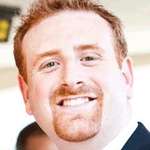
|
|
Vincent Esposito
Chief Strategy and Business Development Officer BuffCo Holdings |
Vincent Esposito is Chief Operating Officer of the New York based-company, Endeavor Plus, Inc., where he has a wide range of responsibilities covering all aspects of the company’s day-to-day operations, particularly those that are financially-related. He joined the company in 2014 after a decade of diversified experience working as a financial investment analyst.
Prior to joining Endeavor Plus, Vincent was a Senior Analyst with Wexford Capital in Greenwich, CT. At the time, Wexford Capital managed $6B in assets, invested globally and approached the market with a thematic lens and coupled this perspective with fundamental analysis to identify trends across sectors and invested in best-of-breed names by triangulating information through multiple avenues to develop unique opportunities in the public market, based on proprietary work.
Mr. Esposito began his Wall Street career at SES Partners (formerly Circle-T Partners) in New York as a Research Analyst. At SES Partners, he married their tactical strategy with fundamental analysis for their US Long/Short Opportunistic Equity Fund. He worked to identify inflection points & catalysts for specific investments through his research with C-Suite industry executives, as well as both buy and sell side specialists.
As a Presidential Scholar at Siena College, Loudonville, NY, Mr. Esposito graduated with a Bachelor of Science Degree in Finance.
|
|
Lee Lewis
Area Vice President and Managing Director, Innovation Lab Practice Arthur J. Gallagher |
Lee Lewis runs Gallagher’s Innovation Lab practice, a mission-driven group devoted to improving the cost, quality and design of American healthcare. Lee advises several health startups working to solve meaningful healthcare problems.
The Innovation Lab has a track record of breakthroughs. It leads the effort to bring sophisticated health plan audits to private employers. It pioneered specialty drug direct purchasing without using a PBM. His team led a grassroots effort to identify all independent freestanding Emergency Rooms in Texas. The innovation lab developed the first HSA compliant model for back and joint pain prevention, and is piloting first-ever ultra-high value virtual networks in 2018 in two major U.S. cities.
His current and past clients include American Airlines, Comcast NBC Universal, Albertson’s Grocery Stores, Home Depot, Abbot Laboratories and dozens of other large and jumbo employers.
Lee is a Rhodes Scholar Nominee. He graduated Second in his Class, Magna cum Laude with University Honors in Accounting from Brigham Young University.
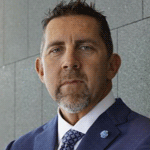
|
|
Dr. Josh Luke, PhD
Healthcare Futurist; Faculty, University of Southern California; Contributor, Forbes; Author, Health-Wealth: Is Healthcare Bankrupting Your Business? 9 Steps to Financial Recovery |
Dr. Josh D. Luke has more than ten years senior healthcare operations experience, including eight years as a hospital CEO. Most recently he is credited for designing Total Wellness Torrance (TWT Model), an innovative re-admission prevention protocol for Torrance Memorial Medical Center. TWT includes a unique Emergency Department triage system that quickly evaluate re-admit candidates to confirm compliance and utilization of previously offered post-acute transitional services, while seeking alternative levels of care for the patient to prevent un-necessary hospitalization.
Dr. Luke has experience in for-profit and not-for-profit hospitals, acute rehab hospitals, sub-acute, TCU, SNF and assisted living facilities. He previously served as CEO for Western Medical Center in Anaheim and HealthSouth Las Vegas Rehab Hospital, as well as an Executive Director for Kindred. He has Lean Six Sigma Black Belt training and is a Fellow with The American College of Healthcare Executives. He is an expert in dual eligible coverage (Medi/Medi) having served as Chair for Cal Optima's Provider Advisory Committee in 2011-2012, as an Executive Board Member for HASC in 2011 and is a licensed SNF and RCFE Administrator.
Moderator:
|
|
Adam Russo, Esq.
Co-Founder and Chief Executive Officer The Phia Group |
Adam V. Russo, Esq. is the Co-Founder and Chief Executive Officer of The Phia Group LLC; an experienced provider of health care cost containment techniques offering comprehensive claims recovery, plan document and consulting services designed to control health care costs and protect plan assets. The Phia Group’s overall mission is to reduce the cost of plans through its recovery strategies, innovative technologies, legal expertise, and focused, flexible customer service.
Attorney Russo is also the founder and managing partner of The Law Offices of Russo & Minchoff, a full-service law firm with offices in Boston and Braintree, MA. Attorney Russo’s practice is devoted to representing employers, plan fiduciaries, third-party administrators and carriers in employment and employee benefits matters throughout the United States. He is a frequent speaker and author on health care and employee benefits topics at webinars, conferences and seminars across the country.
Attorney Russo obtained a Juris Doctorate degree from Suffolk University Law School and a Masters Degree in Finance from the Frank Sawyer School of Management at Suffolk University in Boston, Massachusetts. He also acquired an undergraduate degree from Suffolk University, where he double majored in Political Science and Public Relations. He was recognized by Suffolk University with the 2005 Outstanding Alumni Achievement Award.
Attorney is on the Self-Insurance Institute of America, Inc. (SIIA) Board of Directors, the Board of the Massachusetts Association of Health Underwriters (MAHU), and the Board of Directors at JFS of Metro-West, a non-profit agency that provides social services, elder care, adoption services, and domestic violence assistance. Attorney Russo is admitted to the Massachusetts Bar, the U.S. Court of Appeals for the First Circuit and the Supreme Court of the United States.
Adam and his wife Kelly have four wonderful children named Soli, Maeve, Samuel and Shae. In addition to spending his spare time with his family and friends, Adam enjoys watching his beloved Cleveland Indians baseball team.
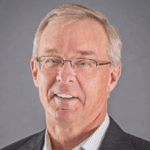
|
|
Gary Bender
Chief Financial Officer SISD Inc. |
Prior to his role at SISD, Inc., Gary Bender was previously Chief Financial Officer with three privately held manufacturing and engineering companies following a successful 20+ year career with Air Products and Chemicals.
At Air Products he held a number of key executive roles in finance, business development, operations and general management. Prior to Air Products, he held positions in the international unit of R J Reynolds Industries with assignments in Europe, Canada and Asia.
Gary received his MBA degree from University of North Carolina and his undergraduate degree from Penn State University.
He has served on a number of community zoning boards and is on the boards of two privately owned companies, the Life Sciences Council board, on curriculum advisory boards for two technical engineering schools, the Workforce Investment Board. He is founder of the CFO Solution.

|
|
Craig Lack
President ENERGI |
Inc. magazine calls Craig Lack, “Craig Lack is the most effective consultant you’ve never heard of.” As the creator Performance Based Health Plans®, Craig consults with public and private C-level executives and independent health care consultants to eliminate employee out-of-pocket expenses, measurably lower health care claims, and drive earnings to the bottom line.
He is a leading authority and a sought-after speaker at national conferences, business coalitions on health and to C-suite groups. Craig has appeared in Forbes, Inc., Fast Company, Huffington Post, Success, and Yahoo Finance and has been featured on CBS, ABC, CW and FOX.
His mission is to help employees eliminate $1 billion in out-of-pocket expenses for their employees.
Inc. says, “Craig Lack is the most effective consultant you’ve never heard of.” http://www.inc.com/logan-kugler/this-entrepreneur-gave-up-nba-dreams-to-make-millions-off-healthcare.html
Forbes calls Craig Lack a “Broker Whisperer for independent healthcare consultants.” http://www.forbes.com/sites/davechase/2016/06/26/if-you-want-to-see-the-future-of-healthcare-watch-the-cable-industry-what-happened-to-newspapers/#3af3a2a16bb1
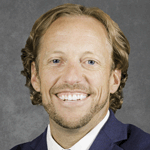
|
|
Andy Neary
Healthcare Strategist The Olson Group |
Andy Neary is a healthcare strategist with The Olson Group. He has more than 15 years of experience in helping employers affect the rising cost of healthcare through innovative strategies. He works with his clients to move them from the benefits status quo with innovative and creative strategies that provide savings for employers and a rich benefit plan array for employees.
He recently was named to the “Boulder 40 Under 40” list, recognizing his professional and charitable contributions to that Colorado community. He was a former pitcher in the Milwaukee Brewers organization.
As a former professional athlete, Neary understands the hard work and daily grind needed to perform at the highest level. His personal motto is, “It’s the work done when no one is watching that generates success”. He takes the same approach with his clients creating truly elite benefit programs.
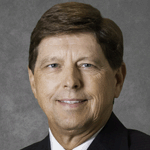
|
|
Tim Olson
President and Managing Partner The Olson Group |
In 2003, Tim Olson founded The Olson Group – an employee benefits consulting firm with an emphasis in retirement planning and group insurance plans.
Tim’s focus on serving his clients holistically garnered him and The Olson Group the honor of being named 2015’s Benefit Adviser of the Year by Employee Benefit Adviser magazine. Since then, Tim and his team have set the standard in client service by reinventing and reinvesting in the practice to deliver ACA expertise, electronic enrollment platforms, wellness initiatives, and fiduciary expertise among other vital solutions. Recently developed BenefitsEdge® – a game-changing strategic planning process that allows organizations to intentionally determine the outcomes of their benefits investment.
The Olson Group currently works with more than 150 employers participating in 500 employee benefit plans, and covering more than 20,000 employees throughout Nebraska, Iowa, Missouri, and Kansas.
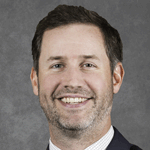
|
|
Brian Tolbert
Principal & Benefits Practice Leader Bernard Health |
Brian Tolbert has over ten years of experience in the health and benefits industry and is one of the founders of Bernard Health. Based in Nashville, Bernard’s mission is to be the world’s most trusted advisor when it comes to helping people plan for their healthcare. Today, they provide employer advisory services in multiple markets and license their proprietary all-in-one HR software, BerniePortal, through other trusted benefits advisors all over the country.
Brian received his BS from Vanderbilt University and earned his MBA from the Owen Graduate School of Management. He and Bernard Health were honored with the 2017 Summit Award from the Association for Insurance Leadership in recognition of their creating a NextGeneration Benefits Firm that provides a superior and more cost-effective benefits plan for employers and enhanced benefits for employees. Most recently, Bernard Health was named to the Inc. 5000 list of fastest growing companies in the U.S.
|
|
Keith Pollard
Editor in Chief International Medical Travel Journal |
Keith has been involved in medical travel and cross border healthcare since the 1990’s. His career has embraced the management of private hospitals in the UK, research and feasibility studies for healthcare ventures, the marketing and business development aspects of healthcare and medical travel and publishing, research and consultancy on cross border healthcare.
Within Intuition Communication, Keith has driven the company’s initiatives in the medical tourism sector and has a worldwide reputation as an opinion leader, speaker, commentator and adviser on medical tourism. He is responsible for the development of consumer-focused medical tourism sites such as Treatment Abroad, and the B2B resource, IMTJ – International Medical Travel Journal. Through his Health Tourism Blog, he provides valuable insight into the medical travel business.
Keith is one of Europe’s leading experts on medical tourism and cross border healthcare, attending and contributing to major conferences across the world on the subject. He has been responsible for many initiatives in the sector including the first patient guide to the EU Directive on Cross Border Healthcare, a Code of Practice for Medical Tourism, a Good Practice Score for Cross Border Reproductive Healthcare, research into patient experiences of medical tourism and an initiative to collect meaningful data in this emerging market. He was an advisor on the NIHR funded project, “Implications for the NHS of Inward and Outward Medical Tourism”, and a contributor to the EU & International Cross Border Healthcare Policy Team at the UK's Department of Health.
|
|
Irving Stackpole
President Stackpole & Associates |
With over thirty five years of experience in healthcare, senior living and human services, Irving Stackpole is the President of Stackpole & Associates, Inc., a market research, marketing, customer service and sales training, and organizational development firm. Founded in 1991, Stackpole & Associates has established itself in the field of medical travel working with governments, governmental agencies, professional associations, healthcare providers, and tourism organizations to define markets, conduct research, develop marketing programs and strategies, establish brand identity, and launch marketing efforts to attract international medical clients from the US, Canada, the UK, and other geographic areas. , Stackpole & Associates applies scientific marketing principles to develop practical solutions to clients’ challenges. Using the most rigorous psychological and behavioral science research, Stackpole & Associates develops methods and designs that produce unimpeachable data yielding reliable, actionable recommendations.
In addition to the publication of many articles in national and international trade magazines and newspapers, Irving is Editor of Medical Tourism Marketing, the first book on the subject published in the sector, and a co-host of the Medical Travel Show. He is a popular speaker, having addressed audiences at medical travel and health care conferences throughout the US and internationally. His client experience embraces an extensive list of medical tourism organizations including professional associations, governments, health care providers, developers, investors, and facilitators.

|
|
Ray Bowman
Senior Vice President, Talent & Development MarineMax |
Ray L. Bowman, Ph.D., is the Senior Vice President for Talent and Team Development and CHRO at MarineMax, headquartered in Clearwater, Florida. MarineMax is the nation’s largest boat and yacht retailer with approximately 70 stores and marinas from coast to coast with approximately 1600 employees, referred to as “team members”. MarineMax is self-insured. In his position at MarineMax, Dr. Bowman also oversees the company’s health care plan as well as executive development, various training functions, strategic planning coordination, and succession planning. Regarding MarineMax’s health care plan, Dr. Bowman has been instrumental in piecing together a set of cost saving strategies for both team members and the company.
Prior to joining the MarineMax team, Dr. Bowman spent nearly four decades practicing Clinical Psychology with four offices in three counties surrounding Tampa Bay, Florida. He is board certified (with Diplomate status) in Neuropsychology, Psychopharmacology, Forensic Psychology, and Clinical Psychology. He has degrees from Eckerd College, Notre Dame, and the University of Georgia. He completed his internship at Shand’s Hospital at the University of Florida. He retired from clinical practice in 2011.
Dr. Bowman is married to his beautiful wife, Debra, of 40 years and has one son, Robert, who lives in Palm Beach Gardens with his wife, Ashley, and Dr. Bowman’s two extraordinarily gifted granddaughters, Hannah and Grace, ages six and two.

|
|
Bernie Heer
Strategist, Ally, Advocate Frenkel Benefits |
Bernie Heer is an employee benefits expert and advisor to small and mid-sized businesses, primarily in New Jersey. Bernie is oddly passionate about helping his clients find exactly the right solution to their benefit plan needs, and finds it immensely rewarding to resolve thorny issues for employees who feel they are losing the battle against the healthcare and health insurance companies. His atypical approach – focused equally on his employer-clients’ objectives and on their employees’ needs – results in a dramatic improvement in the level of appreciation employees have for their benefit plans, and allows his clients to achieve positive ROI on this large expenditure. His company, Frenkel Benefits – an EPIC Company, is among the top independent insurance advisory companies in the United States.
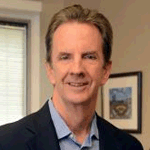
|
|
Steve Kelly
Chief Executive Officer ELAP Services |
Steve Kelly is the co-founder and CEO of ELAP Services LLC, a healthcare cost management and employee advocacy services firm. Founded in 2003, ELAP’s innovative approach to bring rationality to the price of heath services anticipated the future of healthcare years ahead of current Healthcare Reform initiatives.
Mr. Kelly is a recognized expert in the insurance, employee benefits and risk management industry, possessing over 25 years of experience in solving his clients’ healthcare challenges. Since the formation of ELAP, Mr. Kelly has helped hundreds of employers increase their profits by empowering them to take control of their healthcare cost using ELAP’s groundbreaking approach.
Prior to founding ELAP, Mr. Kelly founded the Aldwyn Group, Inc., a Managing General Underwriter of employer stop loss and prescription drug coverage on behalf of reinsurers, including Lloyd’s of London and Munich RE. Aldwyn currently operates as a retail and wholesale insurance brokerage serving clients nationwide.
Mr. Kelly has been featured as an expert commentator on the US Healthcare system on National Public Radio, America’s Healthcare Advocate Radio, and in The New York Times.
Mr. Kelly is involved in several charitable organizations in the Philadelphia community, including the Eagles Fly for Leukemia (President) and The Philadelphia International Visitors Council (Executive Board). Mr. Kelly is an active volunteer at Eagleville Hospital and is a member of the Self Insurance Institute of America, the New Jersey Health Care Financial Management Association (Managed Care Committee) and The New Jersey Health Care Quality Institute.
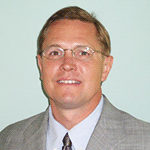
|
|
Bill Lacy
President and Chief Executive Officer ACHRM |
Bill Lacy has over 30 years experience in executive and financial leadership positions. Currently, Bill serves as the President and CEO for the Association for Corporate Health Risk Management (ACHRM), a membership based organization comprised of progressive employers ranging in size up to 30,000 employees and Best-In-Class Sponsor Partners seeking education, a venue to collaborate, innovative methodologies, disruptive technologies and other resources to more effectively contain their organization’s health care costs.
Following the launch of ACHRM’s Philadelphia Chapter in 2012, ACHRM has several hundred employers in its community across ten Chapters. ACHRM expects to have at least 30 chapters across the US over the next five years. Within each ACHRM Chapter, the Association is building strategic relationships with colleges and universities to address the Health Risk Management (HRM) industry’s educational needs, including professional certificates, degrees and research.
Prior to ACHRM, Bill was CFO and COO for Business Health Services, a national Corporate Wellness and Behavioral Risk Management provider based in Baltimore, Maryland; and CFO for Planet Fitness PA based in Lafayette Hill, PA. Bill has also held executive positions with the Association for Corporate Wellness (ACW), Susquehanna (Equity) Bank, Exelon (PECO) Energy, Rainbow Industrial Products and NatWest, and Entre Advisors LLC.
Bill serves as Vice Chairman for the University of the Sciences’ Board of Visitors, the Burlington County College Foundation Internship and Mentoring Committee as well as other Boards and Committees during his career. He earned his MBA (finance and marketing) from Drexel University and BS (math and economics) from Ursinus College.
* This session is available only to attendees of the Medical Travel Track
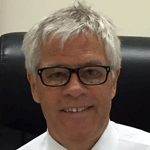
|
|
Graham Elderfield
International Healthcare Consultant Glenfield Consulting |
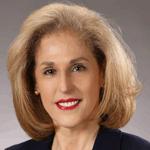
|
|
Michele Forzley
Director Forzley & Associates |
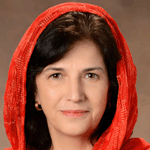
|
|
Elizabeth Ziemba
President Medical Tourism Training |
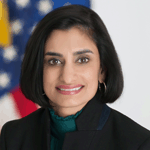
|
|
Seema Verma
15th Administrator Centers for Medicare and Medicaid Services (CMS) |
Seema Verma currently serves as Administrator of the Centers for Medicare & Medicaid Services (CMS), and she is only the 15th person ever confirmed to the post. She was nominated by President Trump on November 29, 2016 – the seventh nomination by the President-elect – and confirmed by the U.S. Senate on March 13, 2017. As Administrator, Ms. Verma oversees a $1 trillion budget, 26% of the total federal budget, that administers healthcare programs for more than 130 million Americans every day.
A nationally recognized leader in health policy and operational design, she has guided healthcare policy in the public and private sector, working with states to build flexibility into their Medicaid programs to help them meet the diverse needs of their unique populations. As the architect of the historic Healthy Indiana Plan, she helped create and implement the Nation’s first consumer-directed Medicaid program.
Administrator Verma is a graduate of the University of Maryland, and holds a Master’s degree in Public Health with a concentration in health policy and management from Johns Hopkins University.
Her editorial commentaries have appeared in the Wall Street Journal, Washington Post and Health Affairs, and she also previously served as Vice President of Planning for the Health & Hospital Corporation of Marion County, Indiana and most recently before heading CMS was President and CEO of Seema Verma Consulting.
|
|
Nebeyou Abebe, MA, PMP
Vice President, Health & Well-Being Sodexo |
Nebeyou serves as Vice President Health & Well-being for Sodexo North America. He is responsible for enterprise-wide health and well-being strategy, advising clients on their workforce (and community) health and well-being goals, developing comprehensive employee health and well-being solutions, and establishing mutually beneficial partnerships with private, public and non-profit entities.
Nebeyou earned his Masters in Social and Public Policy from Georgetown University, Bachelors in Economics from the University of Massachusetts-Amherst and Project Management Professional (PMP) credential from the Project Management Institute. From 2008-12, he served as a federal-level advisory board member for the Office of Minority Health. In 2012, Nebeyou was honored with the prestigious "40under40" award by the Envest Foundation for his work and contributions in public health. His work has been published in national peer review publications including Modern Healthcare, Diabetes Spectrum, Journal of Medical Internet Research, and Employee Business Plan Review. Nebeyou is a highly sought out speaker and has been interviewed by several media outlets.

|
|
Diana Han, MD
Chief Medical Officer G.E. Appliances, a Haier Company |
|
|
Marcus Osborne
Vice President, Health & Wellness Transformation Walmart |
Marcus Osborne serves as Vice President, Health & Wellness Transformation for Walmart. In that role, he is focused on furthering Walmart’s stated goal of improving the healthcare industry in the U.S. by increasing access, quality and affordability in the system for consumers. Prior to joining Walmart, Marcus was a Senior Management Consultant with Alliance Consulting Group in Boston, Massachusetts. He also served as the Chief Financial Officer of the Clinton Foundation HIV/AIDS Initiative. Marcus attended the Harvard Business School and received his Master’s in Business Administration, graduating with honors.

|
|
Olivia Ross
Associate Director, Employers Centers of Excellence Network (ECEN) Pacific Business Group on Health (PBGH) |
Olivia Ross is an Associate Director with the Pacific Business Group on Health responsible for the operation and expansion of the Employers Centers of Excellence Network (ECEN). The ECEN is a national, multi-employer initiative that identifies and provides employees access to high quality surgical care through prospective bundled rates. Before joining PBGH, Olivia spent four years managing several projects at Northwestern University. Her work with the Chicago Pediatric Patient Safety Consortium and the Transplantation Outcomes Research Collaborative focused on risk assessment, improving clinician communication and teamwork. Olivia holds an MPH from UCLA and an MBA from Northwestern University’s Kellogg School of Management.
|
|
David Contorno
President Lake Norman Benefits |
David Contorno is President of Lake Norman Benefits, now part of the Hilb Group and one of the employee benefit practice leaders inside this now top 40 largest insurance agency. As a native of New York, David began his career in the insurance industry at the age of 14, and has since become a leading expert in the realm of employee benefits over the last 21 years. The Hilb Group continues to grow organically by ensuring all management is handled locally, providing top notch solutions and supports, and through strategic acquisitions.
Among his many accolades, David received a Broker Spotlight in 2004 and was recognized as an outstanding Broker of Service in 2005 through 2014 by Blue Cross Blue Shield. He has continually received the Echelon Award by United Healthcare since 2003, reserved for the top 1% of agents nationally, and was a 2015 "40 Under 40" Award Winner presented by Charlotte Business Journal. Most recently, David was Benefits Selling Magazine's 2015 Broker of the Year and, in March 2016, Forbes deemed him "One of America's Most Innovative Benefits Leaders."
David is a member of the Board of Directors for both the Charlotte Association of Health Underwriters and Healthreach Community Clinic. He served on the NC Insurance Commissioners Life and Health Agent Advisory Committee, as well as participated in the Technical Advisory Group that helped with the Market Reforms required under the Affordable Care Act in North Carolina. He is a long-time member of the Lake Norman and South Iredell Chambers of Commerce as well as the National, North Carolina, New York and Long Island Associations of Health Underwriters. David contributes to numerous publications, including Forbes, Benefits Selling Magazine, Business Leader Magazine and Insurance Thought Leadership.
David is committed to giving back to his community and actively participates in the membership drive for the United Way, assisting the local chapter of Habitat for Humanity, and supporting The Dove House Child Advocacy Center. When he is not working, he enjoys boating, traveling, and being with his wife, Heather, and their two children, Hannah and Ethan.
|
|
Valerie Maziarz
Vice President, Human Resources SavATree |
Valerie has 25 years of Human Resources experience across multiple industries, with a strong record of helping align workers to assignments that capitalize on individual strengths, drive business results and increase employee engagement.
Valerie is gifted at taking the complex, breaking it down and making it understood by a broad audience. This is evident by the consistently achieving higher than industry and corporate average employee participation in self-directed benefits.
During her career, in addition to her HR responsibilities, Valerie accepted “out of the box” assignments, taking on Security, Fleet and Facilities Management, opportunities that honed her project management and process analysis skills.
Valerie’s Human Resources knowledge and experience combined with her operational assignments has developed her into a true business partner. Understanding the needs and goals of the enterprise/business is the foundation of Human Resources, Organizational Development and Strategic Management.
Valerie holds a Bachelor’s degree in Psychology from The Catholic University of America (Washington, DC) and completed the American Management Association’s MBA Certificate Program. She is a former member of the Board for the Southern CT chapter of the Society of Human Resources Management (SHRM) and is Vice Chairman of the Board of Directors for Search for Change.
|
|
Mick Rodgers
Principal and Managing Partner Axial Benefits Group |
As the Principal and Managing Partner of Axial Benefits Group, Mr. Rodgers brings his extensive background in health and welfare plans to Axial's clients.
He has been pioneering Healthcare Purchasing Coalitions since 2009 specializing in assisting medium and large corporations, many of whom have multi-state locations, with the development of effective health care programs. Specifically, he has designed, implemented and managed 5 successful healthcare purchasing coalitions helping hundreds of companies lower costs and stabilized renewals.
Prior to co-founding Axial Benefits Group, Mr. Rodgers founded its predecessor company, Atlantic Benefits, in 2003. He also founded The Staffing Exchange (TSE) in 2012, a successful healthcare purchasing coalition dedicated specifically to the Staffing industry. He has had over 22 years of experience and held senior consulting positions at Hays Companies, William Gallagher Associates, and Marsh & McLennan. Mr. Rodgers is a graduate of the University of Massachusetts School of Engineering. He is a former Massachusetts high school wrestling state champion and collegiate wrestler. He is an avid national speaker on the Affordable Care Act and has become known as one of the nation's experts on the topic of its compliance. He is the former Chairman of the Boston Board of Directors for the March of Dimes and has been involved with the development of corporate programs for the both Friends of Boston's Homeless charity and various local Habitat for Humanity Chapters. He lives in Concord, MA with his wife and family, where he is also a town meeting member.
|
|
John Sbrocco
Founder Questige Consulting |
John W. Sbrocco, CSFS is a healthcare strategist and founder of both Questige Consulting and Achieve Health Alliance. He began consulting in 2005 and specializes in bringing innovative risk management solutions to self-funded employers. John holds a designation as a Certified Self-Funding Specialist.
John recently visited El Salvador as a guest of the Ministry of Health on a fact-finding mission to evaluate that country’s healthcare facilities and physicians for their Healthcare Abroad program for patients around the world who travel for superior medical outcomes at substantial savings over domestic healthcare.
An in-demand speaker at industry events & conferences, John has been featured in industry publications including, most recently, BenefitsPro magazine. He is a Charter Member of the Association for Insurance Leadership and a member of the exclusive Agency Growth Mastermind Partnership – an elite group of high-performing benefits consultants and advisors from around the country.

|
|
Sherene Azli
Chief Executive Officer Malaysia Healthcare Travel Council (MHTC) |
Sherene Azli took office as the Chief Executive Officer of the Malaysia Healthcare Travel Council (MHTC) or better known as Malaysia Healthcare in year 2015. Within her short stint with Malaysia Healthcare, an agency under the Ministry of Health Malaysia, Sherene facilitated to raise Malaysia’s silhouette as the “preferred destination for world-class healthcare services”.
Sherene’s fortitude to see Malaysia as the leading global healthcare destination is becoming a reality as the country was awarded as the “Destination of the Year” in 2015, 2016 and 2017 by the International Medical Travel Journal. Not resting on her laurels, Sherene continues to inspire and develop her team and the industry stakeholders for a bullish few years in order to further alleviate Malaysia Healthcare’s standing as the leading global healthcare destination, targeting to host more than a million healthcare travellers by 2020.
Sherene has a proven executive management track record and over 20 years of experience driving marketing growth in various industries. Prior to joining Malaysia Healthcare, Sherene was the General Manager at Talent Corporation Malaysia, playing an instrumental role in building strategies for talent development in 12 key sectors. Preceding that, she was with Telekom Malaysia for 15 years, entrusted with high level positions such as Vice President of Group Marketing and subsequently as the Vice President of Strategy and Business Development.
In fulfilling her aspiration in knowledge sharing and talent development, Sherene has also established herself as an esteemed speaker and trainer in more than 15 countries globally (UK, USA, India, Vietnam, Myanmar, Russia, Japan, Egypt, Spain, Thailand, Romania, Turkey, Oman, Dubai, etc.) at numerous international conferences and workshops in the areas of leadership, strategy, marketing and business management with special focus in healthcare travel and telecommunications.
Sherene is also self-driven, self-reliant, and highly-focused in making things happen, where she consistently adopts creative solutions and collaborative approaches with good interpersonal skills to engage, motivate and encourage others through organisational and industrial changes. Sherene's achievements and contributions earned her international recognition as one of the 50 “Outstanding Women in Healthcare” at the World Health and Wellness Congress 2017. She is also a recipient of the “30 Women Achievers and Leaders of Malaysia” at the Golden Globe Tigers Award 2017.
An ardent believer in accentuating the power of developing human capital, Sherene perceives value in building industry relationships and networks, and hence carries these ideals with her into her current role. Sherene holds a Master’s in Business Administration from the University of Durham (United Kingdom) and a Bachelor of Business Studies (Hons) in Accounting & Finance from the University of Limerick (Republic of Ireland).
Sherene is correspondingly passionate about her role in contributing to Malaysia’s nation building efforts while at the same time balancing her career being a dedicated wife and a mother of two.

|
|
Pamela Frank
Director, International Services Children’s Mercy Kansas City |
In March of 2016, Pam Frank joined Children's Mercy Hospital as their Director of International Services. She bring to the organization more than 20 years of experience in global business development for both healthcare startups as well as nonprofit teaching hospitals. Her expertise in international medicine at academic medical centers emphasizes international patient referrals and global physician advisory services for the purpose of increasing a hospital's exports, branding, innovation and physician as well as community outreach.
Pam has worked with many top ranked U.S. teaching hospitals, including: Boston Children's Hospital, Tufts Medical Center, NewYork Presbyterian Hospital, Mount Sinai Medical Center (New York), Children's Cancer Center Egypt 57357, and the University of Minnesota Medical Center. She has also been a senior advisor to The Association for Health Research & Development (Buenos Aires), EIFIT University's School of Medicine (Medellin), Medical Tourism Training Inc. (Boston) and Global Emerging Medical Services (Saudi Arabia). She has lectured throughout the U.S. and internationally on the globalization of healthcare and medical travel.
Pam began on the manufacturing side of global business as a manager for Latin America with telecom and medical equipment companies. In 1995, she shifted her regional focus from manufacturing to healthcare services, notably telemedicine and medical travel. As Director of International Services at Tufts Medical Center in Boston, she launched in 1997 their first international patient and telemedicine programs. In 1999, she joined Best Doctors as Vice President of Business Development, a provider of employee health benefits, offering innovative healthcare services to more than 15 million members worldwide. In this capacity, she helped transition a start up company through M&A; and restructured their Saudi Arabian PPO/TPA services. In 2006, she returned to the academic side of international health services as a Director at Harvard affiliated Boston Children's Hospital where she doubled the growth of the program to $50 million. In her capacity as an independent consultant, Pam developed healthcare partnerships between foreign government and corporations to add an “international twist” to her clients' existing strategies for technology transfer and commercialization.
Pam has conducted business in over 20 countries and lived in Spain, Turkey, and Mexico. She speaks Spanish and Portuguese, holds a B.A from the University of Colorado in Boulder and received her MBA from Thunderbird, School of Global Management.
Amongst her many civic contributions, she serves on the Advisory Board of the United Nations Association of Greater Boston, co-founded Boston's International Film Festival and Boston's Room to Read Chapter. She is an avid rower, skier, climber and ballet enthusiast.

|
|
Ilan Geva
Managing Director Ilan Geva and Friends |
Ilan Geva is a global branding and consumer behavior expert who provides consulting, teaching, training and help in developing and activating all brand touchpoints. He develops and creates Brand platforms including brand vision, strategy and personality, using strategic branding solutions for multinational, national and regional entities. Much of the work focuses on internal branding and understanding the consumers’ view of the brand. His work has won over 100 industry awards around the world.
Ilan teaches Branding at the University of Chicago and Consumer Behavior & Marketing at DePaul University. He is invited to speak at many international conferences. He helped many countries, doctors, hospitals and healthcare providers solidify their brands while working with some of the largest and best-known Healthcare and travel brands in the US and abroad.
Ilan visited 45 countries, and worked in many of them on 4 continents.
|
|
Jeff Crouse
Superintendent Charlevoix-Emmet Intermediate School District |
Jeff is currently employed as the Superintendent of the Charlevoix-Emmet Intermediate School District. Jeff served as the Chief Financial Officer of the ISD for 15 years, prior to being named Superintendent in 2015. In his role as CFO, he started a health insurance work group in 2005 that implemented a self-funded health insurance program for the 220 employees of the CEISD. Utilizing research, plan design, employee commitment, wellness programs, and along with a healthy group of families it has become one of the most effective self-funded school health insurance plans in Michigan saving the district MILLIONS of dollars over the past decade.
|
|
Brian Flowerday
Chief Administrator, Employee Benefit Services SET SEG |
Brian Flowerday serves as the chief administrator for SET SEG Employee Benefit Services, a not-for-profit healthcare consulting and administrative service provider helping Michigan’s public schools address the healthcare affordability crisis. In his current role, he oversees development and deployment of SET SEG’s benefit-related strategy and operations, with a special focus on helping schools understand the various dysfunctions within the current healthcare system and adopt progressive solutions.
Prior to joining SET SEG, Brian worked as a productivity consultant and manufacturing executive specializing in helping organizations implement lean principles, which he learned and applied in the automotive sector. Brian has more than 20 years of strategic, innovation, and operational management experience and is a graduate of the University of Michigan College of Engineering.
|
|
Flip Steinour
Director of Human Resources Lancaster-Lebanon Intermediate Unit# 13 |
Flip Steinour has been the Director of Human Resources for Lancaster-Lebanon Intermediate Unit located in Lancaster, PA for the past 11 years. Prior to that, Steinour also served in the same capacity for both two other Pennsylvania intermediate units. He started his professional career in human resources in private industry working for Knouse Foods and True Temper Hardware.
Steinour graduated with a BA from Shippensburg University of Pennsylvania and also has attained his MS in Human Resource Development from Villanova University. He earned the Professional in Human Resources (PHR) certification from the Society of Human Resources in 2000.
Over his professional career, Steinour has served as a member of the Executive Board of the Pennsylvania Association of School Personnel Administrators. Additionally, he has chaired the Pennsylvania Association of Intermediate Units HR Directors job-alike group three times over his 21-year career working for intermediate units. Steinour has also presented for superintendent preparation programs involving HR-related topics at Temple University, Penn State University, and Immaculata Universities. In 2015, he was presented the Gary L. Miller Memorial Distinguished Service Award in Recognition of Outstanding Leadership and Significant Contributions to Education by a PAIU Employee.
He has a passion for helping youth as he has been a volunteer coach for lacrosse, junior high football, Special Olympics basketball, Challenger Little League baseball, and has traveled to Vietnam to help stop the sexual trafficking of Vietnamese children.
|
|
Bill Lacy
President and Chief Executive Officer ACHRM |
Bill Lacy has over 30 years experience in executive and financial leadership positions. Currently, Bill serves as the President and CEO for the Association for Corporate Health Risk Management (ACHRM), a membership based organization comprised of progressive employers ranging in size up to 30,000 employees and Best-In-Class Sponsor Partners seeking education, a venue to collaborate, innovative methodologies, disruptive technologies and other resources to more effectively contain their organization’s health care costs.
Following the launch of ACHRM’s Philadelphia Chapter in 2012, ACHRM has several hundred employers in its community across ten Chapters. ACHRM expects to have at least 30 chapters across the US over the next five years. Within each ACHRM Chapter, the Association is building strategic relationships with colleges and universities to address the Health Risk Management (HRM) industry’s educational needs, including professional certificates, degrees and research.
Prior to ACHRM, Bill was CFO and COO for Business Health Services, a national Corporate Wellness and Behavioral Risk Management provider based in Baltimore, Maryland; and CFO for Planet Fitness PA based in Lafayette Hill, PA. Bill has also held executive positions with the Association for Corporate Wellness (ACW), Susquehanna (Equity) Bank, Exelon (PECO) Energy, Rainbow Industrial Products and NatWest, and Entre Advisors LLC.
Bill serves as Vice Chairman for the University of the Sciences’ Board of Visitors, the Burlington County College Foundation Internship and Mentoring Committee as well as other Boards and Committees during his career. He earned his MBA (finance and marketing) from Drexel University and BS (math and economics) from Ursinus College.

|
|
Jason Morgan
Senior Manager, Health and Well-Being Mars, Inc. |
Jason Morgan is a Global Health and Wellness leader with broad expertise in Strategic Design, Program Implementation, Business Development and Account Management. Jason has a distinguished track record of developing, delivering, enhancing and managing global and domestic employee wellness initiatives in Fortune 500 companies as well as serving as a subject matter expert for corporate health & wellness consulting.
Within his roles of creating strategic direction for corporate wellness programs, he has the unique skill set of establishing the global corporate strategy and delivering employee wellness programs worldwide at Mars, Inc.
Given his natural ability with people and his confident, energetic, and outgoing nature, he has built and managed highly effective teams, mentored numerous colleagues and clients, and established a solid reputation as an industry leader.
Jason seeks to transform the approach to corporate health & Wellness by empowering and inspiring individuals and organizations to take action with effective strategies that will look not just at health, but overall happiness as well.

|
|
Jennifer Sargent
Chief Revenue Officer Vera Whole Health |

|
|
Nicole B. Stec, MBA
Employee Health and Wellness Manager City of Mesa |
Nicole Stec is the Employee Health and Wellness Manager for the City of Mesa and a frequent speaker about employer wellness programs. For the past ten years, Nicole has worked in community and corporate health settings, designing and implementing well-being programs for organizations, including healthcare systems, small businesses, the U.S. military and local government.
In her current role, Nicole is responsible for the City of Mesa’s Health and Wellness Center and the City’s worksite wellness program. The Wellness Center and Program offer several resources to City of Mesa employees and families, including chronic disease self-management programs, preventative health services, screenings and coaching.
Nicole is a Certified Wellness Practitioner (National Wellness Institute), an Integrative Health and Lifestyle specialist (University of Arizona) and a Certified Strength and Conditioning Specialist (National Strength and Conditioning Association).
|
|
William Slocum
Executive Vice President ESurgeries.com |
William Slocum, Executive Vice President for ESurgeries. Slocum is a longtime veteran of the insurance industry, having spent a decade consulting for middle-market clients in all areas of insurance, employee benefits and risk management before joining ESurgeries. William also was an integral part of forming the industry we now know as “Referenced Based Pricing”.
In an article he wrote for the Council of Insurance Agent and Brokers (CIAB) William remarked, “We spend a lot of time figuring out how to reduce the costs of healthcare but little asking why medical services are so expensive in the first place.” (Leaders Edge Magazine March 2015)
Residents of Shreveport, LA, William and his lovely wife of 29 years, they have two boys that attend his Alma Matter; LSU. Their favorite pass-time is family; whether backpacking in Montana or skiing in Colorado they always look forward to the next family adventure. “Lately my hobby has become cooking”, he adds “you can’t say your from Louisiana but don’t know how to cook.”
|
|
Suzanne Webb
Founder and Chief Executive Officer Esurgeries.com |
Suzanne Webb is the Founder and CEO of Exclusive Surgeries Solutions, LLC. After spending 15 years in the Ambulatory Surgery Center marketplace Ms. Webb found the place where the safest surgical procedures are performed by the best surgeons. She has spent the last 3 years developing a surgery solution and one where the best surgeons and Ambulatory Surgery Centers provide safe and effective surgeries. Exclusive Surgeries Solutions is a national solution that has relations with 1,000’s of Ambulatory Surgical Centers and surgeons that provide this exceptional level of care -- all at a price point that self-insured companies want.
Prior to Exclusive Surgeries Solutions, Ms. Webb founded Lone Peak Group, LLC in 2006 and opened a new division ASC Billing Specialist, LLC. These companies are both National Medical Billing & Consulting Companies which focus on teaching doctors and medical providers how to maximize profits. Over the past 7 years ASC & LPG has brought in over $300 million for their clients. In 2012 contracts have already been signed to increase revenues by 54%. The company philosophy is to use out-of-network benefits to increase revenues and generate higher profits. The consulting arm of the company has held positions as administrator of Ambulatory Surgery Centers and all aspects of an ASC to create proper operations and procedures. The companies have worked with hundreds of medical professionals nationally with a large base in CA and now TX. There are also clients in MD, PA, NY, IL, GA, AZ, OR, OH, FL, and almost every state. Understanding how to be profitable in these changing times is important to all ASCs and we want everyone to understand these principles. The billing company was sold in 2013.
From 1996 to 2001, Ms. Webb held the role of Chief Financial Officer for three hospitals chains at Universal Health Services, King of Prussia, PA, Behavioral Healthcare, Nashville, TN and Iasis Healthcare, Nashville, TN. At every facility the challenge was the same: How to increase revenues. There were increases over 30% in these facilities due to understanding insurance companies and how to maximize revenues. Contract negotiations, budgeting and cash collections have always been the driving force and with the knowledge gained from working at UHS, these principles have continued to reap rewards.
From 1984 to 1996, Ms. Webb was Accountant/Controller at UHS, a fortune 500 hospital management company in King of Prussia PA. As an accountant, she assisted in helping the company go public. Her areas of responsibility included an Accounting Manager involved in everything from payroll to hospital consolidation. In 1984 when Ms. Webb started with the company they owed only 26 hospitals and when she left the company had grown to 45 acute centers and 18 behavioral health centers. After achieving the goals Ms. Webb had set for herself at Corporate she requested a move to a psych facility and quickly turned that facility to one of the most profitable within the behavioral division. Corporate quickly introduced her strategies as the proper way to bill behavioral healthcare. She was promoted to Controller after only a year at the facility.
Ms. Webb was educated at Brigham Young University, Provo UT, Villanova, PA and Bryn Mawr College, PA from 1979-1984.
She belongs to the NAPW Phoenix Chapter and serves as President, ASU Mentors, Peoria Chamber of Commerce, Glendale Chamber of Commerce, Glendale City Sports Volunteer Coach, Boy Scouts of America, Women’s in Healthcare Leadership Organization, Top 200 Women in Healthcare. She is a Board Member of the Peoria Chamber of Commerce, June 2016 and Treasurer in March, 2017.
Her activities include raising her six children, and 4 grandchildren helps to keep her balanced.
Additional Thought Leaders TBA
|
|
Sarah Redgrave
Vice President, Total Rewards KinderCare Education |
Sarah has over 15 years of international experience in benefits, compensation, internal communication, and change management.
Currently she is accountable for Total Rewards and Customer Care within KinderCare Education, a provider of early childcare education with 30,000 employees across the United States. Previously, she was accountable for Eddie Bauer’s Benefits, Compensation, Employee Communication, and Recognition Programs across the US, Canada, and Hong Kong.
Through managing the balance of fiscal accountability and employee engagement, Sarah has a proven track record of increasing appreciation for Total Rewards in her organizations while driving down erroneous spend. During her tenure at KinderCare Education, Sarah’s innovative work in cost containment has helped the company out-perform the industry average on benefits cost mitigation, and her creativity in building a meaningful total rewards package has enabled the company to stand out as a total rewards leader in the Early Childhood Education industry.
At Eddie Bauer, the work Sarah and her team accomplished helped to secure the company's spot at number 19 on Outside Magazine's "top 50 places to work" list.
Sarah is a Board Member of a Portland based not-for-profit, Start Making A Reader Today (S.M.A.R.T). The group is committed to helping children develop a love of books and reading through one-on-one attention. A passionate supporter of people, Sarah is also the author of a regular blog (www.sarahredgrave.com) dedicated to supporting people from all backgrounds succeed in navigating their careers.
|
|
Bob Gearhart, Jr.
Partner DCW Group |
Bob Gearhart Jr. is the third generation to lead DCW Group and has reshaped the company into a Next Generation Benefits Firm. He and the team at DCW Group are committed to delivering high performing employee benefit plans to the market, one client at a time. Bob’s goal is to reverse the hyperinflation of healthcare that has led to middle class wage stagnation over the last 20 years.
Bob is also a nationally recognized speaker on Healthcare Reform and Employee Benefits. He frequently appears on radio, television, and in print to provide insight into the ever-changing landscape surrounding healthcare in America. In 2017, Bob was invited to El Salvador by that nation’s Ministry of Health to provide feedback on the healthcare facilities and providers in their growing Healthcare Abroad Network for patients around the world.
|
|
Ben Krambeck
Chief Executive Officer ClaimDOC |
Ben Krambeck serves as Chief Executive Officer of ClaimDOC, LLC. In this capacity, Mr. Krambeck is responsible for all staffing decisions, sales, marketing and distribution channel management. Mr. Krambeck was a co-founder of ClaimDOC in January 2013.
Prior to his time at ClaimDOC, Mr. Krambeck held a dual role as Regional Vice President with The TJS Group, a division of TrueNorth Companies, and also served the firm as a self-funded medical plan subject matter expert for the Top 100 insurance brokerage headquartered in Cedar Rapids, IA.
Mr. Krambeck served on the Iowa Association of Health Underwriters Board of Directors from 2006-2009, and his career began in the insurance industry as a Group Sales Representative for Sun Life Financial.
Mr. Krambeck is a licensed insurance agent and received a Bachelor of Arts Degree in Sociology from Simpson College in Indianola, Iowa in 1997. He resides in Des Moines, IA with his wife, Jennifer, and his two daughters Emma and Hannah.
|
|
Carl Schuessler, Jr.
Managing Principal BenefitStrategies LLC |
An intentionally small “concierge” consulting firm offering a unique approach to benefits management to a select group of clients, BenefitStrategies and Mitigate Partners provide Insurance, Risk Management and Employee Benefits Consulting.
Serving as a Population Health Manager specializing in Cost Containment and Risk Mitigation, the partners pride themselves on their ability to be creative in designing innovative, optimum plans and helping companies and individuals make the most of their financial resources by serving as a Fiduciary and Steward of health plan dollars. With more than 25 years of experience in employee and executive benefits consulting and financial planning experience, Carl offers clients improved cash flow, saves money and retains top talent with well-structured employee benefit and financial planning solutions. He is also an accomplished speaker and author.
After spending the last 5 years searching for the best in class Healthcare Solutions to solve the Healthcare Jigsaw Puzzle, by integrating these to significantly reduce his clients’ health plan spend, Carl created and is trademarking FairCost, a health plan design he pioneered.Carl has successfully networked with other trusted partners/vendors such as insurance companies, PBM’s, TPA’s, health care destinations, employee benefit communication companies, and onsite clinics. To the delight of his clients, he has a proven track record of bringing comprehensive High Performance Healthcare Solutions to businesses regarding healthcare costs, benefit design, improved medical outcomes, and improved employee communications. Carl is an employer advocate and provides easily understood solutions and encouragement to employers.
He was selected as one of the first group of 30 forward-leaning Benefits Advisors in the U.S. to participate as a Charter Member in the Health Rosetta Certification Program for Benefits Advisors. The Health Rosetta is a blueprint of best practices for intelligently purchasing health benefits that’s been sourced from the most forward leaning benefits purchasers of all types around the country. The certification program helps ensure he stays at the front of the market to better serve his clients.
|
|
Bev Helkey
Executive Director Employers Healthcare Coalition |
Bev Helkey is Executive Director of the Employers Healthcare Coalition and the Tri-State Purchasing Coalition. She has 30+ years’ experience in healthcare cost management strategies and employee benefits. She joined the coalitions in 2002. She provides management and oversight of two non-profit organizations. Employers Healthcare Coalition provides health education, health literacy, and healthcare cost and outcome resources to the community, and the Tri-State Health Care Purchasing Coalition which group purchases services to their members and the community.
With her extensive experience in healthcare cost management strategies, she has served the organizations through the design, development and implementation of their robust cost saving programs – including education-focused on health literacy, healthcare cost, outcomes and the patient experience.
Ms. Helkey’s career in healthcare cost strategies spans more than 30-years. Helkey holds a bachelor’s degree in Business. She is board member of Leadership Illinois, The Quincy Family YMCA, CDC - The National Leadership Academy for the Public’s Health (NLAPH) and the Association for Corporate Risk Management (ACHRM).

|
|
David West
Director, Corporate Development Group & Pension Administrators, Inc. |
David has worked in the employee benefits industry since 1981 after graduating from Furman University with a BS in Economics. He left Marsh/Mercer to join GPA in 2006 and previously worked for several other insurance companies and third party administrators. Throughout his career he has worked in the areas of underwriting, marketing operations, sales and client management, network development, benefits brokerage, and several areas of management. In his current position he is responsible for helping clients understand and manage their clinical cost drivers; developing direct relationship, risk and cost management programs for clients; managing vendor relationships; improving interdepartmental communication; and identifying and implementing internal and external revenue growth and risk avoidance strategies. He is currently on the Board and the Legislative Chair for the Texas Association of Benefit Administrators; he is a former Officer and President of the DFW Chapter of Certified Employee Benefits Professionals; and he has spoken at and worked with several other professional organizations in various capacities.
|
|
Bill Lacy
President and Chief Executive Officer ACHRM |
Bill Lacy has over 30 years experience in executive and financial leadership positions. Currently, Bill serves as the President and CEO for the Association for Corporate Health Risk Management (ACHRM), a membership based organization comprised of progressive employers ranging in size up to 30,000 employees and Best-In-Class Sponsor Partners seeking education, a venue to collaborate, innovative methodologies, disruptive technologies and other resources to more effectively contain their organization’s health care costs.
Following the launch of ACHRM’s Philadelphia Chapter in 2012, ACHRM has several hundred employers in its community across ten Chapters. ACHRM expects to have at least 30 chapters across the US over the next five years. Within each ACHRM Chapter, the Association is building strategic relationships with colleges and universities to address the Health Risk Management (HRM) industry’s educational needs, including professional certificates, degrees and research.
Prior to ACHRM, Bill was CFO and COO for Business Health Services, a national Corporate Wellness and Behavioral Risk Management provider based in Baltimore, Maryland; and CFO for Planet Fitness PA based in Lafayette Hill, PA. Bill has also held executive positions with the Association for Corporate Wellness (ACW), Susquehanna (Equity) Bank, Exelon (PECO) Energy, Rainbow Industrial Products and NatWest, and Entre Advisors LLC.
Bill serves as Vice Chairman for the University of the Sciences’ Board of Visitors, the Burlington County College Foundation Internship and Mentoring Committee as well as other Boards and Committees during his career. He earned his MBA (finance and marketing) from Drexel University and BS (math and economics) from Ursinus College.
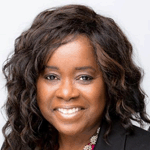
|
|
Gillian Barclay
Healthcare Specialist Nevada Governor’s Office of Economic Development |
Dr. Gillian Barclay is the health industry specialist in the State of Nevada Governor’s Office of Economic Development. In this role, she serves as the lead expert for health sector expansion and investments for economic development in the state. Previously she was vice president of the Aetna Foundation where she led the development and execution of the foundation’s national and international strategies to improve community and economic development outcomes. She was a frequent spokesperson for the foundation, presenting to various audiences in the United States and abroad. Prior to joining the Aetna Foundation, Dr. Barclay was advisor for health systems strengthening at the Regional Office of the World Health Organization, the Pan American Health Organization. There, she worked with governments and other stakeholders on strategic approaches to improve health and human development in low and middle-income countries. Previously, she was the manager for health programs at the W.K. Kellogg Foundation, where she was responsible for the impact of the foundation's investments in health.
Dr. Barclay is a recognized expert in health and human development in the United States and developing countries. She is a member of expert roundtables at the National Academy of Medicine, under the National Academies of Sciences, Engineering and Medicine, and has taught at the Harvard School of Public Health and the City University of New York. She has also conducted research at the Dana Farber Cancer Institute, the Brigham and Women’s Hospital, the Channing Laboratory and the Harvard School of Public Health in Boston, Massachusetts. Dr. Barclay holds a doctorate in public health from Harvard University and a master of public health from the University of Michigan. Her doctorate of dental surgery degree was earned at the University of Detroit Mercy, and she completed her residency at New York Hospital in New York.

|
|
Doug Geinzer
Chief Executive Officer Las Vegas HEALS, University of Nevada |
Doug Geinzer is a skilled and successful entrepreneur who was built and sold several businesses throughout his career. Most of his success has been found in the healthcare, technology and employment industries. Today, Doug considers himself more of a social entrepreneur spending a significant amount of his time improving Southern Nevada’s healthcare infrastructure and positioning Las Vegas to become the most globally recognized health & wellness destination.
As CEO of the Las Vegas HEALS (Healthcare | Education | Advocacy | Leadership | for Southern Nevada), Doug delivers on their mission “To foster strategic alliances in the healthcare community, collaborating on workforce issues and being a proactive force for legislative initiatives to improve access and the delivery of quality healthcare in Southern Nevada.” Doug has bee the recipient of many awards including Entrepreneur of the Year, Healthcare Hero, Innovative Business Leader, Top 40 under 40, “most influential” in employment and a ‘who’s who’ in healthcare. He is a past president of the Las Vegas Metro Chamber of Commerce’s Business Council and sits on the boards of numerous organizations.
Born and raised in Pittsburgh, PA, Doug relocated to Las Vegas in 1993 to build a media company he later sold to Cox and Landmark Communications. Recruiting Nevada, another media company Doug developed was sold to the Greenspun Media Company in 2008, allowing Doug to focus on Las Vegas HEALS. He is married and is raising a multi-lingual young daughter. As an avid water sports fanatic, you will often find Doug stand-up paddling or boating on Lake Sahara.
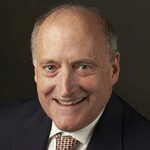
|
|
Stowe Shoemaker
Dean of the UNLV Hotel School University of Nevada |
Dr. Stowe Shoemaker (Ph.D., Cornell University) is the Dean of the William F. Harrah College of Hospitality and a Lincy Professor at the University of Nevada, Las Vegas, with extensive background in pricing, revenue management, consumer behavior, and customer loyalty programs. He has worked with British Airways on their pricing strategy and trained all their revenue managers. He also worked with Accor, Hilton, Landry’s, and Hyatt on their loyalty programs.
Dr. Shoemaker has incorporated his knowledge of hospitality to help healthcare professionals work on patient satisfaction. He held a joint appointment at MD Anderson Cancer Center in Houston and is currently working with them on other research. Locally, he is working with UNLV Medical School.
Dr. Shoemaker’s research has won numerous awards, and he has published two marketing textbooks: Marketing Leadership in Hospitality and Tourism: Strategies and Tactics for a Competitive Advantage and Marketing Essentials in Hospitality and Tourism: Foundations and Practices.
Since 1996 Dr. Shoemaker has been on the executive education faculty of Cornell University where he has taught courses in strategic pricing, revenue management, strategic marketing for hotels and restaurants, and customer loyaly.
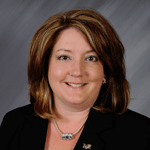
|
|
Cheryl Smith, MA, CMP, HMCC
Health & Wellness Tourism Manager Las Vegas Convention & Visitors Association |
Cheryl Smith is the Director of Specialty Market Sales for the Las Vegas Convention and Visitors Authority (LVCVA). Through a variety of global business sales strategies, industry relations activities and strategic opportunities, Smith is responsible for niche travel market sales including international meetings, incentives, congresses and exhibitions (MICE), health and wellness travel, diversity and LGBT travel, cultural tourism and wedding and romance travel. She also oversees World Trade Center Las Vegas sales for the Las Vegas Convention Center.
Prior to joining the LVCVA in 2012, Smith was the president and managing partner of Banyan Communications Group, LLC, a Las Vegas-based consulting firm specializing in health care, physician practice marketing, and strategic business development. Her 20-year background in the health care industry includes roles as the director of marketing and the system-wide media spokeswoman for HCA Sunrise Health System and the director of public relations and marketing for Good Shepherd Hospital, Good Samaritan Hospital and Advocate Health Care, near Chicago.
Cheryl has marketed numerous medical specialties including neuroscience, neurosurgery, neurology, orthopedic, cardiovascular, oncology, emergency and trauma, diagnostic imaging, ambulatory surgery, ophthalmology, rehabilitation, behavioral health, bariatric, obstetric, pediatric, outpatient and preventative health and wellness services.
Cheryl holds a Masters in Public Affairs Reporting from the University of Illinois and a Bachelor’s in Mass Communications/Print Journalism from Western Illinois University. She is a Certified Meeting Professional (CMP) and certified in Healthcare Medical Meeting Compliance (HMCC) and is also a published author and speaker. She serves on the boards of the Las Vegas Hospitality Association, Las Vegas HEALS and Family to Family Nevada, and is a member of the Las Vegas Spa Association and the past-chair of the Healthcare Special Interest Group of the Las Vegas Chapter of the American Marketing Association. She is currently a member of the MPI Medical Meeting Advisory Panel and sits on the Wellness Advisory Board of the Global Wellness Institute. Smith also has served on the boards of several local philanthropic organizations. In 2014, she was named one of Las Vegas’ “Women to Watch” by Vegas Inc.

|
|
Chet Burrell
President and Chief Executive Officer CareFirst BlueCross BlueShield |
Chet Burrell, joined CareFirst BlueCross BlueShield in December 2007. He is a seasoned professional with more than 40 years in the health care industry. His experience includes serving as President and Chief Executive Officer of RealMed Corporation, a provider of online claims processing services and founder; and Chairman and CEO for Novalis Corporation, a managed care technology and consulting company. He has also served in senior-level positions for Anthem and Empire Blue Cross Blue Shield plans and Blue Cross of Northeastern New York. In addition to his private sector health care experience, Burrell has also served in the New York State government in a variety of capacities, including the Offices of Mental Health and Health Systems Management and as a member of the New York Governor’s Staff.
Burrell earned his Bachelor’s degree in Sociology and Political Science from Allegheny College and a Master’s degree in Public Administration from the University of Albany. Burrell serves on the Boards of the DC Chamber of Commerce, the Greater Baltimore Committee’s Executive and Health Care Committees, the Greater Washington Board of Trade and the Council for Affordable Quality Healthcare (CAQH).
Moderator:
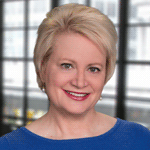
|
|
Susan Dentzer
President and Chief Executive Officer Network for Excellence in Health Innovation (NEHI) |
Susan Dentzer is the President and Chief Executive Officer of the NEHI, the Network for Excellence in Health Innovation, a nonprofit, nonpartisan organization composed of more than 100 stakeholder organizations from across all key sectors of health and health care. NEHI’s mission is to advance innovations that improve health, enhance the quality of health care, and achieve greater value for the money spent. With offices in Washington, DC, and Boston, Massachusetts, NEHI conducts independent, objective research and thought leadership to accelerate these innovations and bring about changes within health care and public policy.
One of the nation's most respected health and health policy thought leaders and journalists, and a frequent speaker and commentator on television and radio, including NPR, Dentzer previously served as senior policy adviser to the Robert Wood Johnson Foundation. Prior to that, she was editor-in-chief of the journal Health Affairs, and from 1998 to 2008, she served as the on-air Health Correspondent for the PBS NewsHour.
Dentzer is an elected member of the National Academy of Medicine and the Council on Foreign Relations. She is a member of the Board of Directors of the International Rescue Committee, a leading humanitarian organization; a member of the board of directors of Research!America, which works to advance research to improve health; and a member of the board of directors of the Public Health Institute. She is a fellow of the National Academy of Social Insurance and the Hasting Center, an institution dedicated to bioethics and the public interest. She previously served as a public member of the American Board of Medical Specialties. She serves on multiple advisory boards, including those of the Duke-Margolis Center; the Philip R. Lee Institute for Health Policy Studies at the University of California-San Francisco; and the March of Dimes public policy advisory group.
A graduate of Dartmouth, Dentzer formerly chaired the Dartmouth Board of Trustees, and is a member of the Board of Advisors of Dartmouth Medical School. She and her husband, Charles Alston, have three grown children.
|
|
Steven J. Corwin, MD
President and Chief Executive Officer NewYork-Presbyterian |
Steven J. Corwin, MD, is President and Chief Executive Officer of NewYork-Presbyterian, one of the nation’s largest, most comprehensive healthcare delivery networks.
Under Dr. Corwin’s leadership, NewYork-Presbyterian has nearly doubled in size and comprises of four divisions dedicated to providing world-class care to more than 2 million patients per year. Together with its academic partners—Weill Cornell Medicine and Columbia University College of Physicians and Surgeons—NewYork-Presbyterian pursues clinical excellence, engages in pioneering medical research, and provides outstanding medical education to the next generation of doctors. The organization’s six-campus academic medical center, NewYork-Presbyterian Hospital, has been the top-ranked hospital in New York on U.S. News & World Report’s annual survey of “Best Hospitals” and among the top 10 hospitals nationwide for more than a decade.
A cardiologist and internist, Dr. Corwin obtained his undergraduate and medical degrees from Northwestern University, graduating summa cum laude and with Alpha Omega Alpha honors. He completed both his internal medicine residency and cardiology training at Columbia-Presbyterian Medical Center. Dr. Corwin joined the NewYork-Presbyterian team in 1979. From 1998 to 2005, Dr. Corwin was the organization’s Senior Vice President and Chief Medical Officer, where he led the development and implementation of 13 clinical service lines, a critical step for the success of the newly merged Hospital.
Prior to his appointment as CEO, Dr. Corwin served as NewYork-Presbyterian Hospital’s Executive Vice President and Chief Operating Officer, where he oversaw day-to-day operations across five campuses and was responsible for advancing a number of strategic initiatives, with We Put Patients First at the core of its mission. These included an intense focus on quality and patient safety, cultivating talented employees and caregivers, advancing clinical and technological innovation, building physician and institutional relationships, providing care to underserved communities, and maintaining the Hospital’s financial and operational strength.
As President and CEO, Dr. Corwin has thoroughly embraced innovative approaches to patient-centered care. He led the way in establishing the NewYork-Presbyterian Regional Hospital Network and NewYork-Presbyterian Medical Groups, which enable patients to receive NewYork-Presbyterian’s world-renowned care directly in their own communities. He has overseen the planning and construction of several state-of-the-art facilities, such as The Spine Hospital at NewYork-Presbyterian/Allen, and the David H. Koch Center, which will be the largest freestanding building dedicated to ambulatory care in Manhattan’s Upper East Side when it opens in 2018. He has championed numerous technological initiatives, including on-demand access to electronic medical records for patients, a telehealth program set to launch in 2016 and a dedicated space at Blueprint Health, one of the country’s leading incubators of health care technology. In addition, his focus on energy efficiency and green buildings has garnered a record number of EPA ENERGY STAR Partner of the Year Awards for Sustained Excellence in Energy Management, the program’s highest honor.
Dr. Corwin is a member of the Board of Directors of the Greater New York Hospital Association and will serve as its president beginning in June of 2016. He is a member of the Governing Council of Health Care Systems of the American Hospital Association. He is also a Fellow at the New York Academy of Medicine, a member of the Association of American Medical Colleges Council of Teaching Hospitals Administrative Board, a member of the Health Management Academy, and a member of the Advisory Board for the Morgan Stanley Institute for Sustainable Investing.
He has received numerous awards and honors, including the Hope and Heroes Award for promoting excellence in pediatric oncology and the VHA Award for Clinical Quality for the design and implementation of an emergency department for chest pain diagnosis and treatment protocol.
Moderator:
|
|
Susan Dentzer
President and Chief Executive Officer Network for Excellence in Health Innovation (NEHI) |
Susan Dentzer is the President and Chief Executive Officer of the NEHI, the Network for Excellence in Health Innovation, a nonprofit, nonpartisan organization composed of more than 100 stakeholder organizations from across all key sectors of health and health care. NEHI’s mission is to advance innovations that improve health, enhance the quality of health care, and achieve greater value for the money spent. With offices in Washington, DC, and Boston, Massachusetts, NEHI conducts independent, objective research and thought leadership to accelerate these innovations and bring about changes within health care and public policy.
One of the nation's most respected health and health policy thought leaders and journalists, and a frequent speaker and commentator on television and radio, including NPR, Dentzer previously served as senior policy adviser to the Robert Wood Johnson Foundation. Prior to that, she was editor-in-chief of the journal Health Affairs, and from 1998 to 2008, she served as the on-air Health Correspondent for the PBS NewsHour.
Dentzer is an elected member of the National Academy of Medicine and the Council on Foreign Relations. She is a member of the Board of Directors of the International Rescue Committee, a leading humanitarian organization; a member of the board of directors of Research!America, which works to advance research to improve health; and a member of the board of directors of the Public Health Institute. She is a fellow of the National Academy of Social Insurance and the Hasting Center, an institution dedicated to bioethics and the public interest. She previously served as a public member of the American Board of Medical Specialties. She serves on multiple advisory boards, including those of the Duke-Margolis Center; the Philip R. Lee Institute for Health Policy Studies at the University of California-San Francisco; and the March of Dimes public policy advisory group.
A graduate of Dartmouth, Dentzer formerly chaired the Dartmouth Board of Trustees, and is a member of the Board of Advisors of Dartmouth Medical School. She and her husband, Charles Alston, have three grown children.
|
|
Chet Burrell
President and Chief Executive Officer CareFirst BlueCross BlueShield |
Chet Burrell, joined CareFirst BlueCross BlueShield in December 2007. He is a seasoned professional with more than 40 years in the health care industry. His experience includes serving as President and Chief Executive Officer of RealMed Corporation, a provider of online claims processing services and founder; and Chairman and CEO for Novalis Corporation, a managed care technology and consulting company. He has also served in senior-level positions for Anthem and Empire Blue Cross Blue Shield plans and Blue Cross of Northeastern New York. In addition to his private sector health care experience, Burrell has also served in the New York State government in a variety of capacities, including the Offices of Mental Health and Health Systems Management and as a member of the New York Governor’s Staff.
Burrell earned his Bachelor’s degree in Sociology and Political Science from Allegheny College and a Master’s degree in Public Administration from the University of Albany. Burrell serves on the Boards of the DC Chamber of Commerce, the Greater Baltimore Committee’s Executive and Health Care Committees, the Greater Washington Board of Trade and the Council for Affordable Quality Healthcare (CAQH).
|
|
Steven J. Corwin, MD
President and Chief Executive Officer NewYork-Presbyterian |
Steven J. Corwin, MD, is President and Chief Executive Officer of NewYork-Presbyterian, one of the nation’s largest, most comprehensive healthcare delivery networks.
Under Dr. Corwin’s leadership, NewYork-Presbyterian has nearly doubled in size and comprises of four divisions dedicated to providing world-class care to more than 2 million patients per year. Together with its academic partners—Weill Cornell Medicine and Columbia University College of Physicians and Surgeons—NewYork-Presbyterian pursues clinical excellence, engages in pioneering medical research, and provides outstanding medical education to the next generation of doctors. The organization’s six-campus academic medical center, NewYork-Presbyterian Hospital, has been the top-ranked hospital in New York on U.S. News & World Report’s annual survey of “Best Hospitals” and among the top 10 hospitals nationwide for more than a decade.
A cardiologist and internist, Dr. Corwin obtained his undergraduate and medical degrees from Northwestern University, graduating summa cum laude and with Alpha Omega Alpha honors. He completed both his internal medicine residency and cardiology training at Columbia-Presbyterian Medical Center. Dr. Corwin joined the NewYork-Presbyterian team in 1979. From 1998 to 2005, Dr. Corwin was the organization’s Senior Vice President and Chief Medical Officer, where he led the development and implementation of 13 clinical service lines, a critical step for the success of the newly merged Hospital.
Prior to his appointment as CEO, Dr. Corwin served as NewYork-Presbyterian Hospital’s Executive Vice President and Chief Operating Officer, where he oversaw day-to-day operations across five campuses and was responsible for advancing a number of strategic initiatives, with We Put Patients First at the core of its mission. These included an intense focus on quality and patient safety, cultivating talented employees and caregivers, advancing clinical and technological innovation, building physician and institutional relationships, providing care to underserved communities, and maintaining the Hospital’s financial and operational strength.
As President and CEO, Dr. Corwin has thoroughly embraced innovative approaches to patient-centered care. He led the way in establishing the NewYork-Presbyterian Regional Hospital Network and NewYork-Presbyterian Medical Groups, which enable patients to receive NewYork-Presbyterian’s world-renowned care directly in their own communities. He has overseen the planning and construction of several state-of-the-art facilities, such as The Spine Hospital at NewYork-Presbyterian/Allen, and the David H. Koch Center, which will be the largest freestanding building dedicated to ambulatory care in Manhattan’s Upper East Side when it opens in 2018. He has championed numerous technological initiatives, including on-demand access to electronic medical records for patients, a telehealth program set to launch in 2016 and a dedicated space at Blueprint Health, one of the country’s leading incubators of health care technology. In addition, his focus on energy efficiency and green buildings has garnered a record number of EPA ENERGY STAR Partner of the Year Awards for Sustained Excellence in Energy Management, the program’s highest honor.
Dr. Corwin is a member of the Board of Directors of the Greater New York Hospital Association and will serve as its president beginning in June of 2016. He is a member of the Governing Council of Health Care Systems of the American Hospital Association. He is also a Fellow at the New York Academy of Medicine, a member of the Association of American Medical Colleges Council of Teaching Hospitals Administrative Board, a member of the Health Management Academy, and a member of the Advisory Board for the Morgan Stanley Institute for Sustainable Investing.
He has received numerous awards and honors, including the Hope and Heroes Award for promoting excellence in pediatric oncology and the VHA Award for Clinical Quality for the design and implementation of an emergency department for chest pain diagnosis and treatment protocol.
Moderator:
|
|
Susan Dentzer
President and Chief Executive Officer Network for Excellence in Health Innovation (NEHI) |
Susan Dentzer is the President and Chief Executive Officer of the NEHI, the Network for Excellence in Health Innovation, a nonprofit, nonpartisan organization composed of more than 100 stakeholder organizations from across all key sectors of health and health care. NEHI’s mission is to advance innovations that improve health, enhance the quality of health care, and achieve greater value for the money spent. With offices in Washington, DC, and Boston, Massachusetts, NEHI conducts independent, objective research and thought leadership to accelerate these innovations and bring about changes within health care and public policy.
One of the nation's most respected health and health policy thought leaders and journalists, and a frequent speaker and commentator on television and radio, including NPR, Dentzer previously served as senior policy adviser to the Robert Wood Johnson Foundation. Prior to that, she was editor-in-chief of the journal Health Affairs, and from 1998 to 2008, she served as the on-air Health Correspondent for the PBS NewsHour.
Dentzer is an elected member of the National Academy of Medicine and the Council on Foreign Relations. She is a member of the Board of Directors of the International Rescue Committee, a leading humanitarian organization; a member of the board of directors of Research!America, which works to advance research to improve health; and a member of the board of directors of the Public Health Institute. She is a fellow of the National Academy of Social Insurance and the Hasting Center, an institution dedicated to bioethics and the public interest. She previously served as a public member of the American Board of Medical Specialties. She serves on multiple advisory boards, including those of the Duke-Margolis Center; the Philip R. Lee Institute for Health Policy Studies at the University of California-San Francisco; and the March of Dimes public policy advisory group.
A graduate of Dartmouth, Dentzer formerly chaired the Dartmouth Board of Trustees, and is a member of the Board of Advisors of Dartmouth Medical School. She and her husband, Charles Alston, have three grown children.

|
|
Elizabeth Maribito
Executive Director Cedars-Sinai Medical Delivery Network |
Elizabeth Acord Maribito is the Executive Director of Oncology and Hematology for Cedars-Sinai Medical Network. The former Vice President of Oncology/Operations at Cancer Treatment Centers of America (CTCA) at Western Regional Medical Center (Western) was recruited by Cedars-Sinai in 2015 to help integrate their newly acquired outpatient oncology services into the hospital-based cancer center and create one unified service line.
A graduate of Dartmouth College, with a Master of Science degree in medical informatics from Northwestern University, her academic background allowed her to open doors to collaborations with other major hospital systems, as well as, technology companies.
Ultimately, her experience building hospitals, programs and bridges prepared her for the exciting role she holds today at Cedars-Sinai Health System. In her short time at Cedars-Sinai, she has overseen the design of architectural plans for three major expansions, two electronic health record implementations and more change is on the horizon.
|
|
Nikhil Pooviah, MD
Co-Founder and Chief Executive Officer CancerAid |

|
|
Merrill Goozner
Emeritus Editor Modern Healthcare |

|
|
Thomas E. Price, MD
Former Secretary Health and Human Services (HHS) |
Dr. Thomas E. Price, an Orthopedic surgeon, most recently served as the 23rd Secretary of Health and Human Services (HHS). He brought to the Department a lifetime of service and a dedication to advancing the quality of health care in America – both as a physician and policymaker. Dr. Price is excited about opportunities to use his vast experience and unique expertise in healthcare and public policy to help actively shape improvements in technology and throughout the financing and delivery systems.
His first calling was to care for patients. Dr. Price received his Bachelor and Doctor of Medicine degrees from the University of Michigan and completed his General Surgery Internship and Orthopedic Surgery Residency at Emory University. After his training, Dr. Price – a third generation physician following in the footsteps of his father and grandfather – began a solo medical practice in Atlanta, Georgia, which would eventually grow to be one of the largest, non-academic orthopedic practices in the country, which he led as Chairman of the Board. During his 20+ years as a practicing physician, he also served as Medical Director of the Orthopedic Clinic at Grady Memorial Hospital as well as an Assistant Professor at Emory University School of Medicine.
As with many physicians and health care providers, Dr. Price’s experience caring for patients gave him a unique perspective about the impact of public policy on the practice of medicine. Eager to broaden the impact he could have on improving access to quality health care, Dr. Price ran for public office and was elected to four terms in the Georgia State Senate – during which time he was chosen by his colleagues to serve as Senate Minority Whip and later as the first Republican Senate Majority Leader in the history of Georgia.
Dr. Price also served as the U.S. Representative for Georgia’s 6th Congressional District from northern suburban Atlanta. He held this office from 2005-2017 and earned a reputation amongst his colleagues for being a tireless problem solver and the go-to expert on health care matters. During his congressional career, Dr. Price served in various leadership roles including Chairman of the House Budget Committee, Chairman of the House Republican Policy Committee and Chairman of the Republican Study Committee.
Committed to promoting positive solutions under principled leadership, Dr. Price remains a fierce advocate for a patient-centered health care system that adheres to six key principles: affordability, accessibility, quality, choices, innovation, and responsiveness.
Dr. Price and his wife, Betty, have lived in the Metro-Atlanta area for nearly 40 years. They have one adult son.

|
|
John Doerr
Chairman Kleiner Perkins |
John Doerr is an engineer, acclaimed venture capitalist, and the chairman of Kleiner Perkins. For more than 37 years, John has served entrepreneurs with ingenuity and optimism, bringing ideas worth spreading to disruptive leaders and teams.
In 2018, John authored Measure What Matters, a handbook for setting and achieving audacious goals. Through his book and platform, WhatMatters.com, he shares valuable stories and lessons from innovators.
John was an original investor and board member at Google and Amazon, helping to create over 500,000 jobs and the world’s second and third most valuable companies. He’s passionate about helping entrepreneurs reimagine the future, from health care transformation to machine learning. Outside of Kleiner Perkins, John works with social entrepreneurs for change in public education, the climate crisis, and global poverty. John serves on the board of the Obama Center and ONE.org.
|
|
Tom Owens, MD
President, Duke University Hospital; Senior Vice President, Duke University Health System |
Thomas Owens, MD, is the President of the Duke University Hospital, Senior Vice President for Duke University Health System, and an Associate Professor of Medicine and Pediatrics at the Duke University School of Medicine.
Over the past decade, Dr. Owens has made important and varied contributions to the success of DUH and DUHS. He led the work to redesign, realign and in some cases reinvent the way we deliver care in many areas of clinical practice. This work has already resulted in significant reductions in readmissions and lengths of stay and enhanced patient experience. He also served in a critically important leadership role with clinical providers and leaders in the planning, preparation and implementation of Maestro Care, one of the most fundamental transformations across DUHS since its inception in 1998.
Dr. Owens’ leadership in patient safety and quality management has resulted in marked quantifiable improvements across multiple clinical quality measures and CMS core measures. In addition under Dr. Owens’ leadership, Duke Primary Care (DPC) has become the leading primary care network in the greater Triangle area while consistently exceeding quality, growth and financial targets. He has also played a pivotal role in helping shape our approach and capabilities in population health improvement.
Dr. Owens received his MD with honors from the University at Buffalo School of Medicine & Biomedical Sciences in 1995. He completed an Internal Medicine and Pediatrics internship and residency at Duke in 1999, a General Internal Medicine fellowship in 2000, and served as Chief Resident in 2001. He has held a number of positions of increased responsibility over the years including Chief Medical Officer for DUH and chief of the DUHS Hospital Medicine program prior to being named Chief Medical Officer for DUHS in 2012.
Tom has received numerous awards and honors including the Eugene A. Stead, Jr. Award for Outstanding Teaching Faculty (2004, 2008), Samuel L. Katz Faculty Award for Excellence in Teaching (2002) and the Duke University Presidential Award for Executive Leadership (2006).

|
|
Tom McGuinness
Chief Strategy and Commercial Officer GE Healthcare |
Tom McGuinness is the Chief Strategy & Commercial Officer for GE Healthcare, an $18 billion business unit of General Electric that provides transformational medical technologies and solutions to the global healthcare industry. GE Healthcare supports customers in more than 100 countries with a broad range of services and systems, from diagnostic imaging and healthcare IT through molecular diagnostics and life sciences. Tom is based at GE Healthcare’s headquarters in Chicago and joined GE in his current role in August, 2016.
Tom has more than 23 years of healthcare leadership experience across all aspects of the industry, from medical technology and pharma/biotech to providers, payers, clinical research, patient engagement, and digital health. In his role at GE Healthcare, Tom is responsible for strategy, marketing, commercial, and communication functions and works with the rest of the leadership team to deliver on GE Healthcare’s mission to be the leader of outcomes-based solutions in healthcare.
Prior to joining GE, Tom was the CEO of PatientPoint, a PE-owned healthcare technology firm focused on care coordination and physician and patient engagement with a network of more than 750 hospitals and 30,000 physician practices. Before that, Tom led Medtronic’s global Biologics business, a ~$1 billion business unit focused on musculoskeletal regenerative therapies across spine, orthopedics, and oral maxillofacial care areas. During his tenure, the business was awarded the 2008 Prix Galien Award for best biotech product in the industry as well as recognized for the Medtronic Marketing Excellence Award. Prior to that, Tom was a partner at McKinsey & Company and a leader in its Healthcare Practice based in Chicago for 13 years. At McKinsey, he was also a core leader in its Strategy & Growth Practice as well as its Marketing & Sales Practice.
He holds an MBA with distinction from Kellogg Business School, a master’s degree from Stanford University, and bachelor's degree from Northwestern University.

|
|
Mark H. Michalski, MD
Executive Director MGH & BWH Center for Clinical Data Science |
Mark H. Michalski, MD, is the Executive Director of the MGH & BWH Center for Clinical Data Science, which is focused on the application and translation of novel machine learning techniques into clinical practice. Previous to this role, Dr. Michalski held leadership and operational roles at early-stage companies in the medical software and device domain, including Butterfly Network and Hyperfine Research. Dr. Michalski held additional strategic roles in healthcare-focused efforts at Google and Genentech. Dr. Michalski completed his radiology residency training as a Holman Fellow at Yale-New Haven Hospital. He graduated with a degree in Cybernetics from the University of California at Los Angeles with multiple honors and received his medical degree from Stanford University.
|
|
Merrill Goozner
Emeritus Editor Modern Healthcare |
U.S. health care continues to transform radically creating both opportunities and challenges for payers and employers. Market forces are provoking organizations to develop new strategic initiatives and to reprioritize existing ones. The session unveils qualitative and quantitative findings from a national research study of payers and employers and gives insight into how organizations adapt to meet these challenges and harness new opportunities.
|
|
Gregory M. Jelinek
Executive Vice President, National Sales Director Treasury Management PNC Healthcare; The PNC Financial Services Group |
Greg Jelinek is the executive vice president and national sales director for PNC Healthcare, Treasury Management for The PNC Financial Services Group. In addition to his responsibilities leading the sales team for PNC Healthcare Treasury Management, he chairs the PNC Healthcare Advisory Board and has responsibility for PNC’s Revenue Cycle Automation Advisory Business. He joined PNC in 1986. Previously, he led the asset management strategy to grow the Wealth and Institutional Investment business from the PNC Corporate and Institutional Bank.
In addition, Jelinek held positions as Market Manager of the Commercial Banking team in Northern Ohio, Chief Credit Officer for the Wealth Management business, head of Business Banking, head of the Dealer Finance unit and various leadership positions in Corporate Banking, Investment Real Estate, Credit and Retail Banking.
Formerly, he served on the boards of the MetroHealth Foundation and the Western Reserve Historical Society and the advisory committee for the Baldwin Wallace Center for Innovation and Growth.
Jelinek graduated from the University of Dayton in 1985 with a bachelor’s degree in Finance. In 1992, he earned his master’s degree from Cleveland State University.
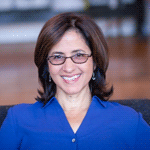
|
|
Sara Parikh, PhD
President Willow Research |
Sara Parikh is President and owner of Willow Research, LLC, a market research and consulting firm that designs and conducts original studies of consumers and professionals. Sara has 30 years of experience in research design, analysis and consulting.
A recognized research expert who presents on methods and findings at professional conferences and seminars, she also testifies as a survey expert in commercial litigation. Sara has designed and conducted a number of healthcare related studies, including a large-scale study with American consumers on the shift toward patient-centered care, and research with hospital executives on trends and challenges in healthcare from the provider perspective.
She holds a PhD and MA in Sociology from the University of Illinois at Chicago, and a BA in Political Science from the University of Wisconsin-Madison.
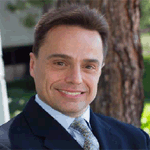
|
|
Mike Reha
Vice President of Sales and Marketing EPIC Hearing Healthcare |
Mike Reha is vice president of sales and marketing for EPIC Hearing Healthcare, the leading provider of hearing care insurance in America. Mike has more than 20 years of experience in the hearing industry, ranging from serving as managing director for Qualitone running the hearing aid manufacturing facility, to his current role directing strategic customer relationships and marketing initiatives for EPIC.
Founded in 1997, EPIC is the first in the country to provide access to hearing care as an ancillary or specialty benefit. With its extensive network of audiologists and hearing healthcare physicians, and distribution relationships with major hearing aid technology manufactures, EPIC is now the national leader in hearing healthcare, and the only organization to offer hearing as a fully insured indemnity plan. EPIC Hearing Service Plan (HSP) manages the process of referrals; professional services and diagnostics; access to all technology; and billing and collections for hearing care. In this manner, members throughout the country can be assured of standardized and consistent procedures for assessment and evaluation, technology selection, programming, and outcomes measurements. He leads contact with all third-party administrators, brokers, employer groups, insurance companies and Taft Hartley funds, through which EPIC HSP covers millions of lives.
With a concentration in human resources, he earned a bachelor of science in business administration from the University of St. Thomas in Minnesota and has a CEBS designation from the International Society of Certified Employee Benefits Specialists through The Wharton School of the University of Pennsylvania.
Managing health care costs as a self-funded employer requires constant and consistent monitoring of employee health, and not just plan design changes and cost shifts. In this session, Quest Diagnostics will share how they successfully achieved lower than benchmark increases for their 61,000 member health plan, moving from a consistent 6% upward trend through 2015 to a -1% trend in 2017.
|
|
Wendi Mader
Director, Marketing and Senior Health & Well-being Strategist Quest Diagnostics |
Wendi Mader has nearly 15 years of experience in the employee health and wellness industry building wellness solutions, analyzing aggregate data for clients and the industry, and leading the marketing and strategy behind Blueprint for Wellness and Quest Diagnostics Health & Wellness. Today, her primary focus is strategy and innovation through Blueprint for Wellness to offer products and services that can enhance clients’ well-being programs in the areas of individual and organizational outcomes, and healthcare cost savings.
At Quest Diagnostics she led the development and design of an in-house wellness platform that includes scheduling, health assessments, reporting solutions, and outcomes-based incentive processing. Wendi also served as a Senior Product Manager for reporting solutions where she focused on transforming data into meaningful insights, thus helping participants engage in health improvement. In addition, she directed the development and design of the aggregate reporting platform that provides Quest Diagnostics Health & Wellness employer clients with population level insights to inform future benefits strategies.
Wendi began her career at Summex Health Management, now WebMD Health Services, where she managed clients and the product lines for large health plans and biometric screening providers. She earned her Bachelor’s degree in health science from Truman State University and holds a Master’s degree in health education, health promotion and fitness management from the University of Northern Iowa.

|
|
Tom Pela
Director, Health and Wellness, Healthcare Management Quest Diagnostics |
As the Director of Employee Health and Wellness for Quest Diagnostics, Thomas Pela is responsible for the strategy and administration for Quest’s 61,000-member group health plan. With the goal of improving population health, simplifying member experience, and reducing waste in the healthcare system, Tom has executed many best-in-class programs in support of these goals. In 2017, the trend for the Quest health plan was – 1%, and Tom and team continue to pilot innovative ways to engage its members around their health.
Thomas earned a BA degree in psychology from Montclair State University, and has spent 20 years in human resources and employee benefits related roles.
|
|
Deb Smyers
Plan Product President Sunshine Health |
Debra Smyers has over thirty years of experience as a health care administrator in a managed care environment with a strong focus on population management and quality improvement. Ms. Smyers is the Plan Product President at Sunshine Health in Sunrise, Florida. Sunshine Health is a subsidiary of Centene Corporation. Her areas of responsibility include utilization management, case management, and quality improvement. She is the operational lead for strategic clinical program development and implementation. In her role, she applies a data driven approach to the design of programs, addressing the unique needs of various populations which will have a positive impact on appropriate utilization of services, quality, and member satisfaction.
Ms. Smyers has experience in the clinical and financial management of Medicaid, Exchange, CHIP and Medicare Special Needs Plan (SNP) products. She has designed and managed numerous innovative clinical programs. Other experience includes developing strong provider relationships and community partnerships to support the care of members, improving Health Plan Employer Data Information Set (HEDIS) rates, and meeting National Committee for Quality Assurance (NCQA) standards.
Ms. Smyers holds a Bachelor of Science degree in nursing from the University of Pittsburgh.

|
|
Lisa Strouss
Director, Field Medical Strategy ODH Inc. |
Dr. Strouss received her Bachelor of Science degree and Doctor of Pharmacy degree from the University of Pittsburgh. She is currently the Director for Field Medical Strategy at ODH, Inc. where she leads clinical strategy with emphasis in pharmacy analytics.
She has 10+ years in neuroscience scientific affairs; 10+ years in health care management with 4 years as Director of Pharmacy Research and Outcomes for Managed Care Organization. Her experience includes pharmacy clinical practice with emphasis on psychiatric medicine and physician interaction, collaboration with internal and external stakeholders within managed care organization and serving as a bridge between the two from a clinical and scientific perspective, educating accounts on clinical therapeutics presentation, medical writing, and clinical management in managed care.
Dr Strouss’ private sector experiences include development of innovative strategies for pharmacy cost management within Medicaid managed care industry, scientific liaison experience within the behavioral health MCO with emphasis on fostering relationships with key opinion leaders, integration with clinical development and assistance in site identification and education for Pennsylvania Medication Algorithm Project. Serve on Pharmacy and Therapeutics Committee specific duties include policy development and review; editing and development of the health plan drug formularies specific to behavioral health medications; evidence based review of clinical pharmacy literature with provision of clinical recommendations to P&T; Committee; and development and implementation of various clinically appropriate and cost-effective clinical management strategies. Oversight of behavioral clinical pharmacist staff; interaction with state agencies for approval and implementation of formulary management policies.
Dr. Strouss is a member of International Society of Pharmacoeconomics Research (ISPOR) Patient-Reported Outcomes as well as ISPOR Clinician Reported Outcomes Good Measurement Practices. She serves on the Allegheny County Medical Response Team and is an adjunct clinical instructor at the University of Pittsburgh School of Pharmacy.
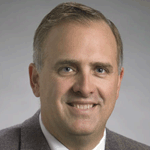
|
|
Todd Bisping
Global Benefits Manager Caterpillar |
Todd Bisping is the Global Benefits Manager at Caterpillar Inc. In this role he is responsible for overseeing the global strategy and initiatives for all benefits, including Caterpillar's Total Health Strategy and Global Mobility. Todd previously has held a wide range of responsibilities in the benefits arena including plan design, administration, compliance, government and policy issues as well as the management of the Caterpillar PPO network which includes over 30 hospitals and 4000 providers. He also has been instrumental in the development and implementation of industry leading pharmacy benefit innovations and solutions. Todd also served as the Chief Strategy Officer for the Health Transformation Alliance during it's launch.
Since joining Caterpillar in 1989 as part of the company’s Engineering program, he has held numerous positions with increasing responsibilities in the areas of Engineering, I/T, and Product Support. He also is certified as a 6 Sigma Blackbelt and Master Blackbelt.
Bisping, a native of Linn, Kansas, graduated from Kansas State University with a bachelor’s degree in Engineering, and Bradley University with a MBA. He also has been certified as a Benefits Professional. He currently serves as Vice Chairman of the Board of Directors for the Heartland Healthcare Coalition as well as a member of the Board of Directors for the Health Transformation Alliance. He is involved in numerous community activities in his hometown of Morton, IL.
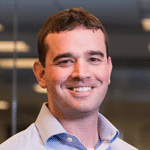
|
|
Joseph Marullo
Director, Operations and Strategic Analytics Restore Health |
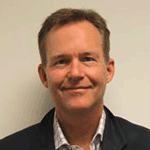
|
|
Dave Beech
Director, Health Management Trion |
As Director of Health Management Services for Trion, Dave has more than 30 years of experience in the health care consulting arena and specializes in employee health strategy, program design, worksite health services, health management and wellbeing, consumer-driven plans, health data utilization and cost analysis and evaluating/selecting health vendors. Dave has been a frequent presenter at national and regional health care conferences including the National Business Group on Health, American Bar Association, CEBS, CFO Magazine, NY Times and HR Magazine.
Dave has worked extensively with major Fortune and nonprofit clients including CalPERS, Apple, BMW, Facebook, Western Digital, LPL Financial Services, First American, Volvo, LegalZoom, Applied Materials, Edwards Lifesciences, Scripps Healthcare, Sharp Healthcare, Providence Health, Ascension Health, Mayo Health Services, and Yale Health System. Prior to joining Trion, David held various regional and national positions in health care with Towers Watson, Hewitt Associates and PWC.
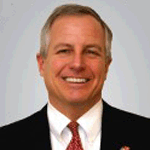
|
|
Stuart Sutley
Corporate Health Advisor Johns Hopkins Medicine |
A graduate of The University of Virginia, Stuart completed a successful four-year-tour in the United States Marine Corps as an infantry officer culminating in a strategic battalion position during Operation Desert Storm. Following Desert Storm, he embarked on a five-year sales and operations opportunity with consumer products giant Newell-Rubbermaid Corporation, and concurrently earned his MBA from Capital University in Columbus, Ohio. In 1998, Stuart was recruited by Bank Boston Ventures to work with one of its portfolio companies, Langston Corporation, where he managed 500 employees and developed sales budgets in excess of $75,000,000.
Seeing the opportunity to assist Academic Medical Centers in developing new revenue streams led Stuart to lead the sales efforts for Johns Hopkins HealthCare Solutions, a for-profit business enterprise that commercializes Johns Hopkins faculty innovations and discoveries into products and services for the employer market. Focus areas have been on-site employer clinics and Johns Hopkins validated programs supporting Diabetes, Cancer, Behavioral Health and Well-Being.
Specialties: Marketing, strategy development, new revenue channels, private exchanges, population health, behavioral health
Moderator:
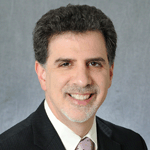
|
|
Paul Fronstin
Director, Health Research and Education Program Employee Benefits Research Institute (EBRI) |
Paul Fronstin is Director of the Health Research and Education Program at the Employee Benefit Research Institute (EBRI), a private, nonprofit, nonpartisan organization committed to original public policy research and education on economic security and employee benefits. He also oversees the Center for Research on Health Benefits Innovation. He has been with EBRI since 1993.
Dr. Fronstin's research interests include trends in employment-based health benefits, private health insurance exchanges, workplace wellness programs, consumer-driven health benefits, retiree health benefits, employee benefits and taxation, and public opinion about health benefits and health care. He currently serves on the board of trustees for Emeriti Retirement Health Solutions and for the Maryland Patient Safety Center. He also serves on the National Advisory Board for the University of Michigan Center for Value-Based Insurance Design. He is the associate editor of Benefits Quarterly and is also a TIAA-CREF Institute Fellow. From 2012-2016, Dr. Fronstin served on the Maryland Health Care Commission. In 2010, he served on the Institute of Medicine (IOM) Committee on Determination of Essential Health Benefits.
Dr. Fronstin earned his Bachelor of Science degree from SUNY Binghamton and his Ph.D. in economics from the University of Miami.
Panelists:

|
|
Robert E. Andrews
Chief Executive Officer Health Transformation Alliance former Chairman of the HELP Subcommittee of the House Committee on Education and the Workforce US House of Representatives |
Robert E. Andrews currently serves as the CEO of the Health Transformation Alliance (HTA).
As CEO of the HTA, Andrews oversees the strategic direction of 40+ major corporations who have come together in an alliance to do one thing: fix our broken healthcare system. Formed by 4 founding members in September 2015, the HTA has grown to include more than 40 of our nation’s leading employers, who collectively are responsible for more than 7 million employees, dependents and retirees and an annual health care spend of $26 billion. Through Andrews’ leadership, the HTA has launched value-driven solutions specifically designed to improve patient care and economic value through world class data & analytics, pathbreaking pharmaceutical solutions, high quality medical networks and robust consumer engagement initiatives.
Andrews previously led the Government Affairs practice at Dilworth Paxson law firm for two years before joining the HTA. Prior to private practice, Andrews served as a Member of the United States House of Representatives for nearly 24 years. Upon his departure from the Congress, President Barack Obama praised Andrews’ service as “an original author of the Affordable Care Act...and a vital partner in its passage and implementation,” and cited his “tenacity and skill” in representing the people of New Jersey. Andrews is married to Camille Spinello Andrews, an Associate Dean at Rutgers Law School and former Dilworth partner, and they have two daughters, Jacquelyn and Josie.
During his time in the U.S. House, Andrews was a Member of the House of Democratic Leadership as Co-Chairman of the Steering Policy Committee; Senior Democratic Member and former Chairman of the Health, Employment, Labor and Pensions (HELP) Subcommittee of the House Committee on Education and the Workforce; Senior member of the House Armed Services Committee, with responsibility for all national defense matters; Senior Democratic member and the former Chairman of the Defense Committee Panel on Defense Procurement Reform; Senior Democratic member and former Chairman of the Defense Committee Panel on Audit of the Pentagon; Participant, White House Summit on Health Care Reforms (2009 and 2010); One of the Original Authors of the Affordable Care Act; One of the original authors of the Defense Procurement Reform Law (2009); and he holds the record for the highest number of votes ever received by a U.S. House candidate in the history of the state of New Jersey.
Andrews’ professional and community activities include his time as former Director of Camden County Board of Chosen Freeholders.
Andrews has been a keynote speaker at charitable, educational and governmental events for 30 years, including: Bucknell University commencement; Rutgers Law School commencement; and Rutgers Camden commencement. He is a frequent guest on CNN, Fox News, MSNBC and CNBC.
Education:
J.D., magna cum laude, Cornell Law School, 1982 • Cornell Law Review • Order of the Coif
B.A., summa cum laude with honors, Bucknell University, 1979 • Phi Beta Kappa

|
|
Leah Binder
President and Chief Executive Officer The Leapfrog Group |
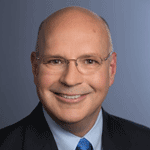
|
|
David Henka
President and Chief Executive Officer ActiveRADAR |
David Henka is the President and CEO of ActiveRADAR (formally RxTE Health), a company specializing in pharmacy cost reduction programs. David brings decades of experience consulting with health plan sponsors on a wide range of employee benefit issues, including plan design, benefit strategies, funding and plan management, to his role at ActiveRADAR. David previously served as ActiveRADAR’s COO, responsible for sales and the development of the company’s IT and analytics platform. Prior to joining ActiveRADAR, David served as the Director of the Reta Trust, a nonprofit Catholic employer healthcare trust. There he was responsible for vendor contracting, benefit design, clinical reporting and strategic market planning. David holds a Bachelor of Arts in History from University of California Los Angeles.

|
|
Michael Thompson
President and Chief Executive Officer National Alliance of Healthcare Purchaser Coalitions |
Michael Thompson is the President and CEO of the National Alliance of Healthcare Purchaser Coalitions (National Alliance), an association of approximately 50 regional coalitions collectively supporting over 12,000 healthcare purchasers providing health coverage to more than 45 million Americans. The National Alliance helps to lead improvements in health, wellbeing and value for our companies and communities across the country.
Prior to joining the National Alliance, Mike was a Principal at PricewaterhouseCoopers (PwC) for 20 years. Thompson is a nationally recognized thought leader for business health strategies and health system reform. He has worked with major employers and other stakeholders on sustainable cost reduction, integrated health, wellness and consumerism, retiree health, private health exchanges and health reform. Known for developing and promoting collaborative cross-sector health industry initiatives, Mike participated on the steering board of the World Economic Forum’s “Working towards Wellness” initiative and co-founded the Private Exchange Evaluation Collaborative (PEEC). Prior to PwC, Mike served as an executive with diverse roles with Prudential Healthcare for over 17 years.
Mike is a Fellow of the Society of Actuaries, serving on the Health Practice Council, and chairs the Medicare Sub-Committee of the American Academy of Actuaries (AAA). He is also widely recognized as a leading national advocate for mental health and wellbeing and was Past President of the New York City chapter of the National Alliance for Mental Illness (NAMI). Mike previously was an active member of the board of the Northeast Business Group on Health for 11 years.
Panel I – Medical Management
Moderator:
|
|
Nelson L. Griswold
President, Bottom Line Solutions, Inc.; Author, DO or DIE: Reinventing Your Benefits Agency for Post-Reform Success |
Nelson Griswold has been called “visionary” by Art Dammers of Anthem, “an authority on voluntary benefits and consultative selling” by Employee Benefit Adviser magazine and “a well-recognized industry thought leader” by Ron Leopold of MetLife.
Nelson has been honored by the Voluntary Benefits Association with their prestigious Industry Leadership Award, for his “professional accomplishments that drive the voluntary benefits industry forward.” A nationally-known agency reinvention and growth expert, he is the author of DO or DIE: Reinventing Your Benefits Agency for Post-Reform Success, the industry bestseller that has been hailed as the only comprehensive blueprint for agency leaders to reinvent their firm to survive and grow in the post-ACA era. As a practice management and agency growth consultant, Nelson works with leading agencies across the country to grow their top- and bottom-line revenue.
Nelson serves as Managing Director of the Agency Growth Mastermind Partnership, a national executive peer-exchange network for non-competing benefits agency owners who collaborate and cooperate to identify best practices and proven growth strategies to remain relevant, profitable, independent & growing.
Nelson is also a leading strategic consultant to carriers and other industry vendors on broker distribution & activation, voluntary benefits, and next-generation engagement & enrollment strategies. Nelson writes a monthly column for Employee Benefit Adviser magazine, has written for Benefits Selling, Producers eSource and other leading industry publications, and writes a blog for Zywave. He is an in-demand keynote speaker and presenter at industry conferences. He is a board member and serves on the executive committee of both the Workplace Benefits Association and the Voluntary Benefits Association
Panelists:
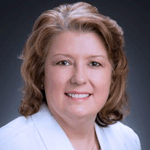
|
|
Deb Ault
Founder & President Ault International Medical Management |
Deborah Ault is well known and respected in the healthcare industry and has been the builder of successful medical management programs since 1996. Deborah has pioneered the “proactive,” “day-one, dollar-one,” and “progressive patient-centric” models of medical management. Most recently the creation of P3CM™ (patent pending) tops her resume. Deborah combines her proven success in the industry with her proven organizational leadership.
A registered nurse for 13 years, Deborah Ault has a diverse background in health care management and in all facets of nursing care. She worked in major hospitals, and acquired business development, management and marketing expertise at several prominent managed care organizations. Most recently, as vice president of care management for a national firm, she successfully utilized care management best practices to integrate two separate business operations into one company, while containing major health care costs.
Deborah began her nursing career upon graduation from Marion Technical College, and studied at several colleges and universities before earning her BBA degree and then MBA. Her leadership, multi-tasking and organizational skills, coupled with her advanced studies in mathematics and statistics, have proven invaluable in helping clients realize savings from medical management interventions.

|
|
Karen Gast
Owner K2 Benefits |
As an Employee Benefit Specialist since 2002, Karen Gast goes beyond mere activity on her clients’ behalf to produce real bottom-line results. She is a specialist in strategies that control the quality and cost of a company’s healthcare to reduce their overall healthcare and benefits budget while improving both benefits and healthcare outcomes for the employees.
In 2003, Karen was selected as one of the Peoria Area 40 Leaders Under Forty as sponsored by InterBusiness Issues magazine.
Her civic involvements, previous and current, include Secretary to the Board of Directors for the Zeta Theta chapter of Alpha Delta Pi, Activities Committee to Creve Coeur Club, Red Carpet Committee with Peoria NEXT, Opera Illinois League Board Member, WTVP volunteer, Peoria Park District volunteer, and member of the Young Professionals Organization.
Karen graduated from Illinois State University with a degree in Political Science.

|
|
Bill Geraci
President MAGIC Health Insurance Solutions |
Bill Geraci is an insurance consultant for employers who are challenged by the rising costs of health care for their employees.
Bill has been in the insurance business since the early 1980’s and to this day continues to serve his clients with the cutting-edge information needed to make the most appropriate insurance decisions. He started his career with Aetna in 1981, and during his sixteen years he worked in various offices, serving in ever increasing roles of management and leadership.
He took the challenge to learn everything he could about the health care industry. In 2001 he dove into health insurance industry and hasn’t looked back. By 2007 he purchased the consulting firm Metro Area Group Insurance Consultants (MAGIC).
Most employers are unaware of the advantages of alternative-funding. In partnership with MAGIC, employers become more proactive in addressing the increasing health care costs. He helps his clients find alternatives that yield results – more profit, more control over costs, and less hassle – both employers and employees benefit.
Bill’s clients receive the most efficient and economic opportunities to control health care costs. He takes his clients step-by-step through the process so they are not caught in a web of confusion. Through his initiatives, countless employers are now educated on the value and benefits of alternative-funding strategies.
Bill, who has extensive experience in self-insurance, brings a wealth of knowledge and expertise in the area of health care insurance. Employers who use MAGIC’s wellness initiatives and claims management are in greater control of the cost of one of their largest budget items. Thus, employers can invest the savings in other areas of the businesses they manage.
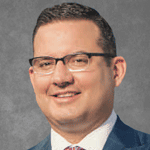
|
|
Dan Thompson
Partner Gulfshore Insurance |
As an Employee Benefits Client Advisor, Dan’s consultative approach helps him gain insight to his clients’ needs and improve the value of their Employee Benefits program. He has worked with Gulfshore Insurance since 2005 and became a partner in 2010. Originally from Maryland, Dan is a licensed 220 & 215 agent and earned a bachelor’s degree from the University of Maryland and a Master’s in Business Administration from Hodges University. Prior to working with Gulfshore, Dan worked for both ADP and Paychex.
Dan is active in the business community through his involvement in the Florida Association of Special Districts, the Southwest Florida Chapter of Health Underwriters, and the Bonita Springs Chamber of Commerce. He was selected as one of Southwest Florida’s “40 Under 40” Leaders by Gulfshore Business Magazine for distinguishing himself in his profession and in the community.
Panel II – Pharmacy and Specialty Drug Costs
Moderator:
|
|
Nelson L. Griswold
President, Bottom Line Solutions, Inc.; Author, DO or DIE: Reinventing Your Benefits Agency for Post-Reform Success |
Nelson Griswold has been called “visionary” by Art Dammers of Anthem, “an authority on voluntary benefits and consultative selling” by Employee Benefit Adviser magazine and “a well-recognized industry thought leader” by Ron Leopold of MetLife.
Nelson has been honored by the Voluntary Benefits Association with their prestigious Industry Leadership Award, for his “professional accomplishments that drive the voluntary benefits industry forward.” A nationally-known agency reinvention and growth expert, he is the author of DO or DIE: Reinventing Your Benefits Agency for Post-Reform Success, the industry bestseller that has been hailed as the only comprehensive blueprint for agency leaders to reinvent their firm to survive and grow in the post-ACA era. As a practice management and agency growth consultant, Nelson works with leading agencies across the country to grow their top- and bottom-line revenue.
Nelson serves as Managing Director of the Agency Growth Mastermind Partnership, a national executive peer-exchange network for non-competing benefits agency owners who collaborate and cooperate to identify best practices and proven growth strategies to remain relevant, profitable, independent & growing.
Nelson is also a leading strategic consultant to carriers and other industry vendors on broker distribution & activation, voluntary benefits, and next-generation engagement & enrollment strategies. Nelson writes a monthly column for Employee Benefit Adviser magazine, has written for Benefits Selling, Producers eSource and other leading industry publications, and writes a blog for Zywave. He is an in-demand keynote speaker and presenter at industry conferences. He is a board member and serves on the executive committee of both the Workplace Benefits Association and the Voluntary Benefits Association
Panelists:
|
|
Spencer Allen
Vice President and Employee Benefits Practice Leader Insurance Office of America (IOA) |
Spencer is a Vice President of Insurance Office of America where he serves as a Senior Consultant and Practice Leader in four states. Spencer has been engaged in the employee benefits arena for 32 years and his clientele are typically the larger privately held or smaller publicly held companies. His focus is in the creation of progressive healthcare strategies and risk management techniques that lower cost, mitigate risk, engage members and improve the health and productivity of the employees. Spencer has also developed extensive knowledge in the Pharmacy and On-site Clinic space which compliments his approach to population health management. This "design-build" consultancy utilizes data analytics to drive program decisions to engage members while reducing Plan Sponsor spend.
|
|
Gary Becker
President ScriptSourcing |
Gary Becker has been a benefit consultant specializing in self-insurance since 1985 and is the CEO of Becker Benefit Group, Inc. and ScriptSourcing, LLC.
In 2009, Gary created the first benefit captive in the Mid-Atlantic area, helping like-minded mid-sized employers transition from “fully insured” to self-funded” to achieve transparency, control, and risk management.
His impressive success in risk management led to the formation of ScriptSourcing, LLC – a pharmacy cost-mitigation program providing solutions and engagement to help employers slash the cost of maintenance name-brand meds and specialty meds by 70-90% while providing a $0 copay for health plan members. In 2017, Gary established Achieve Health Alliance which is an exclusive benefit consortium for highly proactive benefit consultants and employers.
In 2016, he received the “Innovation Award” from the Association for Insurance Leadership in recognition of his “contribution to the advancement of innovation in the employee benefits industry.”
|
|
Eric Levin
Partner Scripta, Inc. |
Eric Levin is a partner in Scripta, a technology company that saves large employers millions on pharmacy benefit costs.
A veteran entrepreneur and investor, he is an expert at growing and running business of all sizes in both the consumer and B2B markets. He is a seasoned executive who has created, or managed, products that have sold over $5billion at retail, been involved in more than 32 mergers and acquisitions, and helped to grow several companies from startup through large scale global success.
His involvement in the technology business began in the mid-1990s as part of Kevin O’Leary’s (of Shark Tank fame) key management team responsible for growing The Learning Company from $60 million to nearly $1 billion in sales in just six years. Following Mattel’s acquisition of The Learning Company for nearly $3.6 billion, Eric was SVP and General Manager for a $500million division of Mattel Interactive.
|
|
Derek Rine
Vice President & Benefits Practice Leader David Rine Insurance |
Derek Rine heads up the employee benefits practice at David Rine Insurance. As a Group Benefits Consultant, he does a lot more than just identifying and meeting the insurance needs of his clients. While protecting personal, business, financial and human assets is a top priority, he also assists businesses in bringing more value to their companies in many other respects. David Rine Insurance exists in part of make life easier for HR professionals through advanced software and other technology.
Derek has spent the last several years evaluating the healthcare climate to identify new strategies and resources to better protect the long-term interests of their clients. These innovations include alternative funding strategies for employer health plans; elite concierge services to gain transparency with providers and guide clients' employees to high quality but low cost facilities in order to improve their loss ratio and ultimately lower their premiums; and proprietary pharmacy programs, which are able to source prescriptions for 50 cents on the dollar in many cases.
Derek recently was profiled in Employee Benefit Adviser magazine for his innovative strategies to enhance the benefits plan while driving EBITDA to the client’s bottom line.
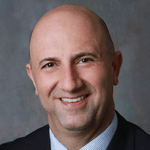
|
|
Ziad Rubaie
Senior Vice President, Sales LDI Integrated Pharmacy Services |
As Senior Vice President of Sales, Ziad plays a role in all aspects of new business and implementations. His job functions include the following:
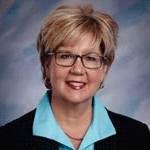
|
|
Susan DeLong
Assistant Superintendent, Personnel Tippecanoe School Corporation |
|
|
Richard Sutton
Employee Benefits Consultant RE Sutton & Associates |
RE Sutton & Associates, a division of Brown & Brown of Indiana, LLC
As an independent broker/consultant, Richard works with a variety of small and large employers and specializes in working with school systems, libraries and other public employers. Richard is a graduate of Ball State University where he majored in Public Relations and Political Science. While at Ball State, Richard was active as President of his Fraternity and President of the Student Center Governing Board.
Prior to founding RE Sutton & Associates, LLC in July, 2001, Richard was a partner at the firm of D.B. Englehart & Associates. Before his consultant work, Richard worked ten years at Blue Cross/Blue Shield and The Acordia Companies, where he received numerous awards for new sales and service to existing clients.
RE Sutton & Associates was named as one of the Top 25 Largest Indianapolis-Area Independent Insurance Agencies/Brokerage firms by the Indianapolis Business Journal for five years. In 2008, RE Sutton & Associates merged with Brown & Brown of Indiana creating the Largest Indianapolis-Area Independent Insurance Agency in the Indianapolis area and the firm has remained at the top of that list.
Richard contributed to a book series “Inside the Minds: Employee Benefit Best Practices”. The book, written by leading executives across the country, is an authoritative perspective on key strategies for offering secure, affordable coverage, while continuing to attract, retain and award employees. Richard’s chapter is entitled: “A Transparent Effort for Servicing Clients in the Employee Benefits Industry.
Richard is a graduate of Leadership Hendricks County. Through that program he was instrumental in instituting the Summer Lunch Bunch for Kids in Brownsburg. This program brings lunch, activities and entertainment to the children of Brownsburg during the summer months. Richard serves on the advisory board for several insurance and health related corporations.
Richard was included in the 2011 Indianapolis Business Journal list “Who’s Who in Health Care and Benefits.” This list includes administrators, benefits experts, insurance executives, and doctors doing groundbreaking work, attorneys, CPAs and policymakers.
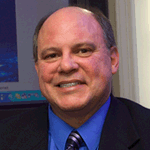
|
|
Fred deMicco
Professor The University of Delaware |
Dr. Fred DeMicco is Professor and ARAMARK International Endowed Chair in the Department of Hotel, Restaurant and Institutional Management at the University of Delaware. He was the Department Chair there for seven years from 2001 to 2007. Formerly, he was Associate Director in the School of Hotel, Restaurant and Recreation Management at Penn State University, where he was Professor-in-Charge of the HRIM undergraduate program (and the Master of Science and PhD graduate program for five years), and he presently is a Conti Distinguished Professor at the Pennsylvania State University's School of Hotel, Restaurant and Recreation Management. Dr. DeMicco is also President of International Academics and Dean of Executive and Professional Programs at the SIAF Campus in Volterra, Tuscany. He has worked in Healthcare at the Massachusetts General Hospital, Boston and at Walt Disney World in hotel management where he also obtained a Ductorate Degree from Disney University. Dr. DeMicco is the Founder of the INNternationale, the international student house at the University of Delaware and has developed and led dozens of Penn State University and University of Delaware student and faculty study abroad programs to six Continents establishing lasting educational and student internship partnerships.
Dr. DeMicco’s scholarly interests are in; International Strategic Management &Trends;, International Medical Tourism and Wellness, Hospitality Management, Wine & Beverage Management, Managerial Accounting and Innovation. He has worked on projects with ARAMARK International at four Summer Olympic Games (living in Atlanta, Australia, Athens and Beijing) and has taught and lead dozens of Study@Sea cruise ship management courses around the world. Since 2007, Dr. DeMicco has been supported and is working with the Foundation of the Bank of Volterra to open a new 25 million euros campus in the center of Tuscany called the Learning Village in Tuscany for business management students and for all students in the Arts & Sciences.
He completed his Ph.D. in Hotel, Restaurant and Institutional Management at Virginia Polytechnic Institute and State University under the direction of Dr. Michael D. Olsen. In 1996, he worked in Hotel Management at Walt Disney World, Florida. He has also been employed by Aramark International, Marriott Vacation Club International and several healthcare operations including assisted living facilities.
He has authored or co-authored nearly 100 refereed articles in the area of tourism and hospitality management and he has co-authored several books including: Medical Tourism and Wellness with Apple Academic Press/Taylor Francis; Restaurant Management: A Best Practices Approach with Kendall-Hunt Publishers (2015) Hospitality 2015: The Future of Hospitality & Travel (2010) with the Educational Institute of the American Hotel and Lodging Association with the next Strategy & Trends text book by Kendall-Hunt released in 2018. Dr. DeMicco is on the Editorial Advisory Board of the Journal of Hospitality & Tourism Research and several other notable research journals.
Dr. DeMicco was the President, International CHRIE –NENA (North East North American Federation). Recently, he was presented the International CHRIE/Cornell Howard B. Meek Award of Excellence for 2017. Dr. DeMicco has helped to bring in several million dollars in research and teaching grants. Active in funds development and university advancement, Dr. DeMicco has been responsible for raising approximately $5 million in the past decade and a half.
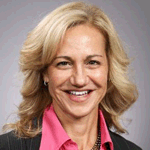
|
|
Tammy Richmond
Chief Executive Officer Go 2 Care |
Tammy Richmond, MS OTR/L has a 30 year extensive history in clinical rehabilitation and wellness services, consultant in practice operations and management, entrepreneur and leader in advancing emerging practice areas in occupational therapy (OT), innovator of administrative and clinical management, professional development documentation and professional development tools, has authored 16 professional publications, has given over 80 professional presentations, an educator at a leading teaching institution, University of Southern California, Division of Occupational Science and Occupational Therapy, (USC) and a well-recognized expert and mentor in private practice, entrepreneurship, marketing, reimbursement and policy. She has dedicated the last 10 years in volunteering for numerous state and national professional committees and working groups.
She is the CEO and founder of Go 2 Care, Inc, an online telehealth company that provides education, consultation and virtual physical and occupational therapy services. In addition, she owns two other health care companies; Hands 4 Health and Ultimate Rehab, LLC.
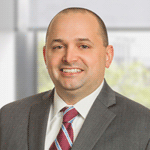
|
|
Josh Ayers
Managing Director BDO USA, LLP |
Josh Ayers, CPA, CITP, CISA, CISSP, CCSFP is a managing director in BDO USA, LLP’s Assurance Services Department. Josh serves a variety of industries, with an emphasis in healthcare, self-funding and third-party administration, and provides technical support and manages the planning, performance & review of financial statement audit and attestation engagements, information technology audit and attestation engagements, and service organization control (SOC) engagements. Josh received his undergraduate degree in Business Administration with an emphasis in Accounting from Saint Louis University, his Master of Arts in Accountancy from the University of Illinois – Springfield, and has presented on financial reporting and information technology topics across the country.
|
|
Steve Kelly
Chief Executive Officer ELAP Services |
Steve Kelly is the co-founder and CEO of ELAP Services LLC, a healthcare cost management and employee advocacy services firm. Founded in 2003, ELAP’s innovative approach to bring rationality to the price of heath services anticipated the future of healthcare years ahead of current Healthcare Reform initiatives.
Mr. Kelly is a recognized expert in the insurance, employee benefits and risk management industry, possessing over 25 years of experience in solving his clients’ healthcare challenges. Since the formation of ELAP, Mr. Kelly has helped hundreds of employers increase their profits by empowering them to take control of their healthcare cost using ELAP’s groundbreaking approach.
Prior to founding ELAP, Mr. Kelly founded the Aldwyn Group, Inc., a Managing General Underwriter of employer stop loss and prescription drug coverage on behalf of reinsurers, including Lloyd’s of London and Munich RE. Aldwyn currently operates as a retail and wholesale insurance brokerage serving clients nationwide.
Mr. Kelly has been featured as an expert commentator on the US Healthcare system on National Public Radio, America’s Healthcare Advocate Radio, and in The New York Times.
Mr. Kelly is involved in several charitable organizations in the Philadelphia community, including the Eagles Fly for Leukemia (President) and The Philadelphia International Visitors Council (Executive Board). Mr. Kelly is an active volunteer at Eagleville Hospital and is a member of the Self Insurance Institute of America, the New Jersey Health Care Financial Management Association (Managed Care Committee) and The New Jersey Health Care Quality Institute.
|
|
Bill Lacy
President and Chief Executive Officer ACHRM |
Bill Lacy has over 30 years experience in executive and financial leadership positions. Currently, Bill serves as the President and CEO for the Association for Corporate Health Risk Management (ACHRM), a membership based organization comprised of progressive employers ranging in size up to 30,000 employees and Best-In-Class Sponsor Partners seeking education, a venue to collaborate, innovative methodologies, disruptive technologies and other resources to more effectively contain their organization’s health care costs.
Following the launch of ACHRM’s Philadelphia Chapter in 2012, ACHRM has several hundred employers in its community across ten Chapters. ACHRM expects to have at least 30 chapters across the US over the next five years. Within each ACHRM Chapter, the Association is building strategic relationships with colleges and universities to address the Health Risk Management (HRM) industry’s educational needs, including professional certificates, degrees and research.
Prior to ACHRM, Bill was CFO and COO for Business Health Services, a national Corporate Wellness and Behavioral Risk Management provider based in Baltimore, Maryland; and CFO for Planet Fitness PA based in Lafayette Hill, PA. Bill has also held executive positions with the Association for Corporate Wellness (ACW), Susquehanna (Equity) Bank, Exelon (PECO) Energy, Rainbow Industrial Products and NatWest, and Entre Advisors LLC.
Bill serves as Vice Chairman for the University of the Sciences’ Board of Visitors, the Burlington County College Foundation Internship and Mentoring Committee as well as other Boards and Committees during his career. He earned his MBA (finance and marketing) from Drexel University and BS (math and economics) from Ursinus College.
|
|
Julie Wilkes
North American Wellness Lead Accenture |
As a heart disease survivor, Julie believes she was given a second chance at life for a reason. She finds that that when she is sharing the inspiration behind her second chance with others, she is living into her life purpose.
Julie is the North American Wellness Lead for Accenture, a Global Fortune 500 Company, CEO and Owner of Seven Studios (a yoga and fitness studio), published author of The 7 Life Miracles, a Life Coach, a motivational speaker and an entrepreneur, owning several companies, including: aromatherapy product lines, an online life coaching series and a public speaking academy.
Julie has appeared on The Carol Alt Show with Fox News, interviewed on The Marilu Henner Show and has been featured on many television shows and new stations either as a fitness/wellness expert, author of motivational content or entrepreneur. Julie has spoken and presented across the globe, including at the White House, The Tower of London, the US Chamber of Commerce, TED Talk, Solutions at Work Live, various national health conferences, the National Business Group on Health, International Women’s Day, and the US Department of Defense. In 2016, she was selected a one of “25 Remarkable Women” from Role Model Magazine and one of 12 ‘Women You Should Know’ in Central Ohio by the Women for Economic and Leadership Development (WELD) organization. Julie has been featured in numerous magazines including: FITNESS Magazine, Columbus CEO, Weight Watchers Magazine, Fit Columbus Magazine and others. Julie has shot over 80 fitness and motivational videos, has several health and wellness mobile phone apps and is an author and often serves as a subject matter expert for local and national news stories. Julie won the Employee Benefits Newsmagazine Leadership In Health Care Award, was selected as one of FITNESS MAGAZINE’S Top 10 Champions of Health and Wellness, was named a 40 Under 40 award winner, TechColumbus Innovation Award Finalist, one of 100 Buckeyes You Should Know, and a lululemon athletica ambassador. Julie is also an animal lover and volunteers with several pet organizations. She is also passionate about the Make a Wish organization and serves as a wish granter for children with life-threatening illness.
Julie has a Master’s Degree in Education-Exercise Physiology from The Ohio State University, and a Bachelor’ s Degree in International Business from Marietta College. She has her Registered Yoga Teacher Training 200 hour certification with Yoga Alliance and fitness and pilates certifications from ACE, AFAA, ACSM, and Fitour. She also has a life coach certification from Well Coaches.
Attendees choose the topic area which interests them most and engage in small group discussion for 45 minutes.
Roundtable A: Leverage Technology and Digital Platforms to Maximize On-Site and Near-Site Clinic Value
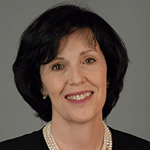
|
|
Lisa Cummings
Director, Total Rewards Chesapeake Energy Corporation |
Lisa serves as Director of Total Rewards for Chesapeake Energy Corporation in Oklahoma City. She is responsible for all compensation, benefits, HRIS and payroll functions for the Fortune 500 Company. Her specialty is design of plans and systems which result in enhanced employee experience and reduced corporate expense.
Lisa joined Chesapeake in 2014. She has worked in benefits and compensation roles at a variety of Fortune 500 companies ranging from Halliburton Company to Dell Computer, Cadbury and Walmart. Lisa graduated from the University of Oklahoma with a Bachelor of Accountancy degree and a Juris Doctorate degree. Lisa is an ERISA attorney and a member of the Oklahoma Bar Association.
Roundtable B: Discuss Effective Worksite Clinic ROI Measurement Strategies
|
|
Brooke Brownlow
Group Vice President, Total Rewards H-E-B |

|
|
Marilyn Bartlett
Administrator, Health Care and Benefits Division State of Montana |
Marilyn Bartlett is Administrator of Health Care and Benefits Division for the State of Montana. She is responsible for administration of Montana’s largest self-funded health plan, with over 31,000 members. Marilyn assumed this position in 2014, with a focus on improving the plan’s financial performance and enhancing benefit offerings.
Marilyn was previously employed as CFO for a regional TPA firm, Controller for a Blue Cross and Blue Shield plan, Administrative Superintendent for an international mining company, and Controller for a regional CPA firm. She graduated with a Bachelor’s Degree in Education from the University of Nevada – Reno and completed the Accounting/Finance program at Montana State University – Billings. Marilyn earned Certified Public Accountant, Certified Management Accountant, Certified Global Management Accountant, and Certified Financial Management designations.
Marilyn and her husband, Ed, reside in Helena, Montana, where Ed is an attorney/lobbyist.
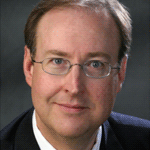
|
|
Ron Dewsnup
President and General Manager Allegiance |
Panel I – Improved Surgical Outcomes
Moderator:
|
|
Nelson L. Griswold
President, Bottom Line Solutions, Inc.; Author, DO or DIE: Reinventing Your Benefits Agency for Post-Reform Success |
Nelson Griswold has been called “visionary” by Art Dammers of Anthem, “an authority on voluntary benefits and consultative selling” by Employee Benefit Adviser magazine and “a well-recognized industry thought leader” by Ron Leopold of MetLife.
Nelson has been honored by the Voluntary Benefits Association with their prestigious Industry Leadership Award, for his “professional accomplishments that drive the voluntary benefits industry forward.” A nationally-known agency reinvention and growth expert, he is the author of DO or DIE: Reinventing Your Benefits Agency for Post-Reform Success, the industry bestseller that has been hailed as the only comprehensive blueprint for agency leaders to reinvent their firm to survive and grow in the post-ACA era. As a practice management and agency growth consultant, Nelson works with leading agencies across the country to grow their top- and bottom-line revenue.
Nelson serves as Managing Director of the Agency Growth Mastermind Partnership, a national executive peer-exchange network for non-competing benefits agency owners who collaborate and cooperate to identify best practices and proven growth strategies to remain relevant, profitable, independent & growing.
Nelson is also a leading strategic consultant to carriers and other industry vendors on broker distribution & activation, voluntary benefits, and next-generation engagement & enrollment strategies. Nelson writes a monthly column for Employee Benefit Adviser magazine, has written for Benefits Selling, Producers eSource and other leading industry publications, and writes a blog for Zywave. He is an in-demand keynote speaker and presenter at industry conferences. He is a board member and serves on the executive committee of both the Workplace Benefits Association and the Voluntary Benefits Association
Panelists:
|
|
Howard Danzig
President Employers Committed to Control Health Insurance Costs (ECCHIC) |

|
|
Tom Garner
Executive Vice President, Operations & Network Development SkyMedicus Inc. |
As Director of Operations, Tom is responsible for expanding the SkyMedicus network of healthcare providers and facilities internationally, as well as developing a domestic network. Additionally he is working with healthcare brokers, third party administrators, major corporations and employer coalitions to enable their clients to take advantage of the high quality, cost efficient healthcare services on a global scale.
His career began, at Grady Memorial Hospital, a 1,000 bed tertiary teaching hospital affiliated with Emory University School of Medicine, where he served 14 years as its Associate Executive Director. Following Grady, he was Executive Director at R.T. Jones Medical Center in Canton, GA, a rural hospital that was struggling financially. He successfully moved the hospital to a sound financial footing, completed an eight million dollar renovation/expansion of the facility, and recruited needed physicians to the community; he left the facility well funded and respected in the community.
He was recruited by Blue Cross Blue Shield Georgia to develop HMO Georgia, a for profit, managed care subsidiary of Blue Cross Blue Shield Georgia, serving as its Chief Operating Officer, he secured the Certificate of Authority, developed the provider network throughout Georgia and established the marketing/sales plan. HMO Georgia ramped up rapidly and moved to a profitable status over a short number of years. He went on after this to develop and operate other managed care organizations in Georgia.
He was also a Partner and CEO of Prime Living, Inc., a real estate development company, developing and managing assisted living communities in Georgia, Florida, and Tennessee.
Tom holds a degree in Business Administration from Georgia Southern College and a Masters in Health Administration from Georgia State University. Tom served his administrative residency at Rush Presbyterian St. Luke’s Medical Center, in Chicago, Illinois.
|
|
Sanjay Prasad
Chief Executive Officer SurgiPrice |
Dr. Sanjay Prasad is a world-renowned Neurotologic surgeon who has been practicing for 22 years. He is widely published in national and international peer-reviewed journals and is the author of multiple chapters in authoritative texts in the field of Neurotology. Neurotology is a super-specialized field of surgery that involves microsurgery of the inner ear, facial nerve and brain. He is the Founder of Metropolitan NeuroEar Group and is the Founder and Managing Partner of Tower Oaks Surgery Center in the Washington, DC, area.
In 2007, he pioneered the concept of bundled pricing within Neurotology and offered this to patients with no insurance or high deductible health plans. Over time the bundled pricing strategy was applied to multiple specialties, such as orthopedics, gynecology, podiatry, general surgery, etc. This was the birth of a competitive marketplace where surgeons now have to compete not only on the basis of bundled pricing but also surgeon-specific, procedure-specific quality parameters.
Dr. Prasad founded SurgiPrice™, a healthcare technology company that developed a bidding platform that forces surgeons, dentists and radiology facilities to compete for patients. SurgiPrice™ has championed use of the bidding platform to foster market competition in the healthcare landscape.
Panel II Direct Contracting with Providers
Moderator
|
|
Nelson L. Griswold
President, Bottom Line Solutions, Inc.; Author, DO or DIE: Reinventing Your Benefits Agency for Post-Reform Success |
Nelson Griswold has been called “visionary” by Art Dammers of Anthem, “an authority on voluntary benefits and consultative selling” by Employee Benefit Adviser magazine and “a well-recognized industry thought leader” by Ron Leopold of MetLife.
Nelson has been honored by the Voluntary Benefits Association with their prestigious Industry Leadership Award, for his “professional accomplishments that drive the voluntary benefits industry forward.” A nationally-known agency reinvention and growth expert, he is the author of DO or DIE: Reinventing Your Benefits Agency for Post-Reform Success, the industry bestseller that has been hailed as the only comprehensive blueprint for agency leaders to reinvent their firm to survive and grow in the post-ACA era. As a practice management and agency growth consultant, Nelson works with leading agencies across the country to grow their top- and bottom-line revenue.
Nelson serves as Managing Director of the Agency Growth Mastermind Partnership, a national executive peer-exchange network for non-competing benefits agency owners who collaborate and cooperate to identify best practices and proven growth strategies to remain relevant, profitable, independent & growing.
Nelson is also a leading strategic consultant to carriers and other industry vendors on broker distribution & activation, voluntary benefits, and next-generation engagement & enrollment strategies. Nelson writes a monthly column for Employee Benefit Adviser magazine, has written for Benefits Selling, Producers eSource and other leading industry publications, and writes a blog for Zywave. He is an in-demand keynote speaker and presenter at industry conferences. He is a board member and serves on the executive committee of both the Workplace Benefits Association and the Voluntary Benefits Association
Panelists:
|
|
Gary Everling
Vice President and Chief Strategy Officer Hendricks Regional Health |
Gary Everling has been in healthcare administration since 1998 and assumed his role at Hendricks Regional Health in 2013. Prior to that, he served as System Executive of Business Development for St. Vincent Health.
Active in his church, for the past 22 years he has enjoyed singing in an a cappella men’s quartet ministry. As an adjunct faculty member, Everling teaches healthcare policy, marketing and statistics at Indiana Wesleyan University. He is a member of the Medical Group Management Association and the Society for Healthcare Strategy and Market Development.
|
|
Jeff Fox
Principal & Benefits Practice Leader HJ Spier |
Jeff Fox has been in benefit consulting for over 30 years. For the majority of his career, he has been in sales/consulting with three different prominent Third-Party Administrators. Because he has dedicated himself to the TPA marketplace, he has a keen understanding of self-funding and the inherent ability to manage plan assets. In 2003, Jeff joined HJ Spier Co., Inc. as their lead employee benefits consultant and since has become a principal in the firm.
Jeff enjoys a very loyal customer base, due in large part to his personal attention to their needs. Through Jeff, his clients are presented with fresh and creative ways to manage their plan costs. He is aware of the ever-changing marketplace and will not hesitate to introduce new concepts and ideas that enable his clients to offer a competitive, yet affordable benefits package.
Jeff creates a partnership with his clients and strives to become a trusted member of their benefits team. He hopes to create an environment of trust and respect, where his clients have his counsel on a regular basis to help them reach their goals.
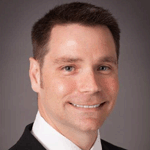
|
|
Troy Hanratty
President and Co-Founder Health 180 |
Troy is the President and Co-Founder of Health 180, a comprehensive health risk management consulting company. Health 180’s programs are designed to make healthcare more accessible, more affordable, and more effective for individuals and organizations. They offer a comprehensive solution using cutting edge health risk management practices, partnerships and technology to change the way healthcare benefits are funded, delivered, and utilized.
With over 15 years of experience in the insurance industry, Troy Hanratty brings a consultant’s point of view to health risk management. During his career, he has risen from sales and account management roles to leading and operating a consulting agency and third-party administrator. Understanding both the insurance industry and what employer’s need has allowed him to develop and launch many cost saving initiatives. Troy has a passion for helping employer’s find their best insurance path which starts with understanding their own company’s risk and finding the correct funding mechanism.
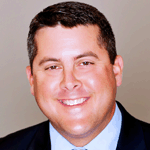
|
|
Deke Lape
Principal Mitchell Insurance, Inc. |
Deke Lape, vice-president of Mitchell Insurance of Sikeston, Missouri, has been in the insurance business for 20 years. Working as a medical insurance consultant, Lape has continued the 80-year-old family tradition of providing health insurance to companies and individuals in Missouri and surrounding states.
Lape along with the Mitchell Insurance and the Health 180 team have developed a narrow network of hospitals, clinics, and doctors to whom the team steers group medical clients. The team also provides biometric screening and onsite assistance to company associates. Mitchell Insurance understands the changing world of health care, and their team wants to provide the very best care and cost-effective coverage for their clients.
Mitchell Insurance and Health 180 are working to change the culture within each employer, and believe the best way to do that is to connect the most important pieces: Medical Provider, Employer, and Employee. If that is accomplished, everyone wins.
A graduate of the University of Missouri-Columbia, Lape has served on the Anthem Blue Cross Blue Shield Council for three years, and he is also a past member of the Roundstone Insurance Advisory Council, an innovative think-tank that collaborates with other producers throughout the country to discuss and implement cost-containment strategies for group medical clients.
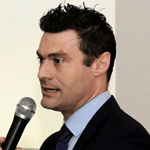
|
|
Massimo Manzi
Executive Director Costa Rican Chamber of Health |
Political scientist, with a specialization in International Relations and Diplomacy. Born and raised in Italy, he resides in Costa Rica since 2004. He has worked in the Organizing Committee for the Summit of Heads of State and Government of 2004, was Chief of Staff of the Ministry of Foreign Trade of Costa Rica from 2005 to 2006, Chief of Staff of the Ministry of Economy, Trade and Industry 2006 to 2007 and Chief of Staff of the Minister of Competitiveness from 2007 to 2010.
Since 2006 he has participated in the structuring of the Medical Tourism Cluster and the Retirement Living Cluster in Costa Rica. Since 2010 serves as Executive Director of both PROMED (the Costa Rican Healthcare Chamber, previously Council for International Promotion of Costa Rica Medicine) and PRORETIRE (the Council for the Retirement Living Industry) He is an international consultant to the Inter-American Development Bank IDB and has developed projects in countries like Belize. Specialist in public-private partnership, cluster structuring, governmental relations.

|
|
Luis Santamaria
Director General Pana Salud |
Luis Santamaria is a Panamanian, founder of PANASALUD, the first Medical Communications startup in the country, leading the Medical Communications platform business in Republic of Panama since March 15th, 2001. The creation of PANASALUD was one of the most disruptive events in the Medical market of the country, by introducing new media, technology, upgrading the systems in more than 500 individual medical practices and organizing the market in the first Medical Directory of Central America under the brand "Salud Panama" (Health Panama), in the website SaludPanama.com, which still today leads the Panamanian market as main source of information about medical providers and services, and is also published on a printed magazine and in Television for the whole country.
As a pioneer on the Medical Communications field in Panama, Luis has been selected many times by public and private entities in Latin America, The United States and Europe to cover news, events and information on Health, Science and Innovation.
In 2012 Luis founded the first initiative to promote the Panamanian medical services to patients from other regions, under the brand HealthPanama.com. Through this new project, a comprehensive portrait of the country’s medical capabilities and history is presented to the international medical travellers as an option.
Today Luis Santamaría leads PANASALUD as General Director. His most ambitious (and successful) project is the PANASALUD Congress, focused on Business, Marketing, Technology and Medical Tourism, with the support of over 200 companies in the country and many others from the LATAM region.
Luis Santamaria is married to Lorena Martinez, another prominent Panamanian entrepreneur and Public Figure as host in the SaludPanama.com show for Television and Internet, and is father of Lila and Vicente Santamaria.
For more information on Luis Santamaria, visit www.LuisSantamaria.com or www.SaludPanama.com
|
|
Brian Flowerday
Chief Administrator, Employee Benefit Services SET SEG |
Brian Flowerday serves as the chief administrator for SET SEG Employee Benefit Services, a not-for-profit healthcare consulting and administrative service provider helping Michigan’s public schools address the healthcare affordability crisis. In his current role, he oversees development and deployment of SET SEG’s benefit-related strategy and operations, with a special focus on helping schools understand the various dysfunctions within the current healthcare system and adopt progressive solutions.
Prior to joining SET SEG, Brian worked as a productivity consultant and manufacturing executive specializing in helping organizations implement lean principles, which he learned and applied in the automotive sector. Brian has more than 20 years of strategic, innovation, and operational management experience and is a graduate of the University of Michigan College of Engineering.
|
|
Bev Helkey
Executive Director Employers Healthcare Coalition |
Bev Helkey is Executive Director of the Employers Healthcare Coalition and the Tri-State Purchasing Coalition. She has 30+ years’ experience in healthcare cost management strategies and employee benefits. She joined the coalitions in 2002. She provides management and oversight of two non-profit organizations. Employers Healthcare Coalition provides health education, health literacy, and healthcare cost and outcome resources to the community, and the Tri-State Health Care Purchasing Coalition which group purchases services to their members and the community.
With her extensive experience in healthcare cost management strategies, she has served the organizations through the design, development and implementation of their robust cost saving programs – including education-focused on health literacy, healthcare cost, outcomes and the patient experience.
Ms. Helkey’s career in healthcare cost strategies spans more than 30-years. Helkey holds a bachelor’s degree in Business. She is board member of Leadership Illinois, The Quincy Family YMCA, CDC - The National Leadership Academy for the Public’s Health (NLAPH) and the Association for Corporate Risk Management (ACHRM).
|
|
Flip Steinour
Director of Human Resources Lancaster-Lebanon Intermediate Unit# 13 |
Flip Steinour has been the Director of Human Resources for Lancaster-Lebanon Intermediate Unit located in Lancaster, PA for the past 11 years. Prior to that, Steinour also served in the same capacity for both two other Pennsylvania intermediate units. He started his professional career in human resources in private industry working for Knouse Foods and True Temper Hardware.
Steinour graduated with a BA from Shippensburg University of Pennsylvania and also has attained his MS in Human Resource Development from Villanova University. He earned the Professional in Human Resources (PHR) certification from the Society of Human Resources in 2000.
Over his professional career, Steinour has served as a member of the Executive Board of the Pennsylvania Association of School Personnel Administrators. Additionally, he has chaired the Pennsylvania Association of Intermediate Units HR Directors job-alike group three times over his 21-year career working for intermediate units. Steinour has also presented for superintendent preparation programs involving HR-related topics at Temple University, Penn State University, and Immaculata Universities. In 2015, he was presented the Gary L. Miller Memorial Distinguished Service Award in Recognition of Outstanding Leadership and Significant Contributions to Education by a PAIU Employee.
He has a passion for helping youth as he has been a volunteer coach for lacrosse, junior high football, Special Olympics basketball, Challenger Little League baseball, and has traveled to Vietnam to help stop the sexual trafficking of Vietnamese children.
|
|
Bill Lacy
President and Chief Executive Officer ACHRM |
Bill Lacy has over 30 years experience in executive and financial leadership positions. Currently, Bill serves as the President and CEO for the Association for Corporate Health Risk Management (ACHRM), a membership based organization comprised of progressive employers ranging in size up to 30,000 employees and Best-In-Class Sponsor Partners seeking education, a venue to collaborate, innovative methodologies, disruptive technologies and other resources to more effectively contain their organization’s health care costs.
Following the launch of ACHRM’s Philadelphia Chapter in 2012, ACHRM has several hundred employers in its community across ten Chapters. ACHRM expects to have at least 30 chapters across the US over the next five years. Within each ACHRM Chapter, the Association is building strategic relationships with colleges and universities to address the Health Risk Management (HRM) industry’s educational needs, including professional certificates, degrees and research.
Prior to ACHRM, Bill was CFO and COO for Business Health Services, a national Corporate Wellness and Behavioral Risk Management provider based in Baltimore, Maryland; and CFO for Planet Fitness PA based in Lafayette Hill, PA. Bill has also held executive positions with the Association for Corporate Wellness (ACW), Susquehanna (Equity) Bank, Exelon (PECO) Energy, Rainbow Industrial Products and NatWest, and Entre Advisors LLC.
Bill serves as Vice Chairman for the University of the Sciences’ Board of Visitors, the Burlington County College Foundation Internship and Mentoring Committee as well as other Boards and Committees during his career. He earned his MBA (finance and marketing) from Drexel University and BS (math and economics) from Ursinus College.
Attendees choose the topic area which interests them most and engage in small group discussion for 45 minutes.
Roundtable A: Digital and Virtual Strategies to Promote Healthy Behaviors and Improve Care
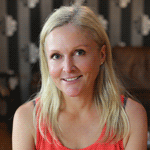
|
|
Siobhan Bulfin
Founder and Chief Executive Officer Melon Health |
Roundtable B: Enhance Wellness Communications to Maximize Engagement and Improve Outcomes

|
|
Ryan Sledge
Director, Corporate Wellness Operations, Employer Services OhioHealth |
Ryan Sledge has a passion for improving the health of individuals and populations. He currently serves as Director of Corporate Wellness Operations for OhioHealth, the largest healthcare system in Central Ohio. In this capacity, Ryan is responsible for innovation, integration, and expansion of wellness programs provided to employers in Columbus, Ohio and the region. During his tenure at OhioHealth, Ryan has also been responsible for creating a sustainable culture of health for OhioHealth’s 29,000 employees.
Ryan has over 10 years of experience in wellness and health management working with employer and community populations. He believes in making healthy choices accessible to all.
Ryan’s academic background includes a Bachelor of Science degree in Exercise Science, a Master of Public Health degree from Michigan State University, and a Master of Business Administration degree from University of Michigan.
|
|
Lisa Cummings
Director, Total Rewards Chesapeake Energy Corporation |
Lisa serves as Director of Total Rewards for Chesapeake Energy Corporation in Oklahoma City. She is responsible for all compensation, benefits, HRIS and payroll functions for the Fortune 500 Company. Her specialty is design of plans and systems which result in enhanced employee experience and reduced corporate expense.
Lisa joined Chesapeake in 2014. She has worked in benefits and compensation roles at a variety of Fortune 500 companies ranging from Halliburton Company to Dell Computer, Cadbury and Walmart. Lisa graduated from the University of Oklahoma with a Bachelor of Accountancy degree and a Juris Doctorate degree. Lisa is an ERISA attorney and a member of the Oklahoma Bar Association.
|
|
Todd Bisping
Global Benefits Manager Caterpillar |
Todd Bisping is the Global Benefits Manager at Caterpillar Inc. In this role he is responsible for overseeing the global strategy and initiatives for all benefits, including Caterpillar's Total Health Strategy and Global Mobility. Todd previously has held a wide range of responsibilities in the benefits arena including plan design, administration, compliance, government and policy issues as well as the management of the Caterpillar PPO network which includes over 30 hospitals and 4000 providers. He also has been instrumental in the development and implementation of industry leading pharmacy benefit innovations and solutions. Todd also served as the Chief Strategy Officer for the Health Transformation Alliance during it's launch.
Since joining Caterpillar in 1989 as part of the company’s Engineering program, he has held numerous positions with increasing responsibilities in the areas of Engineering, I/T, and Product Support. He also is certified as a 6 Sigma Blackbelt and Master Blackbelt.
Bisping, a native of Linn, Kansas, graduated from Kansas State University with a bachelor’s degree in Engineering, and Bradley University with a MBA. He also has been certified as a Benefits Professional. He currently serves as Vice Chairman of the Board of Directors for the Heartland Healthcare Coalition as well as a member of the Board of Directors for the Health Transformation Alliance. He is involved in numerous community activities in his hometown of Morton, IL.
Benefits advisers are no longer waiting for others to solve the challenges in employee benefits. Many are developing innovative strategies and ideas to improve benefits and reduce health care costs.
In this interactive roundtable, Advisers discuss their best practices and solutions.
Moderator
|
|
Nelson L. Griswold
President, Bottom Line Solutions, Inc.; Author, DO or DIE: Reinventing Your Benefits Agency for Post-Reform Success |
Nelson Griswold has been called “visionary” by Art Dammers of Anthem, “an authority on voluntary benefits and consultative selling” by Employee Benefit Adviser magazine and “a well-recognized industry thought leader” by Ron Leopold of MetLife.
Nelson has been honored by the Voluntary Benefits Association with their prestigious Industry Leadership Award, for his “professional accomplishments that drive the voluntary benefits industry forward.” A nationally-known agency reinvention and growth expert, he is the author of DO or DIE: Reinventing Your Benefits Agency for Post-Reform Success, the industry bestseller that has been hailed as the only comprehensive blueprint for agency leaders to reinvent their firm to survive and grow in the post-ACA era. As a practice management and agency growth consultant, Nelson works with leading agencies across the country to grow their top- and bottom-line revenue.
Nelson serves as Managing Director of the Agency Growth Mastermind Partnership, a national executive peer-exchange network for non-competing benefits agency owners who collaborate and cooperate to identify best practices and proven growth strategies to remain relevant, profitable, independent & growing.
Nelson is also a leading strategic consultant to carriers and other industry vendors on broker distribution & activation, voluntary benefits, and next-generation engagement & enrollment strategies. Nelson writes a monthly column for Employee Benefit Adviser magazine, has written for Benefits Selling, Producers eSource and other leading industry publications, and writes a blog for Zywave. He is an in-demand keynote speaker and presenter at industry conferences. He is a board member and serves on the executive committee of both the Workplace Benefits Association and the Voluntary Benefits Association
Panelists:
|
|
Will Glaros
Managing Partner Meyers Glaros Group |
For decades, business owners in Northwest Indiana have relied on Will Glaros to deliver the highest quality benefit services to companies throughout the region. Will founded Employer Benefit Systems (EBS), which was one of the largest locally owned employee benefits firm in Northwest Indiana until the company merged with HIA Insurance in 2014 to form the Meyers Glaros Group.
In his current role as managing partner at Meyers Glaros Group, Will continues to work with the area’s leading employers to develop their benefit plans. Very active in the healthcare industry, he has led the Northwest Indiana Wellness Council, served as past president of the Northwest Indiana chapter of the National Association of Health Underwriters, sits on an advisory board for the Indiana Department of Insurance, and is a member of the Leading Producers Roundtable and Anthem Broker Advisory.
Will has been interviewed by numerous news outlets for his wealth of knowledge about healthcare reform and speaks to organizations about trends in healthcare. Throughout his life, Will has also been involved with many community and civic organizations including serving as past president of Habitat for Humanity and current board member for the Early Learning Partnership (formerly Parents as Teachers).
|
|
Craig Lack
President ENERGI |
Inc. magazine calls Craig Lack, “Craig Lack is the most effective consultant you’ve never heard of.” As the creator Performance Based Health Plans®, Craig consults with public and private C-level executives and independent health care consultants to eliminate employee out-of-pocket expenses, measurably lower health care claims, and drive earnings to the bottom line.
He is a leading authority and a sought-after speaker at national conferences, business coalitions on health and to C-suite groups. Craig has appeared in Forbes, Inc., Fast Company, Huffington Post, Success, and Yahoo Finance and has been featured on CBS, ABC, CW and FOX.
His mission is to help employees eliminate $1 billion in out-of-pocket expenses for their employees.
Inc. says, “Craig Lack is the most effective consultant you’ve never heard of.” http://www.inc.com/logan-kugler/this-entrepreneur-gave-up-nba-dreams-to-make-millions-off-healthcare.html
Forbes calls Craig Lack a “Broker Whisperer for independent healthcare consultants.” http://www.forbes.com/sites/davechase/2016/06/26/if-you-want-to-see-the-future-of-healthcare-watch-the-cable-industry-what-happened-to-newspapers/#3af3a2a16bb1
|
|
Mick Rodgers
Principal and Managing Partner Axial Benefits Group |
As the Principal and Managing Partner of Axial Benefits Group, Mr. Rodgers brings his extensive background in health and welfare plans to Axial's clients.
He has been pioneering Healthcare Purchasing Coalitions since 2009 specializing in assisting medium and large corporations, many of whom have multi-state locations, with the development of effective health care programs. Specifically, he has designed, implemented and managed 5 successful healthcare purchasing coalitions helping hundreds of companies lower costs and stabilized renewals.
Prior to co-founding Axial Benefits Group, Mr. Rodgers founded its predecessor company, Atlantic Benefits, in 2003. He also founded The Staffing Exchange (TSE) in 2012, a successful healthcare purchasing coalition dedicated specifically to the Staffing industry. He has had over 22 years of experience and held senior consulting positions at Hays Companies, William Gallagher Associates, and Marsh & McLennan. Mr. Rodgers is a graduate of the University of Massachusetts School of Engineering. He is a former Massachusetts high school wrestling state champion and collegiate wrestler. He is an avid national speaker on the Affordable Care Act and has become known as one of the nation's experts on the topic of its compliance. He is the former Chairman of the Boston Board of Directors for the March of Dimes and has been involved with the development of corporate programs for the both Friends of Boston's Homeless charity and various local Habitat for Humanity Chapters. He lives in Concord, MA with his wife and family, where he is also a town meeting member.
|
|
Dan Thompson
Partner Gulfshore Insurance |
As an Employee Benefits Client Advisor, Dan’s consultative approach helps him gain insight to his clients’ needs and improve the value of their Employee Benefits program. He has worked with Gulfshore Insurance since 2005 and became a partner in 2010. Originally from Maryland, Dan is a licensed 220 & 215 agent and earned a bachelor’s degree from the University of Maryland and a Master’s in Business Administration from Hodges University. Prior to working with Gulfshore, Dan worked for both ADP and Paychex.
Dan is active in the business community through his involvement in the Florida Association of Special Districts, the Southwest Florida Chapter of Health Underwriters, and the Bonita Springs Chamber of Commerce. He was selected as one of Southwest Florida’s “40 Under 40” Leaders by Gulfshore Business Magazine for distinguishing himself in his profession and in the community.
|
|
Gregory S. Everett
President and Chief Executive Officer Payer Compass |
Greg is the Founder and CEO of Payer Compass, LLC, charting a course to reduce healthcare reimbursement costs and increase plan savings for the self-insured, Health Plans, Medicare/Medicaid and various Government, Tribal and Indigent programs through the power and innovation of reference-based pricing, standard Medicare/Medicaid repricing and now bundled payments.
With over 25 years in the managed care and healthcare software business, Greg brings relative knowledge and first-hand experience to both provider and payer organizations.
Greg’s entrepreneurial spirit and passion for making healthcare more affordable led him to purchase the technology assets of Chart-Tech, Inc. in April 2013, providing the foundation for Payer Compass’s repricing, analytics and consulting offerings.
Recognizing the importance of patient advocacy and care management for plan members and their employers, Greg added the integral services of Innovated Medical Risk Management, now known as CareValent, a Payer Compass Company. Additionally, a partnership was established with The Phia Group to provide a complete, best-in-class RBP program that incorporates pricing, advocacy, and balance billing avoidance and support.
Payer Compass’s RBP program yields plan savings of ~40% and < 1% of claims escalating to a balance bill, overwhelmingly empowering Health Plans and the Self-Insured.
When offline, you can find Greg on the beach, on the links or on a boat cruising any body of water.
|
|
S. Paul Mackey
Vice President, Employee Health and Benefits Alliance Coal, LLC |
Paul Mackey has direct management, plan design, and third-party contract negotiation responsibility for Alliance Coal, LLC and Affiliates’ self-insured health and welfare plans, covering more than 11,500 participants and spending in excess of $70 million annually on health care. Mr. Mackey has similar responsibility for the company’s tax-qualified defined benefit pension and 401(k) retirement plans.
Paul has dedicated 23 years managing Alliance’s ERISA Benefits, Pension, 401k, Life, and of course, Health. He has focused his professional efforts for the last 19 years on designing an innovative health care strategy to improve the health of the Alliance Coal employees and their families, all while trying to manage the upwardly spiraling health cost trend. Mr. Mackey’s health plan leadership team includes an independent physician managing the treatment of Alliance only participants at 11 on-site primary care clinics employing over 30 (MD’s, NP’s, RN’s and support staff), and a dedicated physician led UR/pre-cert and care coordination team performing payment and case management functions for Alliance plan participants. This strategy has produced a negative cost trend for the past 4 years without shifting the cost burden to participants and without charging employees or dependents health plan premiums.
The Alliance PSSP participant statistics reveal impressive retirement readiness practices with a 401-K participation rate of 93% of eligible participants, an avg employee deferral rate of 8.6% of compensation and an employer deferral rate of 8% of compensation. Participants are actively engaged in planning for their retirement.
Paul received the Senior Professional Human Resources (SPHR) designation through the Society of Human Resources Management (SHRM). He served for several years on the Tulsa Area Human Resources Board of Directors and was a past Chairman of the Oklahoma Human Resources Conference.
Paul has worked for the Alliance Resource Partners, L.P, for 30 years in both the Government Affairs and Human Resources Departments and currently serves in the position of Vice President of Employee Health and Benefits. Alliance is a diversified producer and marketer of coal to major United States utilities and industrial users. Alliance, the nation's first publicly traded master limited partnership involved in the production and marketing of coal, is currently the third largest coal producer in the eastern United States with mining operations in the Illinois Basin, Northern Appalachian and Central Appalachian coal producing regions. Alliance operates eleven mining complexes in Illinois, Indiana, Kentucky, Maryland and West Virginia.
|
|
Ross Friedberg
General Counsel and Chief Compliance Officer Doctors on Demand |
Ross Friedberg is General Counsel and Chief Compliance Officer at Doctor On Demand. He oversees all of Doctor on Demand’s legal, privacy and government affairs activities, and regulatory compliance within the rapidly evolving area of digital health.
Prior to Doctor on Demand, Ross served as an attorney at Epstein Becker Green, a nationally recognized health law firm, where he focused his practice on legal, regulatory, and policy challenges impacting telehealth and digital health. In 2014, Ross co-authored one of the first and only comprehensive legal guides on telehealth: “Navigating the Telehealth Landscape: Legal and Regulatory Issues” (published by Bloomberg BNA’s Portfolio Series), which subsequently received the Burton award for distinguished legal writing. Ross received an undergraduate degree from Cornell University and graduate degrees in Law and Public Health from the the University of Connecticut. He is admitted to practice law in Connecticut and the District of Columbia and lives in Arlington, Virginia.
|
|
Irving Stackpole
President Stackpole & Associates |
With over thirty five years of experience in healthcare, senior living and human services, Irving Stackpole is the President of Stackpole & Associates, Inc., a market research, marketing, customer service and sales training, and organizational development firm. Founded in 1991, Stackpole & Associates has established itself in the field of medical travel working with governments, governmental agencies, professional associations, healthcare providers, and tourism organizations to define markets, conduct research, develop marketing programs and strategies, establish brand identity, and launch marketing efforts to attract international medical clients from the US, Canada, the UK, and other geographic areas. , Stackpole & Associates applies scientific marketing principles to develop practical solutions to clients’ challenges. Using the most rigorous psychological and behavioral science research, Stackpole & Associates develops methods and designs that produce unimpeachable data yielding reliable, actionable recommendations.
In addition to the publication of many articles in national and international trade magazines and newspapers, Irving is Editor of Medical Tourism Marketing, the first book on the subject published in the sector, and a co-host of the Medical Travel Show. He is a popular speaker, having addressed audiences at medical travel and health care conferences throughout the US and internationally. His client experience embraces an extensive list of medical tourism organizations including professional associations, governments, health care providers, developers, investors, and facilitators.
|
|
Ray Bowman
Senior Vice President, Talent & Development MarineMax |
Ray L. Bowman, Ph.D., is the Senior Vice President for Talent and Team Development and CHRO at MarineMax, headquartered in Clearwater, Florida. MarineMax is the nation’s largest boat and yacht retailer with approximately 70 stores and marinas from coast to coast with approximately 1600 employees, referred to as “team members”. MarineMax is self-insured. In his position at MarineMax, Dr. Bowman also oversees the company’s health care plan as well as executive development, various training functions, strategic planning coordination, and succession planning. Regarding MarineMax’s health care plan, Dr. Bowman has been instrumental in piecing together a set of cost saving strategies for both team members and the company.
Prior to joining the MarineMax team, Dr. Bowman spent nearly four decades practicing Clinical Psychology with four offices in three counties surrounding Tampa Bay, Florida. He is board certified (with Diplomate status) in Neuropsychology, Psychopharmacology, Forensic Psychology, and Clinical Psychology. He has degrees from Eckerd College, Notre Dame, and the University of Georgia. He completed his internship at Shand’s Hospital at the University of Florida. He retired from clinical practice in 2011.
Dr. Bowman is married to his beautiful wife, Debra, of 40 years and has one son, Robert, who lives in Palm Beach Gardens with his wife, Ashley, and Dr. Bowman’s two extraordinarily gifted granddaughters, Hannah and Grace, ages six and two.
|
|
David West
Director, Corporate Development Group & Pension Administrators, Inc. |
David has worked in the employee benefits industry since 1981 after graduating from Furman University with a BS in Economics. He left Marsh/Mercer to join GPA in 2006 and previously worked for several other insurance companies and third party administrators. Throughout his career he has worked in the areas of underwriting, marketing operations, sales and client management, network development, benefits brokerage, and several areas of management. In his current position he is responsible for helping clients understand and manage their clinical cost drivers; developing direct relationship, risk and cost management programs for clients; managing vendor relationships; improving interdepartmental communication; and identifying and implementing internal and external revenue growth and risk avoidance strategies. He is currently on the Board and the Legislative Chair for the Texas Association of Benefit Administrators; he is a former Officer and President of the DFW Chapter of Certified Employee Benefits Professionals; and he has spoken at and worked with several other professional organizations in various capacities.
|
|
Bill Lacy
President and Chief Executive Officer ACHRM |
Bill Lacy has over 30 years experience in executive and financial leadership positions. Currently, Bill serves as the President and CEO for the Association for Corporate Health Risk Management (ACHRM), a membership based organization comprised of progressive employers ranging in size up to 30,000 employees and Best-In-Class Sponsor Partners seeking education, a venue to collaborate, innovative methodologies, disruptive technologies and other resources to more effectively contain their organization’s health care costs.
Following the launch of ACHRM’s Philadelphia Chapter in 2012, ACHRM has several hundred employers in its community across ten Chapters. ACHRM expects to have at least 30 chapters across the US over the next five years. Within each ACHRM Chapter, the Association is building strategic relationships with colleges and universities to address the Health Risk Management (HRM) industry’s educational needs, including professional certificates, degrees and research.
Prior to ACHRM, Bill was CFO and COO for Business Health Services, a national Corporate Wellness and Behavioral Risk Management provider based in Baltimore, Maryland; and CFO for Planet Fitness PA based in Lafayette Hill, PA. Bill has also held executive positions with the Association for Corporate Wellness (ACW), Susquehanna (Equity) Bank, Exelon (PECO) Energy, Rainbow Industrial Products and NatWest, and Entre Advisors LLC.
Bill serves as Vice Chairman for the University of the Sciences’ Board of Visitors, the Burlington County College Foundation Internship and Mentoring Committee as well as other Boards and Committees during his career. He earned his MBA (finance and marketing) from Drexel University and BS (math and economics) from Ursinus College.
|
|
Robert E. Andrews
Chief Executive Officer Health Transformation Alliance former Chairman of the HELP Subcommittee of the House Committee on Education and the Workforce US House of Representatives |
Robert E. Andrews currently serves as the CEO of the Health Transformation Alliance (HTA).
As CEO of the HTA, Andrews oversees the strategic direction of 40+ major corporations who have come together in an alliance to do one thing: fix our broken healthcare system. Formed by 4 founding members in September 2015, the HTA has grown to include more than 40 of our nation’s leading employers, who collectively are responsible for more than 7 million employees, dependents and retirees and an annual health care spend of $26 billion. Through Andrews’ leadership, the HTA has launched value-driven solutions specifically designed to improve patient care and economic value through world class data & analytics, pathbreaking pharmaceutical solutions, high quality medical networks and robust consumer engagement initiatives.
Andrews previously led the Government Affairs practice at Dilworth Paxson law firm for two years before joining the HTA. Prior to private practice, Andrews served as a Member of the United States House of Representatives for nearly 24 years. Upon his departure from the Congress, President Barack Obama praised Andrews’ service as “an original author of the Affordable Care Act...and a vital partner in its passage and implementation,” and cited his “tenacity and skill” in representing the people of New Jersey. Andrews is married to Camille Spinello Andrews, an Associate Dean at Rutgers Law School and former Dilworth partner, and they have two daughters, Jacquelyn and Josie.
During his time in the U.S. House, Andrews was a Member of the House of Democratic Leadership as Co-Chairman of the Steering Policy Committee; Senior Democratic Member and former Chairman of the Health, Employment, Labor and Pensions (HELP) Subcommittee of the House Committee on Education and the Workforce; Senior member of the House Armed Services Committee, with responsibility for all national defense matters; Senior Democratic member and the former Chairman of the Defense Committee Panel on Defense Procurement Reform; Senior Democratic member and former Chairman of the Defense Committee Panel on Audit of the Pentagon; Participant, White House Summit on Health Care Reforms (2009 and 2010); One of the Original Authors of the Affordable Care Act; One of the original authors of the Defense Procurement Reform Law (2009); and he holds the record for the highest number of votes ever received by a U.S. House candidate in the history of the state of New Jersey.
Andrews’ professional and community activities include his time as former Director of Camden County Board of Chosen Freeholders.
Andrews has been a keynote speaker at charitable, educational and governmental events for 30 years, including: Bucknell University commencement; Rutgers Law School commencement; and Rutgers Camden commencement. He is a frequent guest on CNN, Fox News, MSNBC and CNBC.
Education:
J.D., magna cum laude, Cornell Law School, 1982 • Cornell Law Review • Order of the Coif
B.A., summa cum laude with honors, Bucknell University, 1979 • Phi Beta Kappa
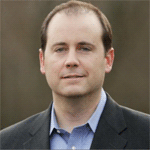
|
|
Joshua Benner
President and Chief Executive Officer RXAnte |
Joshua Benner, PharmD, ScD, is the President and CEO of RxAnte, a provider of science-based information technology solutions for improving quality and lowering the cost of healthcare. A leading voice on medication adherence, Dr. Benner’s award-winning research and numerous publications have shed new light on the problem of non-adherence and identified promising approaches to improving it. Prior to RxAnte, Dr. Benner was Fellow and Managing Director at the Brookings Institution’s Engelberg Center for Health Care Reform, where he focused on medical technology policy. Prior to Brookings, Dr. Benner was principal at ValueMedics Research, an analytic and consulting services firm. Following the successful sale of ValueMedics to IMS Health in 2007, he served as senior principal in health economics and outcomes research and global lead for medication adherence at IMS. Dr. Benner received his Doctor of Pharmacy degree from Drake University and his Doctor of Science in health policy and management from the Harvard University School of Public Health.
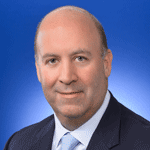
|
|
Enrique A. Conterno
Senior Vice President, Eli Lilly and Company; President, Lilly Diabetes; President, Lilly USA |
Enrique Conterno is a senior vice president of Eli Lilly and Company. He also is president of Lilly Diabetes and president of Lilly USA.
Enrique joined Lilly in 1992 and has held a range of roles in sales, finance, marketing, business development, and general management. He served as marketing and sales director for Lilly’s Peru and Brazil affiliates, as executive marketing director for the intercontinental region and Japan, and as general manager for Lilly Mexico. He also was vice president of the company’s U.S. neuroscience business unit and vice president for health care professional markets.
In addition to his role as president of Lilly Diabetes, Enrique was named president of Lilly USA in January of 2017. He also was president of Lilly USA in 2009.
Enrique earned a bachelor’s degree in mechanical engineering from Case Western Reserve University and a master’s degree in business administration from Duke University.
Enrique is on the Board of Governors at the American Red Cross and on the Board of Visitors at Duke University’s Fuqua School of Business.
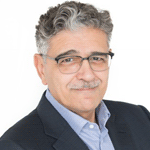
|
|
Azmi Nabulsi, MD,
Deputy Chief Medical and Scientific Officer Takeda |
Azmi Nabulsi, M.D., M.P.H., is Deputy Chief Medical and Scientific Officer for Takeda Pharmaceuticals, where he manages the strategic, medical, and operational functions. He contributes to Takeda’s R&D; strategic vision, leads portfolio management, patient engagement efforts, manages many of Takeda’s alliance partnerships, and drives continuous improvement in Takeda’s global R&D; operations, enhancing productivity and delivering results.
Previously, Dr. Nabulsi was president of Takeda Development Center Americas, Inc., where he directed all aspects of Takeda’s drug development activities, including the identification of new product candidates, execution of clinical trial programs and support for innovative lifecycle management approaches for Takeda’s marketed products. He also provided oversight and direction on the transitioning of Takeda compounds from research through development and into global market launch and has led multiple New Chemical Entity (NCE) approvals. Functions under his management include, clinical science/early development, clinical operations, pharmacovigilance, analytical science, quality assurance, regulatory, pharmaceutical science, and strategic project management.
Dr. Nabulsi has more than 20 years of experience, having previously held the position of general manager for Takeda’s Strategic Development Department based in Osaka, Japan, where he oversaw Takeda’s global portfolio strategies, development of Mid-range plans, product development plans and performance and productivity initiatives. Prior to that, he held various roles of increasing responsibility within R&D; operations for Takeda.
Prior to joining Takeda in 2004, Dr. Nabulsi held multiple global leadership positions in the development division of Abbott Laboratories including, head of the oncology and transplant venture, and divisional vice president of Global Medical Affairs, including epidemiology and outcomes research.
In addition to industry experience, Dr. Nabulsi has held positions within academia, including an adjunct assistant professorship in the University of North Carolina's Department of Epidemiology, and a research fellowship at the University of Minnesota's Division of Epidemiology. He currently represents Takeda on number of Boards, including for the iBio Institute and the Foundation for Sarcoidosis Research.
Dr. Nabulsi has presented more than 38 scientific abstracts at leading scientific meetings and published more than 18 studies in top tier medical journals. He has also authored a chapter in the book Advances in Neurology Volume 76 Antiepileptic Drug Development.
Dr. Nabulsi received his medical degree from Ain-Shams University in Cairo, Egypt, and his master of public health degree from the University of Minnesota.
Moderator:

|
|
Sarah Jane Tribble
Senior Correspondent Kaiser Health News |

|
|
Ryan Olohan
Managing Director, Healthcare Google Inc. |
As the Managing Director for Healthcare at Google, Ryan Olohan leads the teams responsible for developing and managing Google's relationships with pharmaceutical and consumer health companies. Ryan and his teams partner with the largest companies in the world to leverage Google's consumer platforms while connecting the vast health resources and innovation at Google in an effort to push the industry forward. His relentless push is why he was selected by MM&M; as a “Top 40 Healthcare Transformer of 2016” and PRWeek’s 2017 Top 50 Healthcare Influencer.
Before Healthcare, Ryan spent the first half of his 11 years at Google overseeing the CPG industry as the Head of Consumer Packaged Goods. Prior to Google, Ryan was a consultant for Hewitt Associates and a Vice President at Bank of NY Mellon before getting the itch to lead Business Development at two prominent startups. Outside of his day job, he is a frequent speaker at industry events and is a Board member for the Chopra Foundation, the Consumer Healthcare Products Association Foundation, and the Digital Health Coalition. He is also the founder of the Google Healthcare Advisory Board and the co-author of the widely acclaimed "Pharma 3D" (www.Pharma3D.com) in partnership with Google, McKinsey, and Wharton. When not at Google, Ryan "relaxes" at home in New Jersey with his wife and seven children.
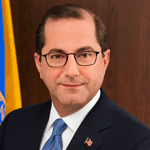
|
|
Alex M. Azar II
Secretary U.S. Department of Health and Human Services (HHS) |
Alex M. Azar II was sworn in as the Secretary of Health and Human Services on Jan. 29, 2018. Azar has spent his career working in both the public and private sectors, as an attorney and in senior leadership roles focused on advancing healthcare reform, research and innovation.
From 2001 to 2007, Azar served at the U.S. Department of Health and Human Services – first as its General Counsel (2001–2005) and then as Deputy Secretary. During his time as Deputy Secretary, Azar was involved in improving the department’s operations; advancing its emergency preparedness and response capabilities as well as its global health affairs activities; and helping oversee the rollout of the Medicare Part D prescription drug program.
In 2007, Azar rejoined the private sector as senior vice president for corporate affairs and communications at Eli Lilly and Co. From 2012 to 2017, he served as president of Lilly USA LLC, the company’s largest affiliate. Azar clerked for U.S. Supreme Court Justice Antonin Scalia prior to practicing law for several years.
Azar graduated summa cum laude with a bachelor’s degree in economics and government from Dartmouth College and earned his law degree from Yale University.
For the past 10 years, Azar has lived in Indiana with his wife and their two children.
|
|
Imelda Dacones, MD
President and Chief Executive Officer Northwest Permanente, P.C. |
Imelda Dacones, MD, is the President and Chief Executive Officer of the Northwest Permanente Medical Group (NWP).
In her role, Dr. Dacones leads nearly 1,500 physicians, clinicians and administrators in the largest independent, physician-led, multi-specialty professional organization in Oregon. NWP provides care to more than half a million members of Kaiser Permanente in Oregon and Southwest Washington.
Dr. Dacones joined Northwest Permanente in 1999 as a primary care physician in Internal Medicine, and became a hospitalist full time in 2002. In 2011, she served as the physician leader for the planning and opening of Kaiser Permanente Westside Medical Center in Hillsboro, Ore. She became the Chief of Staff and Chief Medical Officer of Westside Medical Center by the time the facility opened in 2013.
Before becoming the CEO of Northwest Permanente, Dr. Dacones was the Chief Medical Officer and Director of Hospital Operations for the Kaiser Permanente Northwest region.
She won the NWP Distinguished Physician Award in 2012 and was featured as a “Top Doc” for 2013, 2014 and 2016 in Portland Monthly magazine.
Dr. Dacones is passionate about ensuring that health care is available to everyone, no matter their economic or residency status. She is a member of the Foundation Board of Directors for Virginia Garcia Health Center, whose mission is to provide high-quality, comprehensive and culturally appropriate primary health care with a special emphasis on those with barriers to receiving health care. Dr. Dacones is also committed to nurturing the future generation of physicians, and serves on the Board of Directors for the Kaiser Permanente School of Medicine, planned to open in 2019 in Pasadena, Calif.
She received her undergraduate and medical degrees from the University of Chicago, where she also completed her internship and residency training in Internal Medicine at the University of Chicago Hospitals.
|
|
Daniel Duhigg
Medical Director for Addiction Services Presbyterian Healthcare Services |
Daniel Duhigg, D.O., M.B.A. is board certified in General Psychiatry and Addiction Psychiatry, and holds an advanced credential in chronic pain management. He is the Medical Director for Addiction Services at Presbyterian Healthcare Services in Albuquerque, New Mexico, Clinical Associate Professor at the University of New Mexico and Clinical Assistant Professor at the Burrell College of Osteopathic Medicine.
In his role as Medical Director for Addiction Services, Dr. Duhigg leads a team focused exclusively on patients living with substance use disorders. Dr. Duhigg works with clinical professionals across the system of care to develop innovative solutions to substance use disorders and their treatment. This includes the creation of innovative programs such as the Hospital Intervention Team to address substance use disorders in an inpatient setting, and a telementoring ECHO network to support primary care providers treating substance use disorders in the community.

|
|
Paul L. Uhrig
Chief Administrative, Legal and Privacy Officer Surescripts |
An early champion of health information technology, Paul was involved in the creation and operation of Surescripts starting in 2001, and pivoted from his law career to join Surescripts in 2006. As the company’s Chief Administrative, Legal and Privacy Officer, he oversees several key functions, including internal audit, legal, privacy, security, policy and government affairs. With respect to our topic today – the opioid crisis – Paul works across multiple function at Surescripts – product, marketing, customer relations, and external affairs – to align and drive programs that Surescripts has brought to the table to fight the opioid epidemic.
Paul works to bring change to the healthcare industry outside of his role at Surescripts by serving as Chairman of the Board for DirectTrust, Vice Chairman of the Board for The Sequoia Project and as a board member for Enli Health Intelligence and eHealth Initiative.
Moderator:
|
|
Pamela Greenberg
President and Chief Executive Officer Association for Behavioral Health and Wellness (ABHW) |
Pamela Greenberg is the President and CEO of the Association for Behavioral Health and Wellness (ABHW); she joined the organization in 1998 as the Executive Director for the American Managed Behavioral Healthcare Association (AMBHA). ABHW is the national voice for payers that manage behavioral health insurance benefits. ABHW member companies provide specialty services to treat mental health, substance use, and other behaviors that impact health to approximately 170 million people in both the public and private sectors. ABHW and its member companies use their behavioral health expertise to improve health care outcomes for individuals and families across the health care spectrum.
Pamela serves on the Editorial Board of the Bloomberg BNA Health Insurance Report. She is a liaison to the National Committee for Quality Assurance Standards Committee. In 2015 Ms. Greenberg joined the Advisory Board of Landmark Health a company that provides home-based medical care to individuals with multiple chronic conditions and in 2017 she joined InnovaTel Telepsychiatry’s Strategic Advisory Board.
She also was the Chair of the Coalition for Fairness in Mental Illness Coverage, one of the leading Coalitions that helped develop, advocate for, and get the Wellstone-Domenici Mental Health Parity and Addiction Equity Act of 2008 signed in to law. Additionally, Pamela served as President of ACMHA: The College for Behavioral Health Leadership.
Prior to joining ABHW Pamela was the Deputy Director of Federal Affairs for America’s Health Insurance Plans (AHIP). Before joining AHIP Ms. Greenberg was a Legislative Assistant at Capitol Associates, a healthcare consulting firm in Washington, D.C.
Pamela has a B.A. from Mount Holyoke College and a Masters in Public Policy from Georgetown University.
Moderator:
|
|
Susan Dentzer
President and Chief Executive Officer Network for Excellence in Health Innovation (NEHI) |
Susan Dentzer is the President and Chief Executive Officer of the NEHI, the Network for Excellence in Health Innovation, a nonprofit, nonpartisan organization composed of more than 100 stakeholder organizations from across all key sectors of health and health care. NEHI’s mission is to advance innovations that improve health, enhance the quality of health care, and achieve greater value for the money spent. With offices in Washington, DC, and Boston, Massachusetts, NEHI conducts independent, objective research and thought leadership to accelerate these innovations and bring about changes within health care and public policy.
One of the nation's most respected health and health policy thought leaders and journalists, and a frequent speaker and commentator on television and radio, including NPR, Dentzer previously served as senior policy adviser to the Robert Wood Johnson Foundation. Prior to that, she was editor-in-chief of the journal Health Affairs, and from 1998 to 2008, she served as the on-air Health Correspondent for the PBS NewsHour.
Dentzer is an elected member of the National Academy of Medicine and the Council on Foreign Relations. She is a member of the Board of Directors of the International Rescue Committee, a leading humanitarian organization; a member of the board of directors of Research!America, which works to advance research to improve health; and a member of the board of directors of the Public Health Institute. She is a fellow of the National Academy of Social Insurance and the Hasting Center, an institution dedicated to bioethics and the public interest. She previously served as a public member of the American Board of Medical Specialties. She serves on multiple advisory boards, including those of the Duke-Margolis Center; the Philip R. Lee Institute for Health Policy Studies at the University of California-San Francisco; and the March of Dimes public policy advisory group.
A graduate of Dartmouth, Dentzer formerly chaired the Dartmouth Board of Trustees, and is a member of the Board of Advisors of Dartmouth Medical School. She and her husband, Charles Alston, have three grown children.
Panelist:
|
|
Amy Compton-Phillips, MD
Executive Vice President and Chief Clinical Officer Providence St. Joseph Health |
Amy Compton-Phillips, MD, is Executive Vice President and Chief Clinical Officer for Providence St. Joseph Health. She is responsible for enhancing health care and health outcomes across the seven-state system. Leading the division of Clinical Care and Personalized Health, she is responsible for ensuring Providence St. Joseph Health’s 111,000 caregivers and 20,000+ employed and/or affiliated physicians deliver care that is safe, effective, compassionate, seamless, personalized, and high value for all. Working with physicians, nurses, and pharmacists, she helps foster clinical research, innovation and entrepreneurship to create ever better health outcomes. She is a frequent keynote speaker, author, board member, and serves as the Care Redesign Theme Leader for New England Journal of Medicine Catalyst.
Dr. Compton-Phillips has an extensive background in directing patient care programs and leading development of high-performing health care organizations. Prior to joining Providence in 2015, Dr. Compton-Phillips served as the Chief Quality Officer at Kaiser Permanente, where she focused on improving the value of care delivery. Among many other initiatives, she helped create infrastructure to implement health care improvements at scale across the Kaiser Permanente system. During her tenure, Dr. Compton-Phillips was a key organizational leader in developing capacity in patient-driven design, enhancing clinical outcomes and the care experience, and addressing the affordability of care.
Dr. Compton-Phillips has served as a front line physician in an array of administrative and leadership roles. She holds a Bachelor’s Degree from Johns Hopkins University and earned her medical degree from the University of Maryland School of Medicine. She is a board certified internist, with strong clinical interest in wellness and women’s health.
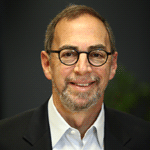
|
|
David Lansky
President and Chief Executive Officer Pacific Business Group on Health (PBGH) |

|
|
Alan Warren, PhD
Chief Technology Officer and Senior Vice President Oscar Health |
Dr. Alan Warren is the CTO and SVP of Engineering for Oscar Health, the high-tech NY startup aiming to transform the healthcare industry. Prior to Oscar, Alan was Engineering VP in Google’s NY office and led efforts there spanning desktop and mobile search, AdWords, and Developer API's and tools, as well as starting products such as Google Finance, Blog Search and Google Health. While there, he also founded and led Google's collaborative applications area, including Google Drive and the Docs, Sheets and Slides suite. Before joining Google he co-founded and was CTO for the technology and engineering side of Juice Software, an enterprise software startup also in New York City. Prior to Juice, Alan spent 3 years as Chief Architect of Hyperion Solutions, two years in IBM's Software Solutions Division, and ten years in T.J. Watson Research. His early research spanned materials and device physics, computational physics and modeling, and circuit design. Since shifting to software and computer science full-time, Alan has been drawn to graphics and visualization, component-based architectures and systems design, and most recently, the collaboration and productivity applications space.
Alan majored in Physics and Math at Georgia Tech (’78) and received his Ph.D. in Solid State Physics from MIT (’85).
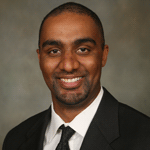
|
|
Kenneth L. Hill Jr., MD, FAANS
Chief Operating Officer and Co-Founder WonderHealth, LLC |

|
|
Joel Worral
Co-Founder HospitalRun |
I'm a CTO turned marketer and GM with a background in the tech and social sectors. Today, I'm focused on helping:
Currently, I'm the Chief Technologist for Masterworks, an agency serving faith-based relief and rescue organizations. I'm also a co-founder of the HospitalRun open source project. Previously, I served as the head of technology and marketing for CURE International, where I helped to reshape their brand and created the CUREkids program.
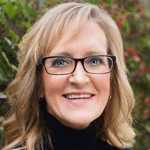
|
|
Kimberly Hutton, MD
Chief Medical Officer CareATC |
Dr. Kimberly Hutton has served as the Medical Director for CareATC since 2010. As a strong supporter of the employer-sponsored clinic model, Dr. Hutton continues to provide exceptional medical care at CareATC Clinics in the Tulsa area.
Prior to joining CareATC, Dr. Hutton worked for Utica Park Clinics in Tulsa for 10 years while continuing part-time emergency work. Serving on the Utica Park Medical Executive Committee for four years, she worked closely with physicians and administrators throughout the region.
Her professional interests include treating chronic disease to goal, as well as reducing the health risks of hypertension, hyperlipidemia and diabetes. In addition, she enjoys treating women’s health issues, mental illness, and pediatric and adolescent health concerns.
Dr. Hutton earned her medical degree from The University of Kansas School of Medicine in Kansas City in 1996 after receiving her bachelor’s degree in biology from The University of Kansas in Lawrence 1991. In 1999, she completed her residency in family medicine at Trinity Lutheran Hospital in Kansas City, Missouri, where she served as Chief Resident, and was named “Resident of the Year.” From there, she moved to Oklahoma and practiced both emergency medicine and family practice in Tahlequah, Pryor and Muskogee. Dr. Hutton is board-certified in family practice.
In her spare time, she enjoys spending time with her three children. Her other interests include traveling, physical fitness, snow skiing, and spending time with friends and family.
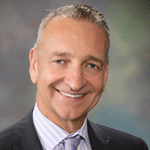
|
|
Philip Kurtz
Chief Executive Officer CareATC |
Philip joined CareATC in 2013 as Chief Executive Officer after having founded and served as the CEO of Benefit Informatics, a healthcare data analytics company with more than 7,000 employers and 5 million members on the platform. In 2010, he sold the company to BenefitFocus and he continued to serve the company as President for 3 more years.
Prior to Benefit Informatics, Philip founded CIS Technology a company that developed software for hospital claims processing and revenue cycle management, where he served as President and CEO from 1985 to 2000. After taking the company public on NASDAQ the company merged with National Data Corporation and is now part of Mckesson Corporation.
From 1975 to 1985, Philip practiced public accounting as a CPA with an emphasis on developing business software in oil and gas taxation, construction and the medical industry.
Eighty percent of health care decisions are made by women, who account for 56% of total personal health care spending. Yet much of the current conversation around health system change overlooks women’s health. As the health care system seeks to better meet the needs of consumers and develop more efficient care models, health systems, policymakers, and plans need to be intentional about making sure the health care system works for women. Centering women in health care transformation efforts is a force multiplier that can yield several benefits, from lower costs to improved health outcomes to positive economic impact. Simply put, women's health is the key that unlocks health system transformation.
This panel brings together a clinician leader at a large, multilayered, national health system, with a policy director of a national women’s health care provider group, and a health care executive at a large insurer to consider:
Moderator:
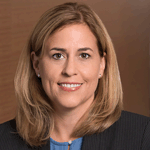
|
|
Sharon Woda
Managing Director, Manatt Phelps & Phillips, LLP |
With a deep understanding of healthcare policy, strategy and business trends, Sharon Woda advises both public- and private-sector healthcare companies on solutions for navigating changes in the healthcare system.
Working with payers, providers, foundations, associations and other healthcare companies, Sharon provides strategic and business advice on topics related to the Affordable Care Act, delivery system reform initiatives, implementation of accountable care organizations, changes to Medicare Advantage Plans and the changing role of Medicaid managed care organizations. Sharon helps clients create innovative solutions to challenges, develop business and sustainability plans, identify operational and organizational changes, and develop implementation roadmaps.
A skilled facilitator, Sharon has significant experience with large, multiyear initiatives that frequently include working with multiple stakeholders and gaining consensus on initiatives that might take several years to plan and execute.
Prior to joining Manatt, Sharon was a managing consultant with The Lewin Group, where she led a multiyear project with the Office of the National Coordinator for Health Information Technology and spearheaded a strategy for the Centers for Medicare & Medicaid Services to implement new provider network criteria for Medicare Advantage Plans. Sharon also worked at Accenture as a manager in its healthcare payer strategy division and began her career at United HealthCare, building customized networks.
Panelists:
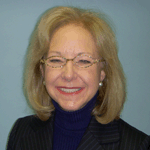
|
|
Karen Shea, MSN
Vice President Maternal and Child Services Anthem, Inc. |
Karen’s 4 decade long career has been devoted to improving the health and health care outcomes of women and children. Prior to joining Anthem, Karen held leadership positions in prominent academic medical centers including:
She was trained as a neonatal nurse practitioner and holds a Bachelors from Salve Regina University in Newport, Rhode Island and Masters from the University of California, Long Beach. She is a current member of:
For the past 10 years Karen has held the position of Vice President for Maternal Child Services for Anthem, Inc.; a fortune 40 company and the nation’s second largest health insurer.
The program serves the needs of pregnant women and their newborns in all 50 states representing 10% of the nation’s annual births.
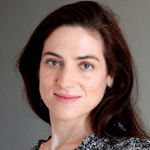
|
|
Emily Stewart
Vice President of Public Policy Planned Parenthood Federation of America |

|
|
Chris Jennings
Founder and President, Jennings Policy Strategies; Former Deputy Assistant to the President for Health Policy and Coordinator for Health Reform, The White House |
Chris Jennings is an over three decades-long health policy veteran of the White House, the Congress and the private sector. Mr. Jennings is currently President of Jennings Policy Strategies (JPS), a nationally respected health care consulting firm committed to assisting foundations, purchasers, health systems and other aligned stakeholders develop policies to ensure higher quality, more affordable and sustainable health care. He is also a senior fellow at the Bipartisan Policy Center where he works to develop bipartisan policies designed to lower cost growth, enhance coverage and improve quality.
In January 2014, Mr. Jennings departed from his second tour of duty in the White House where he served as Senior Advisor to the President for Health Policy and Coordinator of Health Reform. He served in a similar capacity in the Clinton White House for nearly eight years. From his positions in the executive branch, Mr. Jennings has helped implement access and delivery reform provisions of the Affordable Care Act as well as played leadership roles in the development, passage and implementation of bipartisan health reforms, such as the Children’s Health Insurance Program, the Health Insurance Portability and Accountability Act (HIPAA), the Prescription Drug User Fee Act (PDUFA) of 1997 and major Medicare reforms in the Balanced Budget Act (BBA) of 1997.
In his decade of service in the U.S. Senate, he served as the Deputy Director of the Special Committee on Aging for three Senators (including his home state Senator, John Glenn) and led major reform efforts in the areas of long-term care, prescription drug coverage/cost containment, and rural health care. In this capacity, he also served in a major role for the U.S. Bipartisan Commission on Health Care (also known as the “Pepper Commission”).
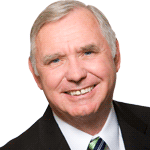
|
|
Robert E. Moffit
Senior Fellow The Heritage Foundation |
Robert E. Moffit is a senior fellow at The Heritage Foundation. He is also Chairman of the Maryland Health Care Commission as an appointee of Governor Larry Hogan.
Moffit long has specialized in health care and entitlement programs, especially Medicare. He brings to the health reform effort his government experience as a Principal Deputy Assistant Secretary at the U.S. Department of Health and Human Services (HHS) and a senior official of the Office of Personnel Management (OPM), where he served during the Reagan administration. In 2010, Modern Healthcare magazine named Moffit as one of the 100 most influential Americans in health care. He has testified frequently before congressional committees.
Moffit’s articles have appeared in The Wall Street Journal, The Washington Post, The Hill, Fortune, The Irish Independent, The National Interest and National Review. He has also published in numerous professional and specialty journals, among them Health Affairs, Health Systems Review, Harvard Health Policy Review, Inquiry, Journal of Law, Medicine and Ethics, National Affairs, New England Journal of Medicine, Postgraduate Medicine, and Journal of Medicine and Philosophy.
Moffit holds both a master's degree and a doctorate in government from the University of Arizona. He received his bachelor's degree in political science from LaSalle University in Philadelphia. His essays on political science have appeared in The Catholic Historical Review, Law and Liberty Review, Modern Age and The Political Science Reviewer.
Moffit serves on the advisory board of the Buckley School of Public Speaking in Camden, South Carolina. Recognition for his work includes public service awards from diverse organizations such as the American College of Eye Surgery, the International Hyperbaric Medical Association, and the National Hispanic Family Against Drug Abuse.
Dr. Moffit is married and lives with his wife, Barbara, in Severna Park, Maryland.
Moderator:

|
|
Mary Agnes Carey
Partnerships Editor and Senior Correspondent Kaiser Health News |
 Prevention and Well-Being Track: Make Well-Being a Priority: An Employer’s Journey
 Worksite Clinics Track: Worksite Health:
Good Health is
Good Business
Worksite Clinics Track: Worksite Health:
Good Health is
Good Business
 Employer Direct Contracting Track: Examine Employer-Led
Accountable
Care through Direct
Contracting with Local
Providers
Employer Direct Contracting Track: Examine Employer-Led
Accountable
Care through Direct
Contracting with Local
Providers
 Self-Insured Track: Move the Needle on Self-Insurance: Collaborate with TPAs and Brokers to Minimize Costs
 Benefits Adviser Track: Advising the C-Suite: The Critical Importance of Engaging C-Level Executives in Strategic Benefits Conversations
 Medical Travel Track: Medical Travel and Tourism Market Overview
 Corporate Health-Risk Innovation Track: Why All Self-Insurance Plans Are Not Equal (Alternatives to the PPO Model)